
If you haven’t had the chance you should read this great article explaining why smart people say dumb things when talking about bikes. It is an interesting analysis, trying to pin down the reasons people people react so negatively to cyclists but it doesn’t address the range of recurring comments. Most of these comments have been thoroughly debunked and appear dead but seem to come back to life every now and then. These are zombie arguments.
This article is meant to be a resource for killing those zombies arguments.
1. Cyclists receive special treatment
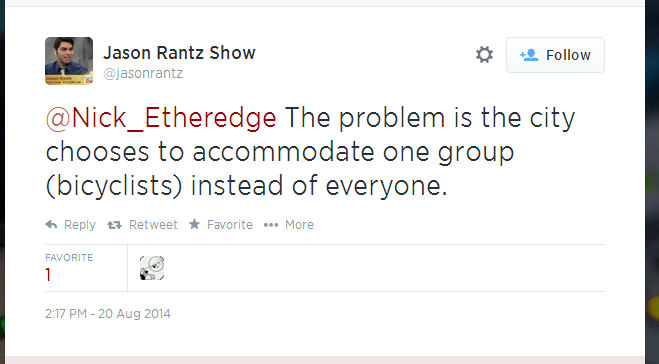
This claim often rises from the dead when there’s a street design change to accommodate cyclists.
Building bicycle infrastructure isn’t special treatment. All modes have unique infrastructure, including cycling. The amount of infrastructure for cyclists pales in comparison to other modes. This estimate puts the number of separated, green lanes for cyclists at about 288 miles nationwide. Compare this to the 3,952 lane miles in Seattle that were designed and built to prioritize the safety of motorists. The only treatment that cycling receives which is different is vastly less infrastructure.
But all of that is beside the point. There are many paths, side streets and greenways not built for cyclists but that can be used comfortably. More importantly, suggesting that modes are in competition misunderstands the nature of streets, to allow everyone to travel where they are going efficiently and safely. Street design should allow modes to complement each other and this is the case with bike infrastructure. Bike lanes reduce collisions which isn’t just good for bikers, it’s good for drivers, who may be found culpable in accidents, and pedestrians, who are less likely to be hit. In addition to safety, bike infrastructure encourages more cycling, reducing congestion by reducing the number of cars on the road. In fact, the best evidence shows that bike lanes don’t increase travel times but do improve safety.
2. Changes to accommodate bikes are being driven by powerful, shady interests.