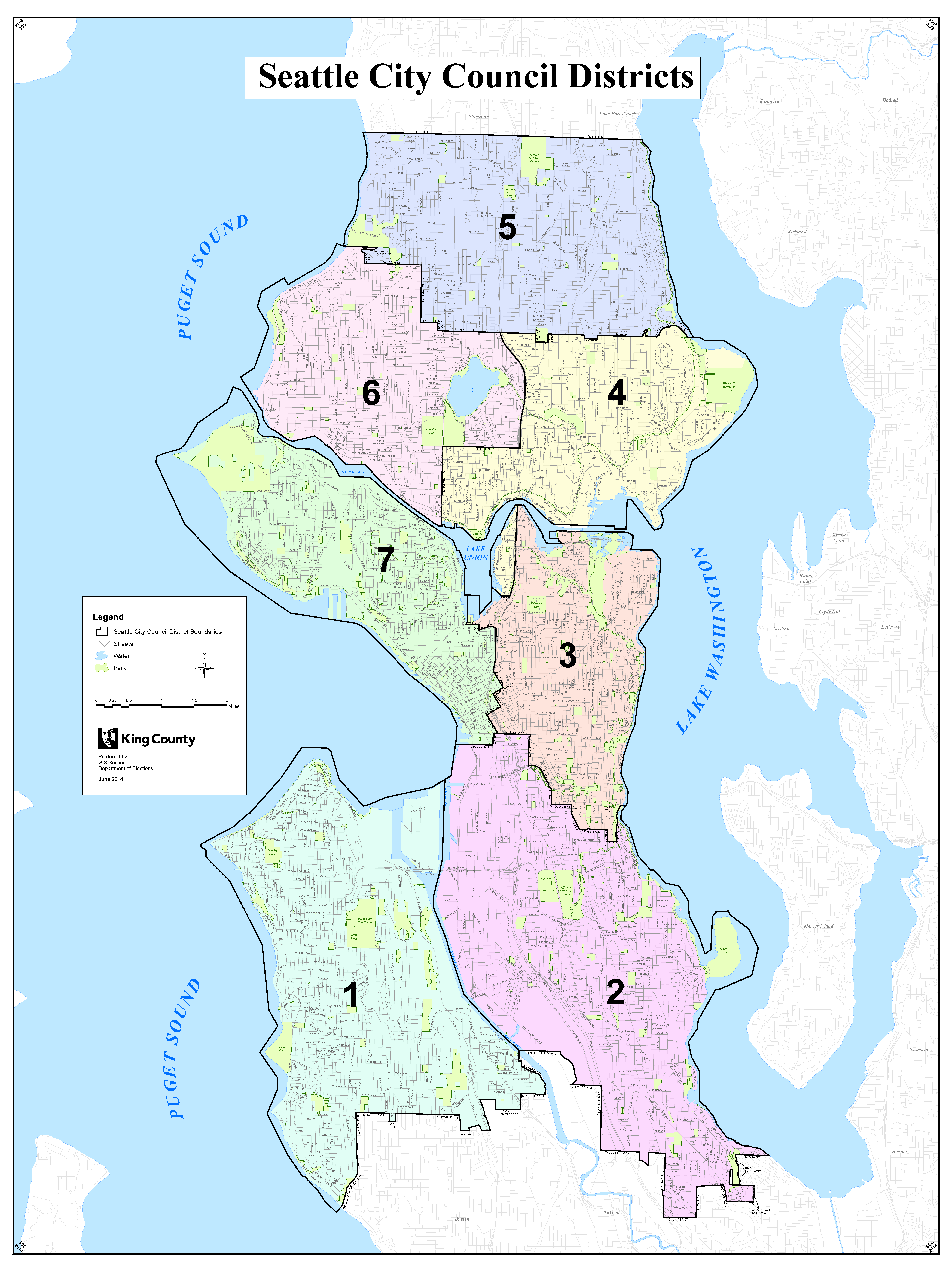
Ahead of the 2023 election, the seven Seattle City Council districts are set to be redrawn using 2020 U.S. Census figures to rebalance each district’s population level. The bureau’s population estimate for Seattle came back surprisingly low — 24,000 lower that the April 2020 estimate of 761,100 from the Washington State Office of Financial Management — which may decrease the amount of border shifting required.
Even so, some significant moves will happen. In short, District 7 will need to get much smaller and Districts 1, 2, and 5 will need to get a bit bigger to get within range of the average council district population. The rest are pretty close to the population average, but may need to see borders shifts in order to facilitate the needed precinct swaps among the districts that differ from the average significantly. Containing Seattle’s fast-growing downtown core, District 7 is most out of balance, exceeding the average by 18,063 residents.
On the other end of the equation, District 5’s census tally was 6,126 residents below the average district. As the northernmost district, it borders only Districts 4 and 6 which both came in pretty close to the average. So District 5 (D5 and so on for others) will take from either or both, and then the donor district will have to make up the difference from one of the more populated districts that neighbor it. Many prognosticators, such as SCC Insight‘s Kevin Schofield, forecast District 5 will absorb Crown Hill, a prediction which has a geographic logic to it since Crown Hill is the northernmost neighborhood not already in D5. In such a scenario, District 6 would then need to grow a bit elsewhere, and North Magnolia seems the likeliest option to provide that growth followed by Fremont. D6 is currently underpopulated and will likely expand anyway, while D4 is well within the acceptable range, so it wouldn’t necessarily require a border shift.
Districts, however, don’t have to be right at the population average. “The rules for redistricting require that the district boundaries must be adjusted so that the difference in population between the largest and smallest districts is no larger than 1% of the entire population (using the official 2020 census numbers),” Schofield explained. “According to the census, the total population of Seattle is 737,015. That means all seven districts will need to be within 7,370 people of each other.” Dividing this total maximum difference would give us 3,685 on either side of the average, but the redistricting commission may opt to keep districts much closer to average population to keep things fairer and simpler.
| Council District | 2010 Census | 2019 Estimate | 2020 Census | Growth rate | Difference from mean | 2019 Difference from mean |
|---|---|---|---|---|---|---|
| 1 | 86,785 | 99,700 | 99,698 | 14.88% | -5,590 | -7,029 |
| 2 | 87,268 | 101,900 | 99,163 | 13.63% | -6,125 | -4,829 |
| 3 | 86,558 | 113,200 | 106,845 | 23.44% | 1,557 | 6,471 |
| 4 | 87,677 | 109,000 | 106,103 | 21.02% | 815 | 2,271 |
| 5 | 86,950 | 98,300 | 99,102 | 13.98% | -6,186 | -8,429 |
| 6 | 86,771 | 101,100 | 102,753 | 18.42% | -2,535 | -5,629 |
| 7 | 86,651 | 123,900 | 123,351 | 42.35% | 18,063 | 17,171 |
| Total | 608,660 | 747,100 | 737,015 | 21.09% | 105,288 | 106,729 |
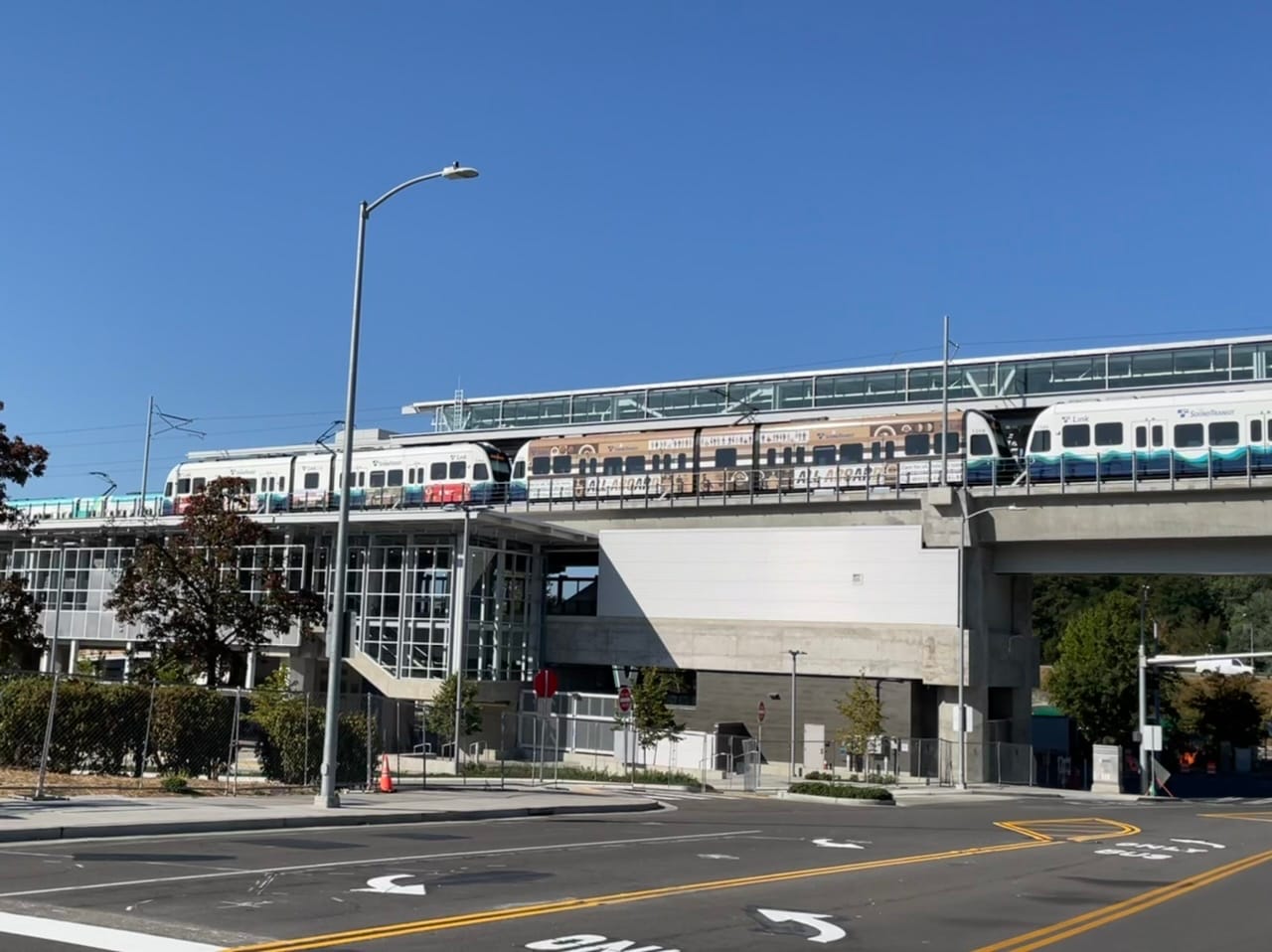
The exchange between Districts 1, 2, and 7 is where things get really complex. District 1 only borders District 2 currently with the Duwamish River the dividing line. That means District 1 must absorb part of District 2 to take on enough population, with SoDo or Georgetown constituting the options just across the border. But District 2 is also underpopulated so it will need to take from District 3 or 7 or both to make up the difference. District 7 has plenty of population to give, but District 3 is barely over the average after its census total came in surprising low — more than 6,000 residents lower than its 2019 population estimate had forecast. Whether a possible effect of Trump administration meddling or a real pandemic-induced population dip reflected in greater Capitol Hill’s diminished population numbers, the Census figures — undercount or not — are what they are.
District 3 is close enough to the district population average to not require border changes. Still, there’s a strong case to be made that D2 should absorb more of Mount Baker and North Rainier from D3 rather than snake north into Pioneer Square to take from D7. D3 would then take from D7 in First Hill or Cascade (the eastern area of South Lake Union that abuts I-5) to make up the difference. This jives with guidance to keep district shapes simple and neighborhoods together as much as practical, but they are not the only solutions. Roughly speaking such a trade would go something like this:
- D1 takes about 5,000 residents from D2.
- D2 takes about 11,000 residents from D3.
- D3 takes about 9,000 residents from D7.
- D5 takes about 5,000 residents from D6.
- D6 takes about 8,000 residents from D7.
Political implications
Most sitting councilmembers appear to have no risk of being redistricted out of their district. The exception is Councilmember Kshama Sawant, who owns a home in Leschi, pretty close to the southern border of her district. D2’s border will move north somewhere, either in Leschi or farther west. It’s also possible a natural boundary like I-90 will become the new district border, which would spare Sawant from being districted out.