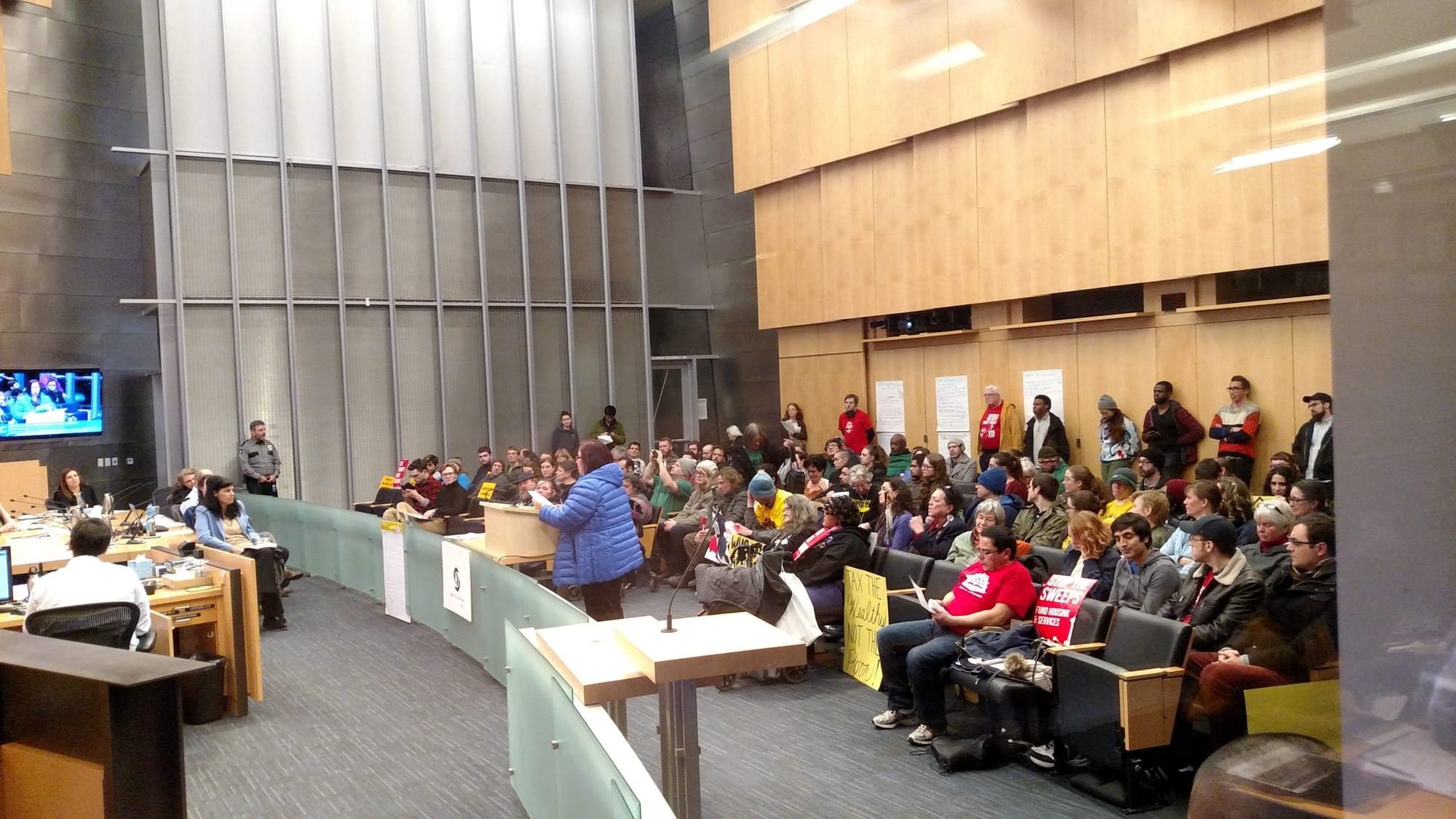
Council Chambers were packed Tuesday evening as housing advocates rallied for solutions to Seattle’s affordability crisis. The “Housing Gap” meeting called by Councilmember Teresa Mosqueda underscored that activists want bold actions taken to tackle issue and make up for decades of halfhearted investment in affordable housing.
One person speaking to that need was Rep. Nicole Macri who represents the 43rd District in Olympia and serves as Deputy Director at Downtown Emergency Service Center (DESC), which is one of Seattle’s largest supportive housing providers. Rep. Macri warned against getting complacent with how much money we’re investing and with how many affordable homes we’re producing.
“We need to get comfortable with much bigger numbers,” Rep. Macri said.
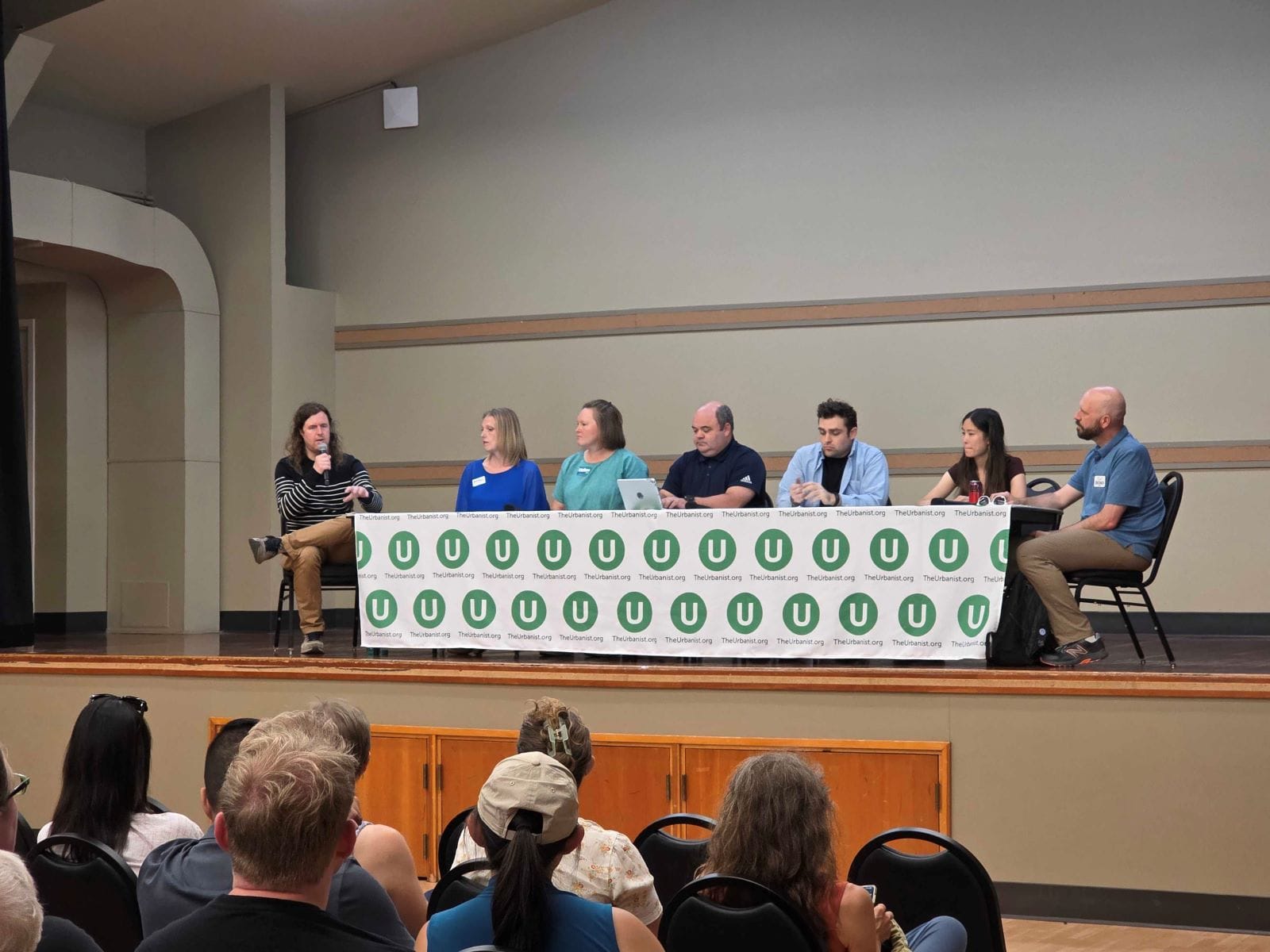
As a special meeting of the Housing, Health, Energy and Workers Rights Committee, Chair Mosqueda led the proceedings with Councilmembers Lisa Herbold, Mike O’Brien and Kshama Sawant also in attendance. The councilmembers heard testimony from experts, mixing in their own commentary before handing it off to public comment. The Seattle Transit Riders Union (TRU) organized the event and arranged the panel.
In her presentation, TRU General Secretary Katie Wilson estimated the housing gap at 30,000. With more than 30,000 people in need (e.g., severely rent burdened or homeless) across the Seattle metropolitan area, local cities and counties would need to raise $5.1 billion to build 30,000 apartments to make up the housing gap and permanently house everyone, she said. To accomplish that, we’d need to invest $500 million per year for 10 years. Wilson pointed to several ongoing megaprojects to show we’ve made this kind of investment before.
“When we care about something we find a way to do it,” Wilson said. “There’s big expensive capital projects that go on all the time. There’s a few going on now. There’s the [Alaskan Way Viaduct Replacement] tunnel. There’s the Washington State Convention Center. So the fact that these are big numbers doesn’t mean this is something we can’t tackle.”
The Alaskan Way Viaduct Replacement tunnel project may push $4 billion when all is said and done, while the Washington State Convention Center Addition is expected to cost $1.6 billion.
At the meeting, Councilmember Sawant revived her proposal to institute an employee head tax to fund affordable housing and upped the ante. Her latest proposal suggest setting the tax high enough to raise $200 million per year, which she said could finance the construction of one thousand affordable homes annually.
“[T]he decisions of the City Council cannot be based on what big business finds palatable, and instead must be rooted in what is needed by working people in this city,” Councilmember Sawant said in her press release. “These same big corporations are currently celebrating the windfall of Trump’s corporate tax cuts, and can certainly afford to pay if the City Council and Mayor demonstrate the backbone to pass a strong progressive business tax. Other revenue sources can and should be added, but we cannot allow vague promises of other, later progressive revenue as a ruse to avoid bringing in real revenue that is on the table right now with this proposed legislation.”
Councilmember O’Brien agreed that Trump corporate tax cuts were an opportunity to capture that corporate windfall as revenue for the City.
The reduction in the corporate tax rate also means that the Low Income Housing Tax Credit (LIHTC) has become less effective since corporations have less tax liability to write off and thus use LIHTC less. The LIHTC is America’s number one funding source for new affordable homes, so weakening it will deprive affordable housing developers of much needed funding. A slowdown in LIHTC funding is already apparent as banks and corporations adjust.
Both expert and public testimony focused on the urgency of the need, increasing the scale of solutions, and the availability of resources to do so if we’d only grasp them. A full video of the committee meeting with public testimony is available here. Additionally, Capital Hill Seattle Blog published some takeaways from testimony here.
"This is a manufactured crisis." Alison Eisinger of Seattle King County Coalition on Homelessness said. We needed to invest more in affordable housing in past decades and now we must play catchup. #HousingForAll
— The Urbanist (@UrbanistOrg) February 21, 2018