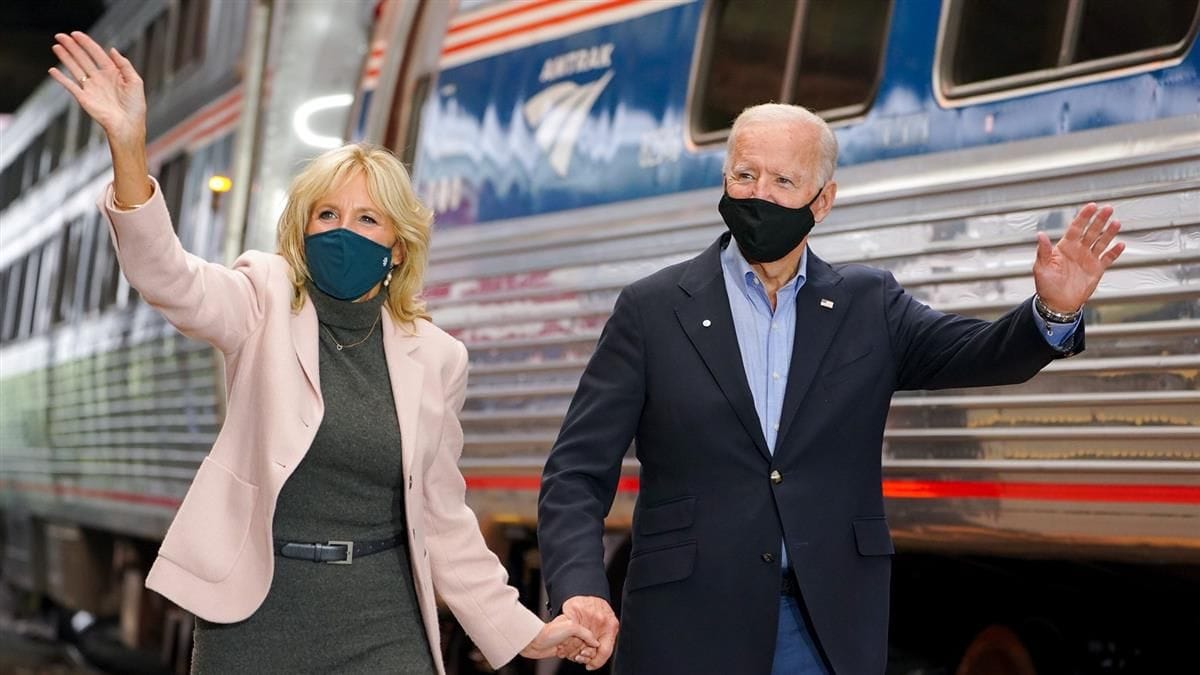
Joe Biden and Senator Kamala Harris officially became President-elect and Vice President-elect on Saturday, which signals a shift from a car-centric, anti-city administration to a clean slate.
Questions continue to swirl over whether a Biden-Harris administration will govern as progressives or rubber stamps for corporate interests and the centrist establishment. Biden made his career as a moderate and was an author of the controversial 1994 crime bill that accelerated mass incarceration, particularly of Blacks and Latinos. That said, there is little doubt that President-elect Biden loves trains and will seek much more rail funding than his predecessor.
Amtrak–America’s cash-strapped federal passenger rail agency–took note and pointed toward stimulus funding in a congratulatory press release.
“Amtrak looks forward to working with President-elect Biden and Congress,” Amtrak president Bill Flynn said. “To get the economy moving and help Amtrak and our employees through this unprecedented situation, Congress must act now on pandemic relief and economic stimulus funding which enable Amtrak to recall furloughed employees, restore service frequency on long-distance and state-supported routes, and make investments that will advance critical capital projected such as bridges and tunnels on the Northeast Corridor and new equipment, infrastructure improvements and major station upgrades throughout the network.”
Amtrak CEO Flynn also stressed how rail investment aligns with climate action.
“As we look to the future, expanded Amtrak service is essential to decarbonizing our transportation network, which generates roughly 28% of the U.S. annual carbon emissions,” Flynn said. “With cars and trucks responsible for nearly 82% of those emissions, we need passenger rail alternatives throughout the nation.”
We covered Biden’s campaign promises on high-speed rail and climate, and that pledge has also made it into Biden’s transition website: “Provide every American city with 100,000 or more residents with high-quality, zero-emissions public transportation options through flexible federal investments with strong labor protections that create good, union jobs and meet the needs of these cities–ranging from light rail networks to improving existing transit and bus lines to installing infrastructure for pedestrians and bicyclists.”
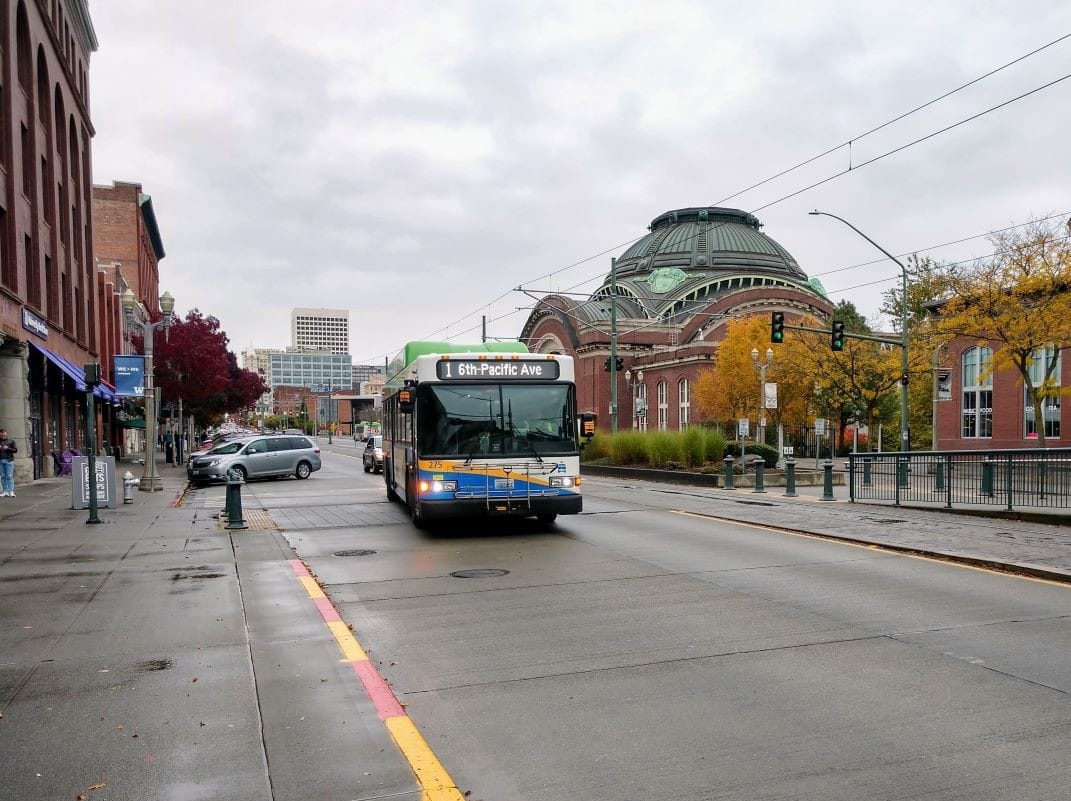
The commitment to expanding and electrifying transit in large cities could make the difference in realizing King County Metro’s long-term vision for filling out the RapidRide alphabet from A to Z and electrifying its bus fleet by 2040. Federal assistance could also help Sound Transit meets its timelines and unfreeze projects despite the recession. Many other regional transit agencies are likely looking to capitalize similarly on the sudden appearance of a willing and motivated federal partner.
Biden’s campaign plan set ambitious long-term high-speed rail goals with near-term benchmarks.
“He’ll start by putting the Northeast Corridor on higher speeds and shrinking the travel time from D.C. to New York by half–and build in conjunction with it a new, safer Hudson River Tunnel,” the plan said. “He will make progress toward the completion of the California High Speed Rail project. He will expand the Northeast Corridor to the fast-growing South. Across the Midwest and the Great West, he will begin the construction of an end-to-end high speed rail system that will connect the coasts, unlocking new, affordable access for every American.”
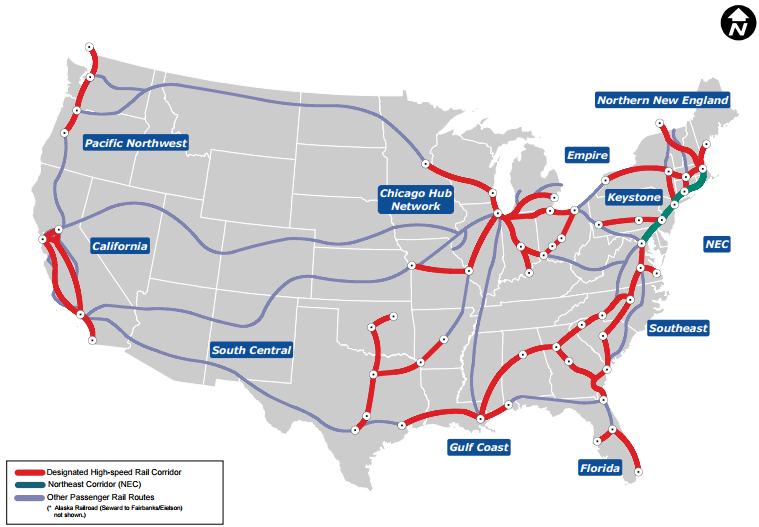
The Northeast Corridor is far and away Amtrak’s highest ridership corridor so it makes sense to build off it, speeding up the corridor and the slower lines to the south connecting to it. High-speed rail from Washington, D.C. to Richmond, Charlotte, and Atlanta makes sense both from a service standpoint and political one, delivering on a campaign promise to a part of the nation increasingly important to the Democrats’ coalition. Improvements and right-of-away acquisition are already in motion for the Richmond segment.