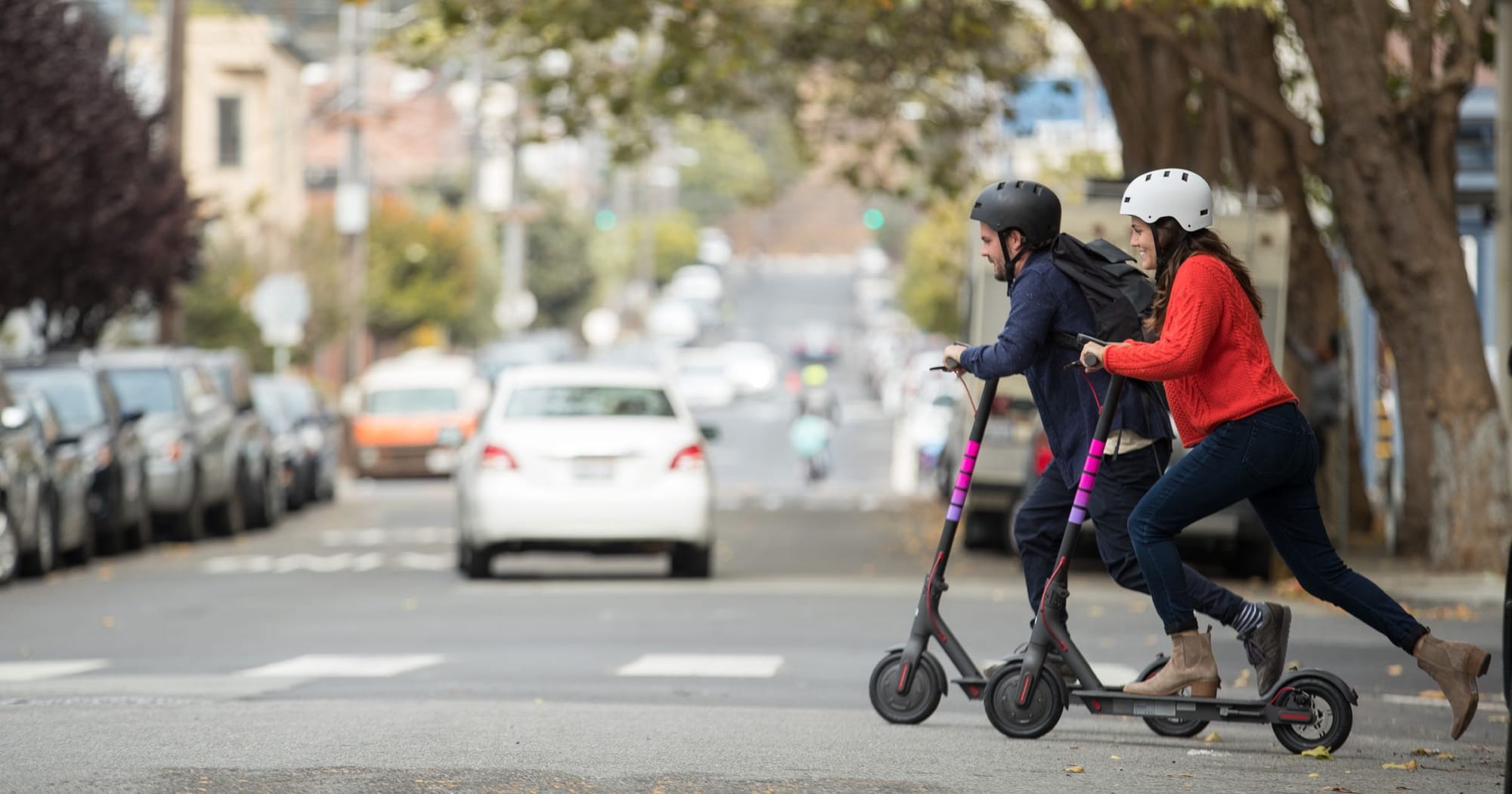
While the Seattle Department of Transportation (SDOT) has a “New Mobility Playbook” touting trendy transportation options, it doesn’t have a e-scooter program. We got a hint at why in Mayor Jenny Durkan’s comments at Civic Cocktail last week.
“No helmet, no experience; it goes 18 miles per hour,” Durkan said. “I think they can be fun for people, but for the City to say ‘we’re going to put them in our right-of-way’ and have people use them knowing they’re going to get hurt, I don’t think that’s responsible.”
Add 100 miles per hour in speed and you’d be talking about cars, but the mayor signaled out e-scooters as the safety menace on our streets in a nation where 37,000 people die annually in car crashes. Despite the alleged danger, several companies have been interested in rolling out scootershare programs in Seattle, including all three bikeshare operators the City has permitted–Lime, Lyft, and JUMP (owned by Uber). Apparently venture capitalists think the scootershare market is larger than the bikeshare market, hence scootershare companies like Bird have a billion dollar valuation.
But even with the buzz around scooters, the City is dragging its feet. Mayor Durkan’s signature move in her first year has been the delay, so in part it comes as no surprise.
It’s true there have been some high-profile deaths among scootershare riders. For example, one Cleveland scooterer was run down by a motorist high on heroin. It’s easier to stand out when you’re one among a handful, but meanwhile dying in a car is commonplace–partially because Americans spend so much time in cars.
Early data does suggest e-scooters are less safe than bikeshare. Of course, as the example illustrates, getting run over by a person driving car is typically the largest danger for people riding scooters or bikes, followed by being driven off the road or doored by a motorist. Interestingly, Scott Kubly argued protected bike lanes would solve that problem, and scootershare would help build the political coalition to lobby for them.
“If scooters came to New York it would increase the number of people that want protected bike lanes,” Lime’s Chief Programs Officer (and former Seattle DOT commissioner) Scott Kubly told my Streetsblog colleague Gersh Kuntzman in July. “I also know how hard they are politically. When we found that some [Lime] riders in San Francisco were riding on the sidewalk, we asked why. They said they didn’t feel safe in the street. We asked, ‘If you had a protected bike lane, would you feel safe.’ And the vast majority gave it a hard yes. … Scooter riders want the same protection that bikers do.”
Angie Schmitt Streetsblog September 24, 2018
Expanding safe bicycling infrastructure has been a long-term goal of Seattle for a while, if not a short-term one. That said, SDOT has had a string of interim directors since Kubly left and his replacement seemed to have much less vision (or support) around implementing protected bike lanes and other safety projects.