This article is the second in a two-part series about designing a new rail network for Seattle and its surrounding areas. You can read Part 1 here.
We live in an interesting time. It’s been about eight months since Covid first landed on our shores and seven months since we locked down. Back then, it seemed like the world had turned upside down but we held our heads high for a return to normalcy. Today, time still seems to be endlessly drudging on, still keeping our long-lost pre-pandemic lives very out of reach.
It’s sometimes fun to reminisce about what life was like before things took a pause; we used to meet others as a fact of life and roamed the streets however we pleased, the little things we took for granted but wouldn’t dare do anymore. Back then we were well in our stride building out ST2 and planning ST3 (Sound Transit was even speeding up some station openings), and despite some hiccups bus ridership was doing pretty well.
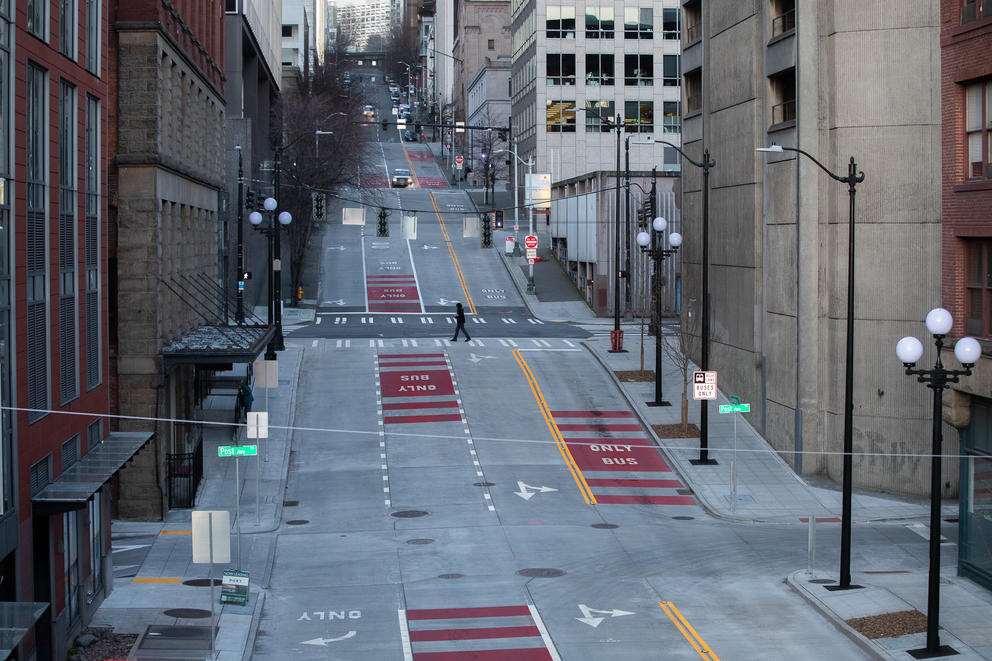
But now amidst virus spreading, revenue losses, and construction delays, it doesn’t seem like we’ll be able to love transit the way we used to for a long time. Alas, the pandemic is a curse but also an opportunity. It gives a reminder to improve the transit we have, a chance to secure massive transit funding (in the name of job creation, but more on this later), and time to dream about a brighter transit future.
Lessons from Covid
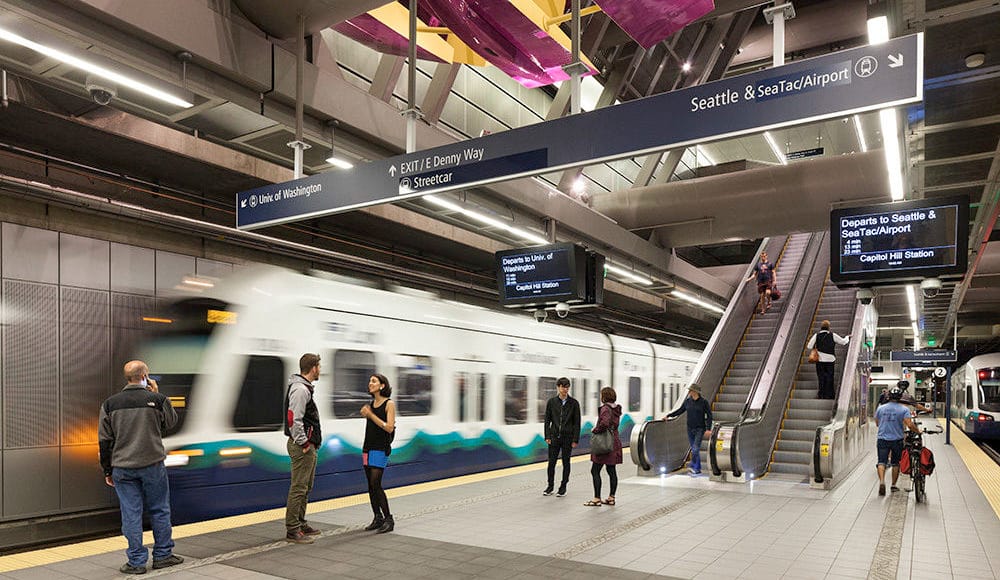
Before Covid hit, crush-loaded transit vehicles were a common sight during rush hour. Seats onboard buses and trains filled quickly; unlucky passengers were packed into the aisle like sardines. But with social distancing, that’s simply not possible anymore. Vehicle capacities have been slashed to just one-fourth of their maximums, and it’s especially hard on Link.
If history is any indication, it’s not likely that we’ll get comfortable boarding crowded buses for a while. That means to get people back on transit, we’ll need to increase service frequencies so that there’s less people on each vehicle.
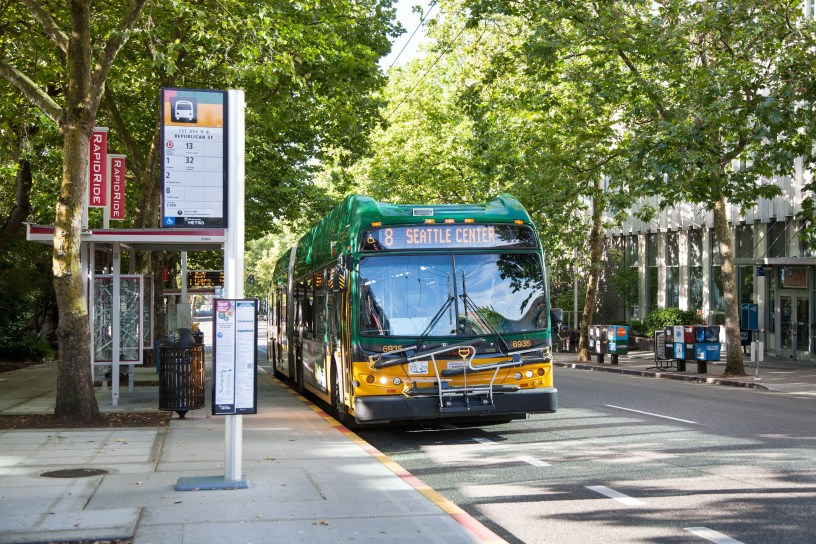
Unfortunately though, our existing transit systems face some constraints; Link is limited to its current six-minute headway due to traffic signaling, and making three- or four-minute buses more frequent risks delays (without dedicated lanes, at least).
But let’s focus on Link (or more broadly, rail) for now. Building it is crucial to increasing transit capacity since capacity-wise a maxed-out rail vehicle trounces an articulated bus ten-to-one and can reliably run at much faster thanks to dedicated right-of-way. Strangely, each ST2/ST3 Link line (and the one we have now) will likely run at lower frequencies than many buses right now.
You might remember that in the last article we discussed upgrading the Metro’s Route 8 and Route 44 bus lines to rail but in a way that was purposefully incompatible with Link. At first it seems counterintuitive, but by designing those lines to be unapologetically not light rail we weren’t constrained to its decades-old design. We could change things that might have made sense for Link but not for Routes 8 and 44.
The result was that the 8 and 44 lines should be built with narrower 12-foot tunnels (as opposed to Link’s 21-foot ones) and run slimmer trains powered by a third rail (but with the same capacity). Let’s not stop there; Covid reminds us that we should add transit frequency for safety (and besides, who doesn’t want more frequent transit?), but with human drivers (like on Link) it isn’t really possible. So let’s get rid of them.
A Bit About Automation
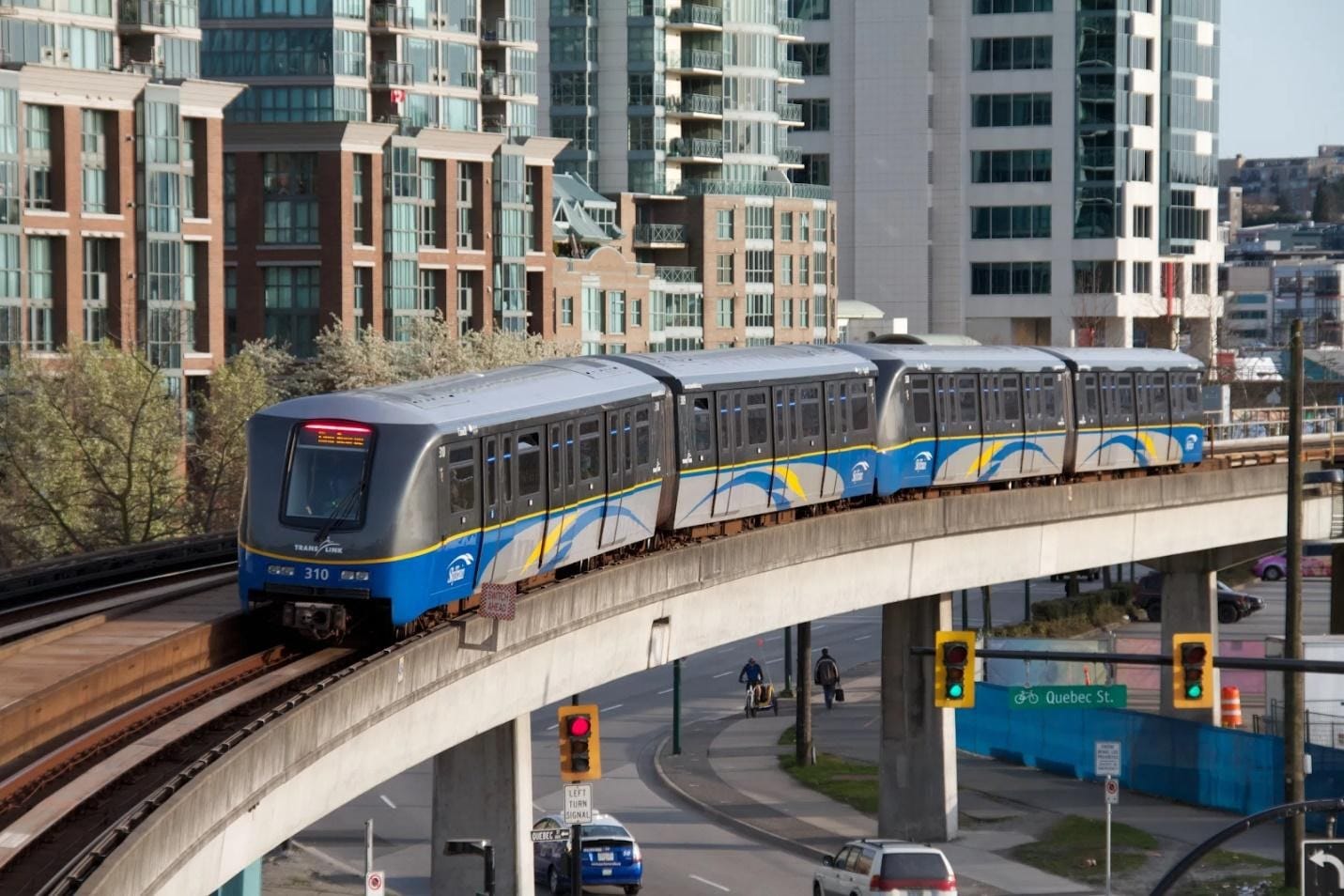
The reasoning behind automation is actually quite simple: frequency and reliability. London’s automated Victoria line can reach a frequency of 36 trains per hour (or one train every 100 seconds), and Vancouver’s SkyTrain can do the same. Electronic signaling allows trains to run closely together in precise harmony; no drivers means running shorter trains more frequently won’t cost more than running longer trains less frequently; computers make it easy to dispatch extra trains to meet surges in demand, like after a concert (just thinking about the future here). Safety is another advantage of automated trains: about 50% of rail transit accidents are caused by human error, so eliminating drivers from the equation could increase safety significantly (the Australian Parliament also launched an inquiry into this and they seem to agree).
Interestingly, having computers control trains have another interesting benefit: energy savings. It’s estimated that SkyTrain uses some 50% less electricity per passenger than similar systems because computers coordinate the braking of one train and the acceleration of another to maximize the usage of regenerative braking. Other systems generally see a 30% decrease in energy consumption after automation.
Technologically, automation isn’t very hard to implement. Apart from the initial capital cost, automation could pay for itself through reduced maintenance in the long-term. One could also argue that we could cut costs even more if we also got rid of train and station staff, but while that’s true it’s probably not the best thing to do. Having staff on board and in stations especially during quieter hours can help cultivate a sense of safety and helpfulness—a human touch that many transit systems seem to lack. As a sidenote, ST2 and ST3 could technically be automated as long as their at-grade crossings in SoDo and Bel-Red were to be eliminated. One way to do this is to elevate the line whenever it crosses a road and to move the station onto that elevated portion, sort of like what’s done on LA’s Expo Line.
Service drives demand—add more frequency, and more riders will come. As our population grows, the transit serving us needs to be ready for what the future brings, and not automating trains just isn’t gonna cut it.
A Bigger Picture
You might have noticed that I’ve been referring to the 8 and 44 lines rather disparagingly up until now (or maybe not), but I assure you that there’s a reason. Sure, those two new lines are great, but we’ll need a far more comprehensive network to reshape our car-dominated landscape. Indeed, the lines are just glimpses into a 21st-century transit utopia—one that that many other cities already have.