Rubén Casas believes that the lack of connected, walkable neighborhoods may be helping to spur the “epidemic of loneliness.”
Speaking at a January 30 forum hosted by transit advocacy organization Tacoma On the Go, Casas, who is an associate professor at the University of Washington Tacoma and serves on the Tacoma Transportation Commission, referenced outgoing Surgeon General Vivek H. Murthy’s letter discussing the negative health effects of social isolation, and said that he and others “live in cities by name only.”
“Really, we live in suburbs that have certain sections or islands that are true cities. […] Between them, there’s a lot of gaps, and those gaps are created because we have designed places where you need to bring a one-ton, very big piece of property with you to be anywhere you want to go,” Casas continued. “This matters because if we want to remake our society, we have to start by creating more proximity between you and the people you care about.”
That’s where the concept of a 15-minute city or neighborhood comes in. In a 15-minute neighborhood, people don’t need a car to access their basic needs — things like groceries, health care, school, or being able to meet up with a friend. Instead, all of these activities and amenities should be within a 15-minute walk or bike ride of home.
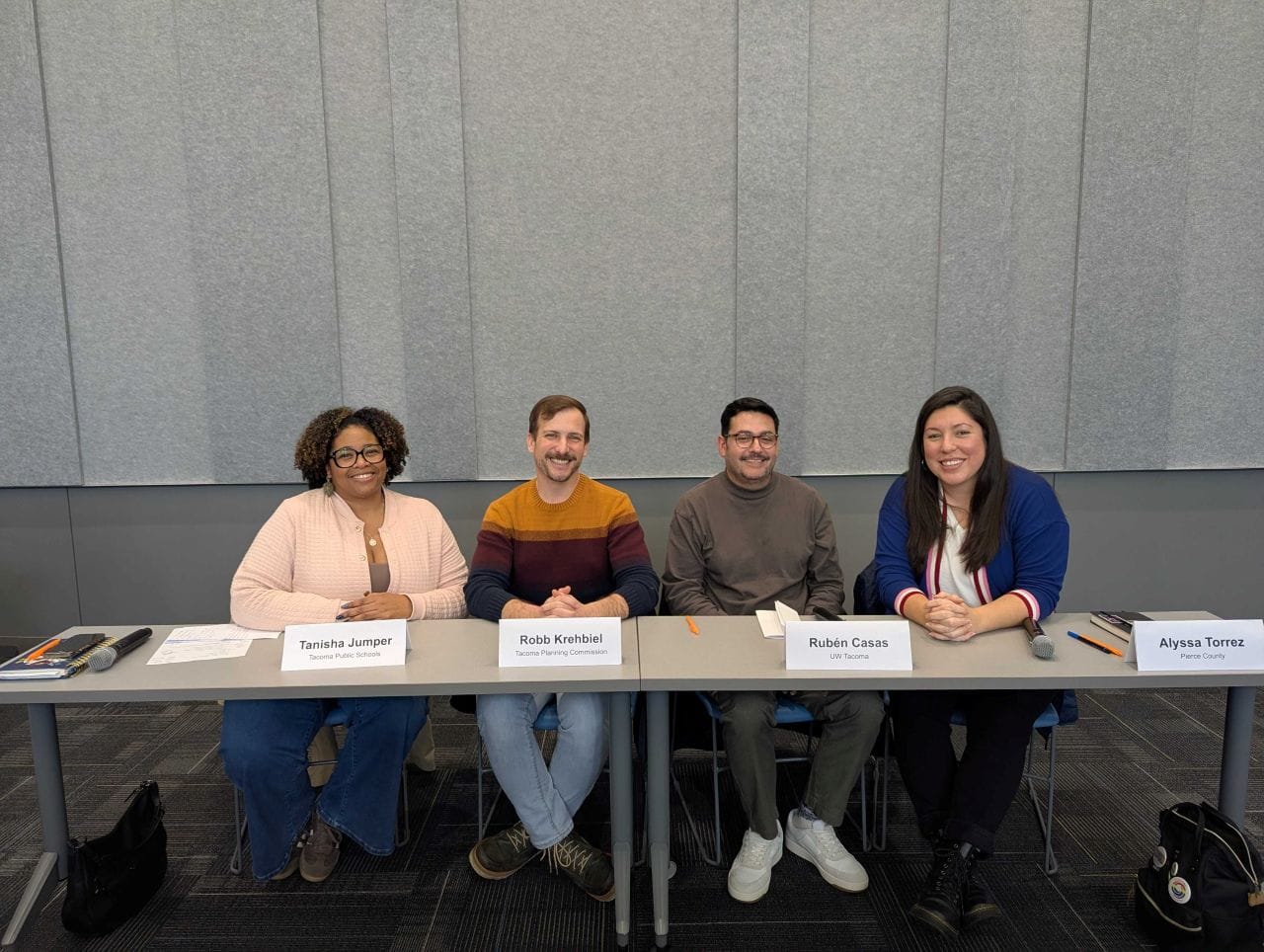
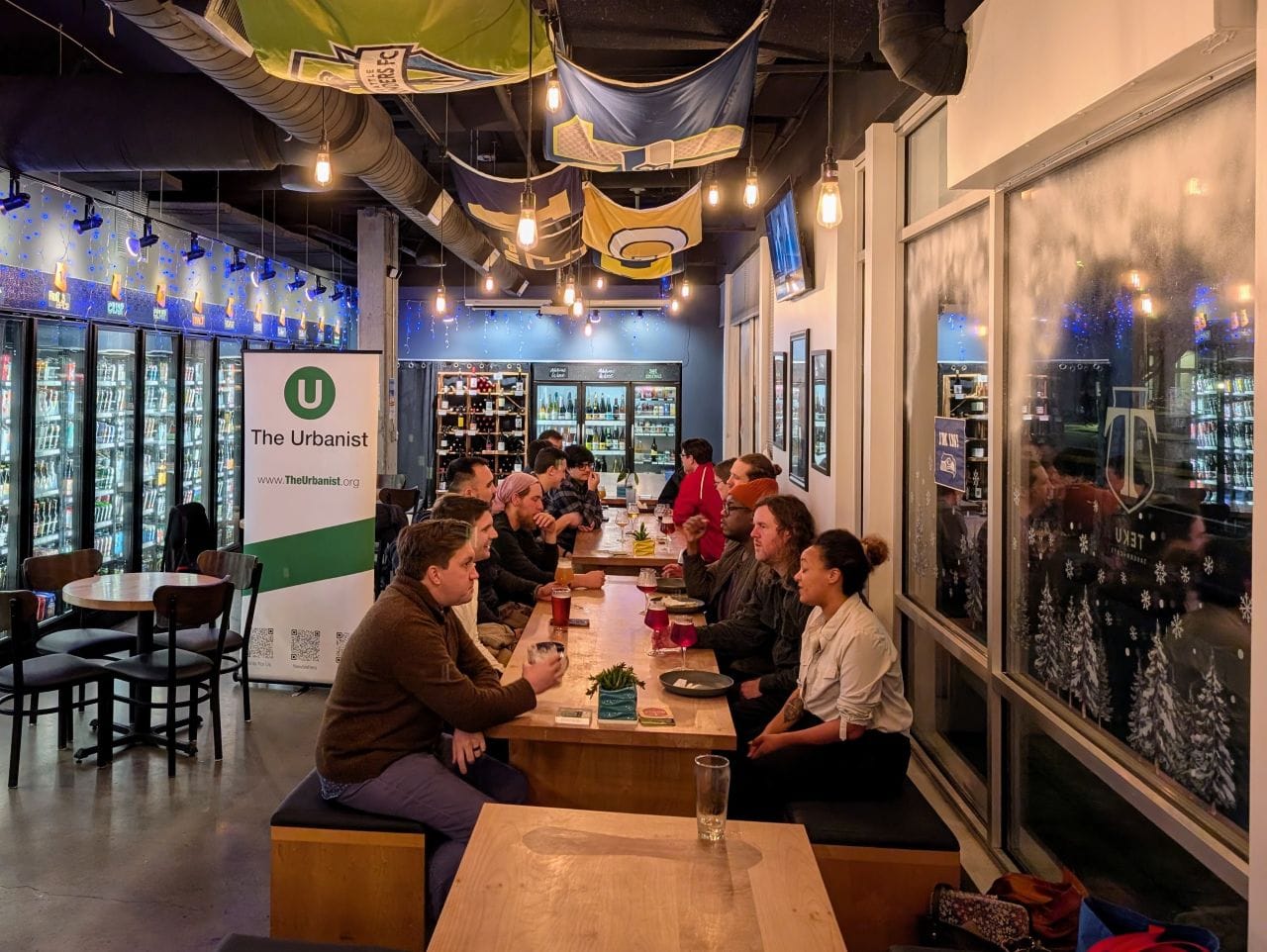
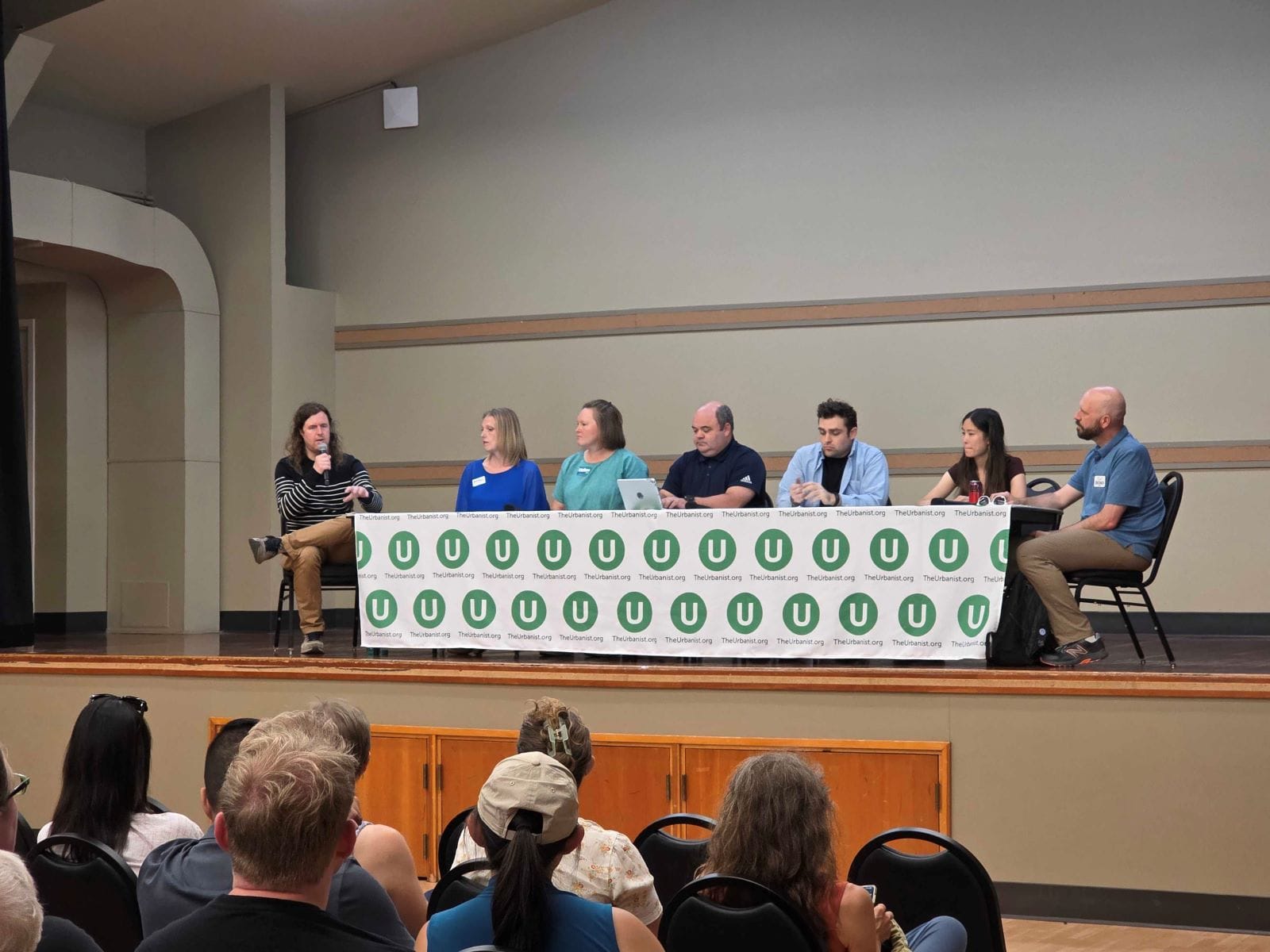
Casas, South Sound Housing Affordability Partners program specialist Alyssa Torrez, Pierce County Planning Commission Chair Robb Krehbiel, and moderator Tanisha Jumper discussed this kind of urban layout during the forum, as Tacoma works to create its own 15-minute neighborhoods. (Note: Casas is also a boardmember at The Urbanist, which is run as a 501(c)(4) nonprofit, and he has contributed articles as a freelancer.)
Carlos Moreno, a French Colombian professor, researcher, and scientist, coined the term “15-minute city” in 2016; but, Casas said, the concept is “an organic and very historical way that human settlements have been set up,” where “the neighborhood becomes the organizing principle for everyday life.”
With the rise of car culture and car-centric city planning throughout the past century, this isn’t the case for most American cities today, and certainly isn’t the case for Tacoma. But it’s where the city wants to go, with an eye towards mitigating environmental impacts in the face of rising density and population.
City-level actions
Part of this vision lies with Home in Tacoma, a housing reform vehicle the City has used to work towards its vision of 15-minute neighborhoods. Krehbiel said he thinks it’s “one of the biggest things” that’s allowed the City to progress in this direction.
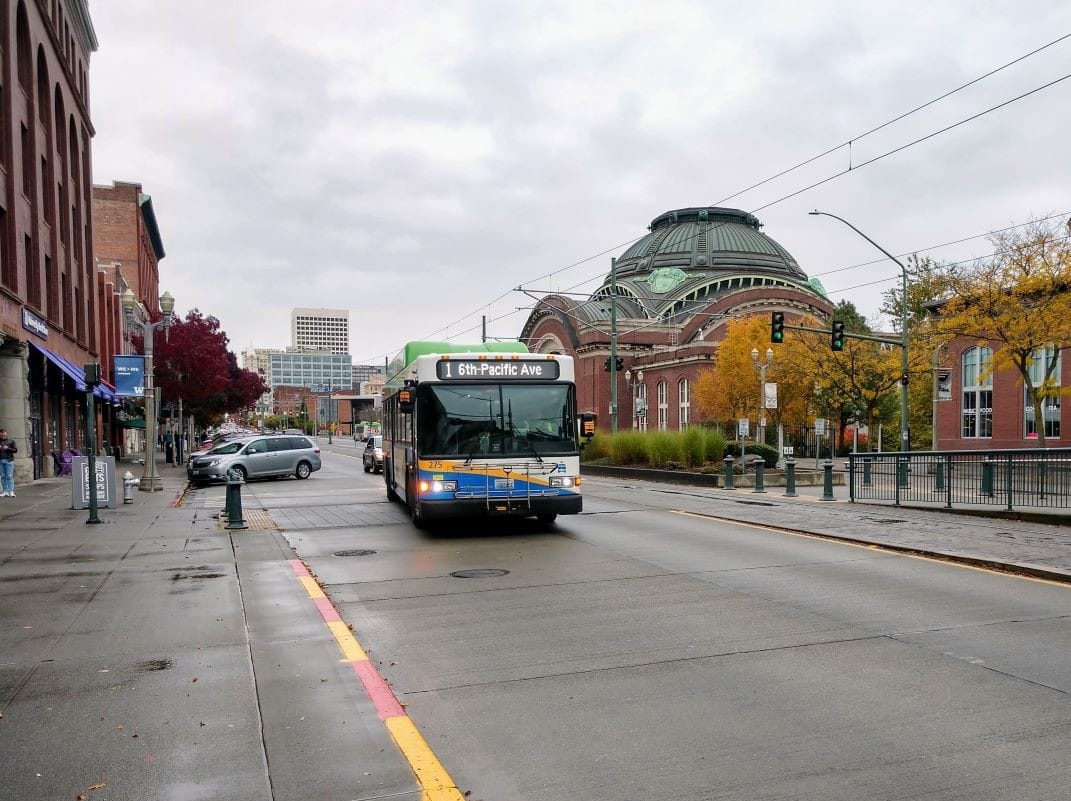
“I joke with our former chair that we essentially rezoned the entire city in that update and made it so that it was easier to do more dense development in our residential areas,” Krehbiel said. “There are still areas that are low density, but along, especially, our public transit areas, we have a lot higher density in those areas to encourage more folks to live along bus routes, train routes, to reduce their dependency on [private] vehicles.”