Work on the issue of affordable housing continues in Bellevue, as the City Council voted Monday evening to advance staff work on rezones for certain properties held by religious organizations. Additionally, the city authorized an agreement that will potentially help the city secure millions of dollars from lawsuits against opioid manufacturers, a small share of larger payout set to come to cities around the state.
Work Continues to Help Organizations Build More Affordable Housing on Religious Property
Implementation of Bellevue’s meager Affordable Housing Strategy has continued to chug along, but not all suggestions within the plan are created equal. Work around Strategy C-1 — increasing density on properties owned by faith-based organizations — is entering a new, meatier phase of implementation that could help increase Bellevue’s housing stock. At the time of the plan’s adoption, staff estimated that this action alone could facilitate as many as 1,000 new affordable units throughout the city.
Because land acquisition in suitable residential areas is often a difficulty for non-profits and other affordable housing builders, land owned by religious organizations presents an enticing option for partnerships. Through this approach, non-profits can find significant residential land, religious organizations can fulfill their philanthropic mission of helping their neighbors, and the community is treated to a significant increase of affordable housing. The State legislature recognized the benefit these partnerships can bring when they passed HB 1377 during the 2019 legislative session. The bill required cities planning under the Growth Management Act to offer density bonuses to affordable housing developers using land from religious organizations. Bellevue completed its work to comply with the law last year, when Council adopted a Land Use Code Amendment (LUCA) to provide a 50% density bonus for permanently-affordable housing on faith-owned properties.
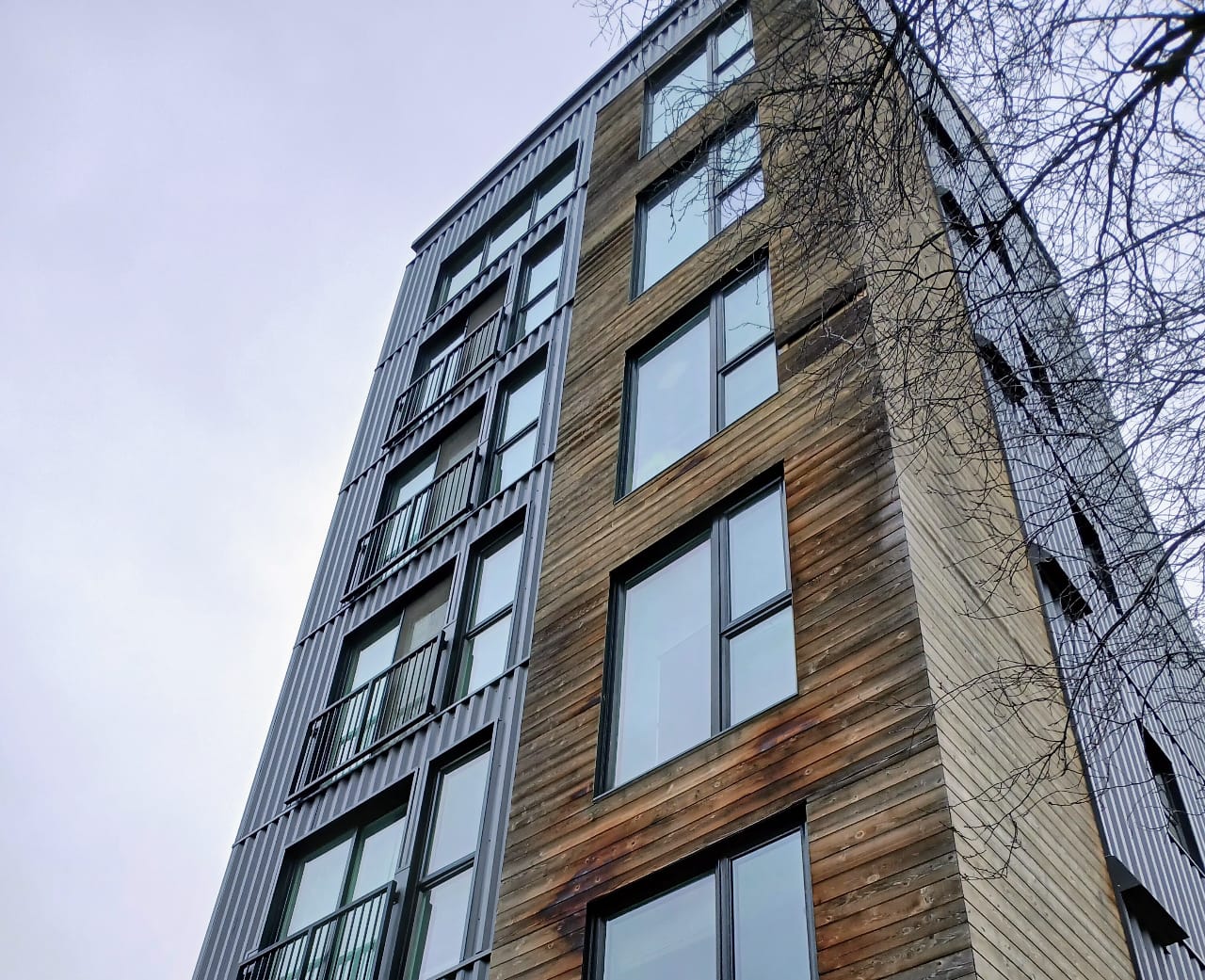
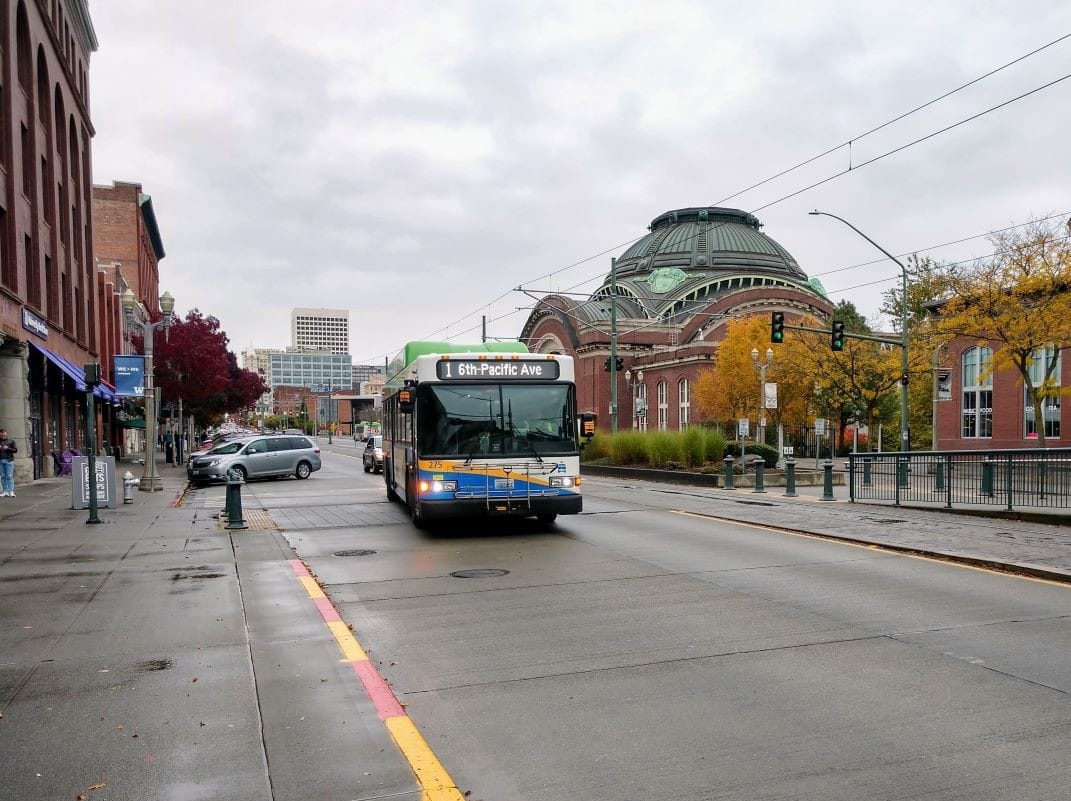
However, the density bonus doesn’t really get at the crux of the city’s affordable housing strategy (nor is a 50% density bonus significantly helpful when a parcel of religious land is zoned for single-family). The initiation of Phase Two work, which would rezone certain religious properties to be multifamily, significantly increasing their density bonus, is the portion of the endeavor that will actually meaningfully add affordable housing in Bellevue. However, single-family religious properties that would be eligible for a rezone would still be subject to several exclusionary criteria. Only properties that are on an arterial, within a half-mile of frequent transit, and within 300 feet of a jurisdiction where multifamily or commercial uses are already permitted would be considered at this time.
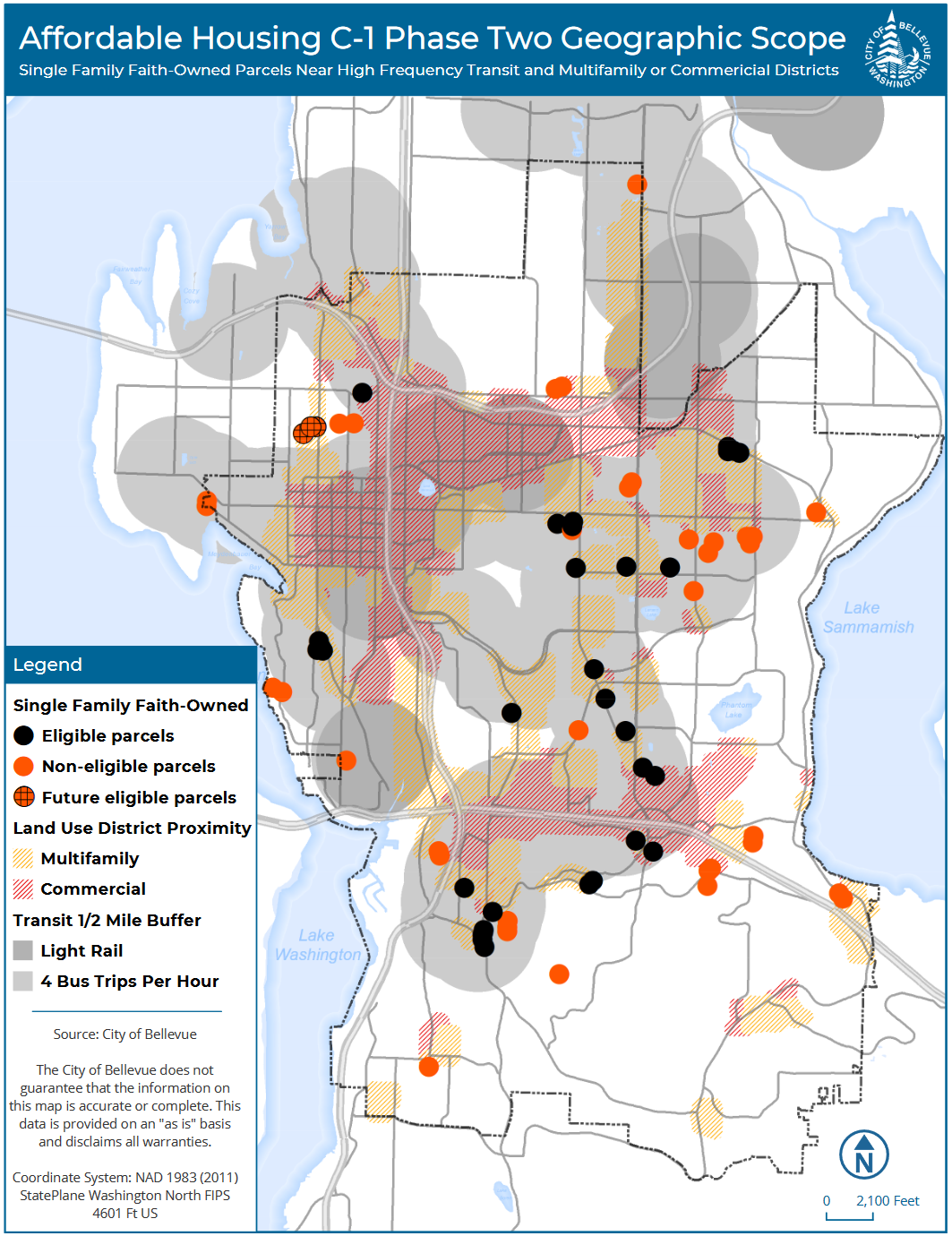
Responding to a question from Councilmember Zahn on why a 300 foot proximity requirement to existing multifamily or commercial uses was included as a criterion, staff justified it as “the distance where [one] can visually see other development nearby that feels like it’s the same density”. In other words, staff wanted to limit visual impacts of multifamily developments on single-family neighborhoods. Similar sentiments were echoed by Councilmember Lee, who expressed concern that the system would be “abused” by faith-based organizations who would buy new land and have it converted into multifamily so that they could build permanently affordable housing near otherwise single-family neighborhoods.