Near the end of 2015, Bellevue City Council endorsed Vision Zero with a goal of reaching zero traffic deaths and serious injuries by the year 2030. In September, Bellevue started working on a Vision Zero Action Plan. The ultimate goal is to produce a set of strategies, performance indicators, and an implementation matrix with timeframes, costs, and potential funding sources. In other words, the foundation for a set of projects to achieve zero deaths and serious injuries by 2030.
This work will be based on the following core pillars: community engagement, assessment of collision data, coordination with existing policies, and best practices assessment.
Community engagement
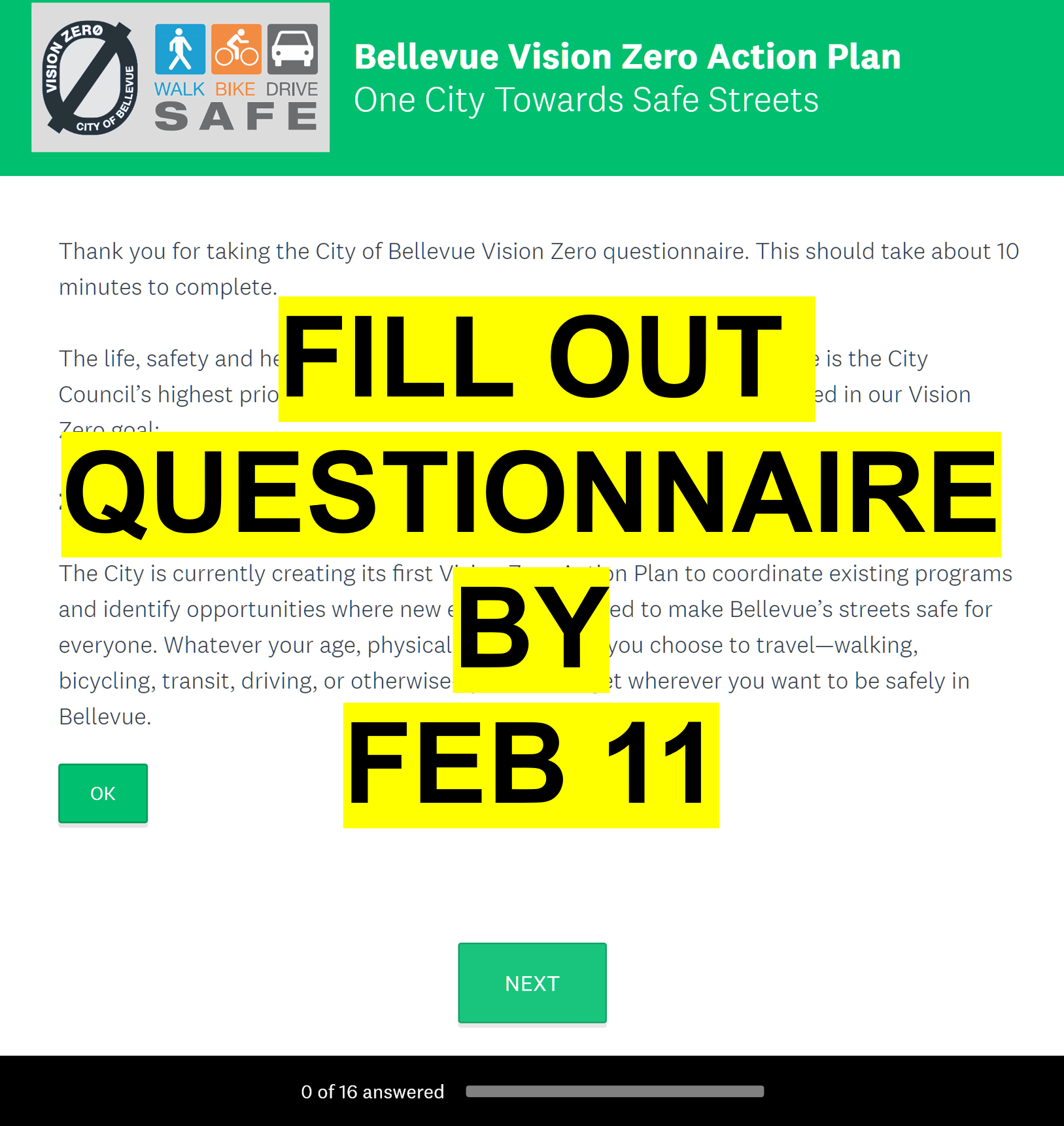
- For community stakeholders, Bellevue will hold a public workshop on past Vision Zero successes and solicit input on proposed strategies. The city also has an online questionnaire open for comment through February 11th.
- The transportation commission will carry out regular briefings to ensure continuity through the plan development process.
- The city council will gauge receptivity of the goals prior to finalizing a report.
- Partner agencies will hold two strategy sessions, which include the Washington State Department of Transportation (WSDOT) and Washington Traffic Safety Commission.
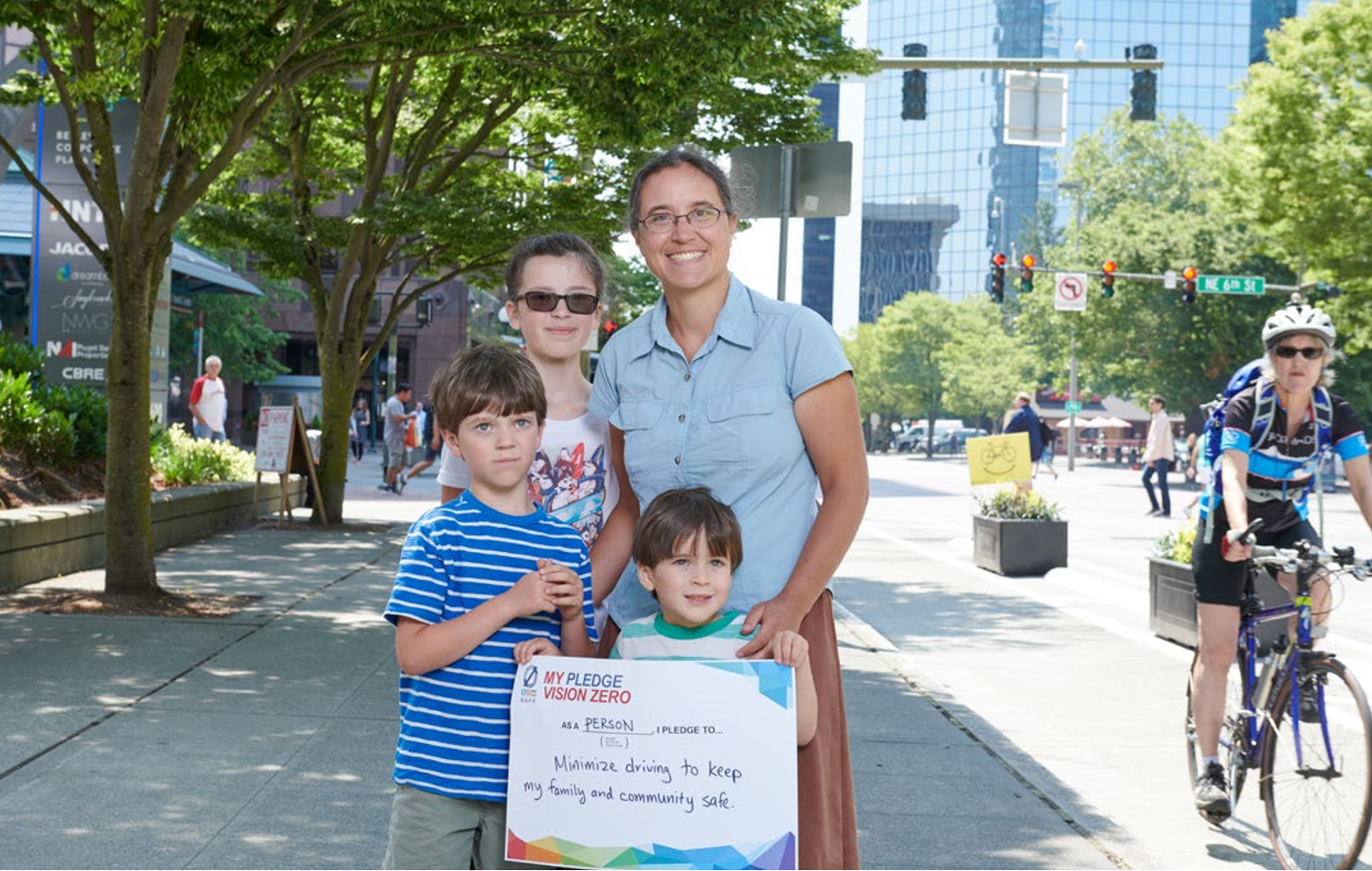
- Bellevue will build upon prior efforts, including an online wikimap of the public’s road safety concerns and personal pledges for safety (like the one below).
Assessment of collision data
- Bellevue plans to leverage collision data from the 2006-2017 timeframe, visualized in map and chart form, to determine roadway characteristics and behavioral factors that contributed to deaths or serious injuries.
- A publicly accessible Crash Map Portal is already available (as seen below).
- Based on collision data, Bellevue will suggest a proactive, systems-based approach to safety, rather than reacting when something undesirable happens.
Coordination with existing policies
- Bellevue will coordinate with road safety strategies in engineering, education, encouragement, evaluation, equity, and enforcement; and
- Leverage police department data reflecting trends in citations issued, photo enforcement (especially before/after enforcement impacts).
Best practices assessment
- Bellevue will inventory visions, goals, principles, strategies of adopted action plans from other communities.
- The city is particularly interested in “street designs that emphasize safety, predictability, and the potential for human error, coupled with targeted education and data-driven enforcement efforts,” according to the Action Plan Scope of Work.
The final report is due out this summer.