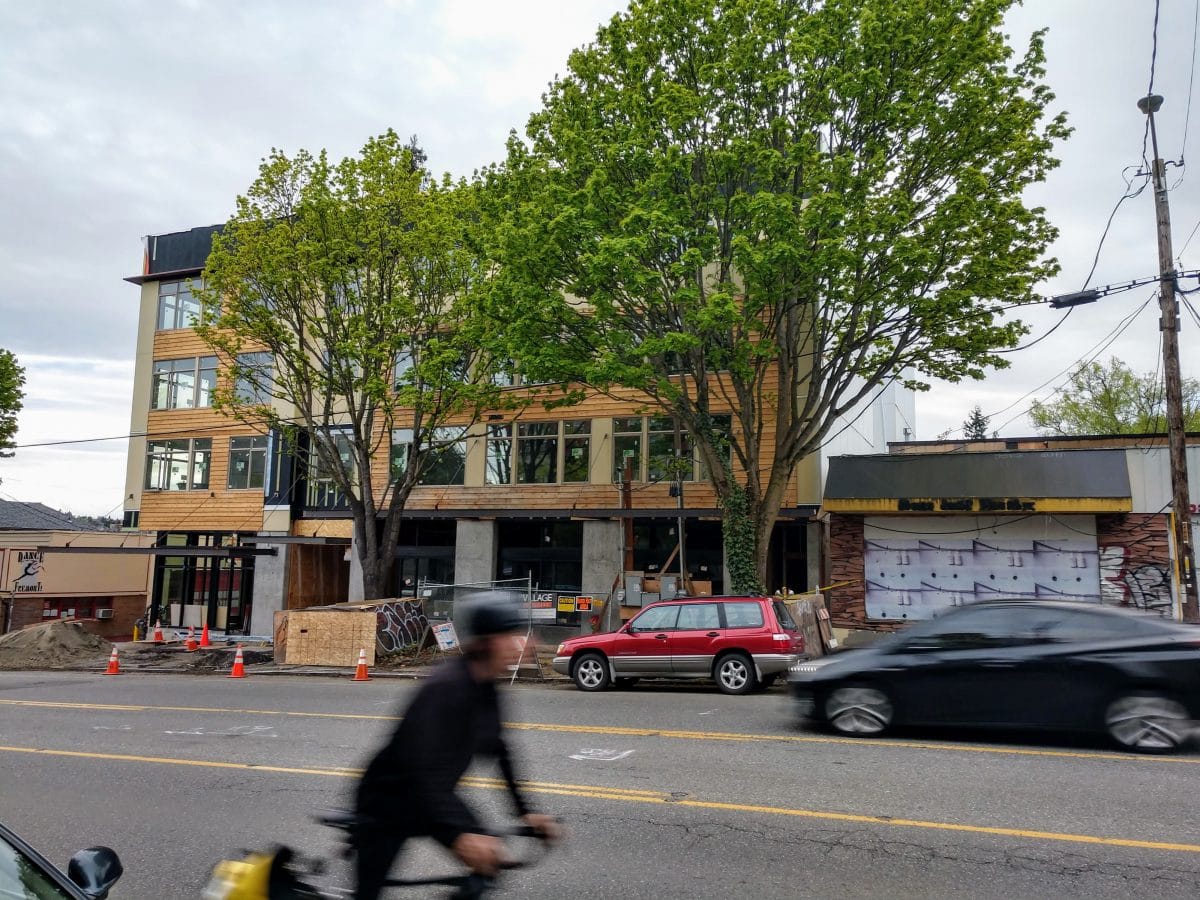
The last year in Seattle has been pathetic for safe streets, equitable mobility, and climate action. Mayor Durkan has been killing safe streets projects left and right—including 35th Avenue NE, with an associated bike lane. The bike lane was going to provide direct and safe access to schools, a neighborhood library, businesses, and homes. However, instead of prioritizing safe streets, the mayor decided climate arson, deadly 12-foot wide lanes motorists are using as speedways, and free car storage were more important. The Mayor and the Seattle Department of Transportation (SDOT) need to fix this. Protected bike lanes belong on arterials — yes, in Seattle — and probably in your city, too.
Seattle has grown rapidly — it grew by only 8.5% from 1994 (the year the urban village strategy was adopted), to 2005 (the year I moved to Seattle). Since 2005, the city has grown by over 30%. In less than 14 years, Seattle grew by nearly a third. At the same time, as Gene Balk noted in his piece, ‘Some Seattle Neighborhoods are untouched by rapid population growth. Why?’ — this tremendous growth has not been balanced. A fraction of the city has seen nearly all of the growth, the direct result of a misguided urban village strategy (that never had to be reviewed with the Race and Social Justice Initiative) that was largely co-opted by a small number of homeowners to keep apartments and affordable housing away.
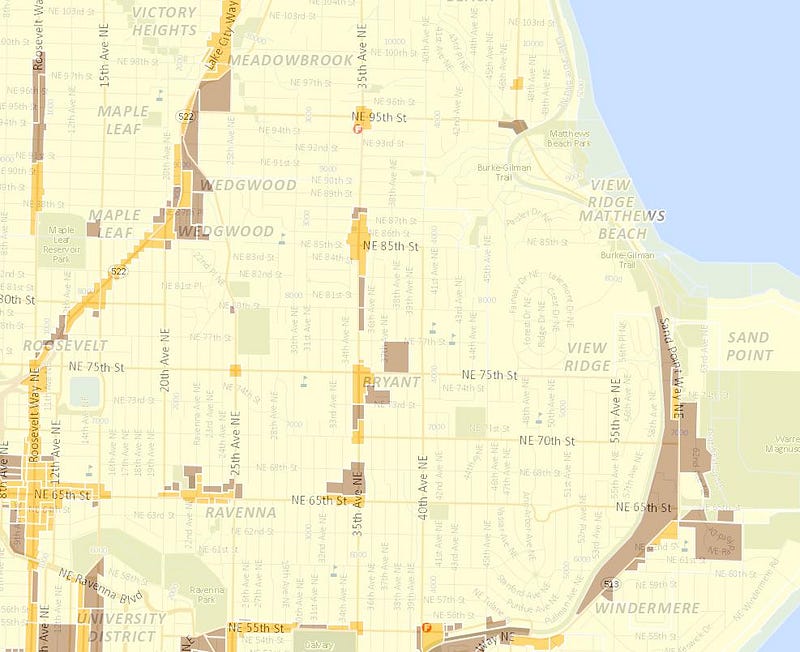
At the same time, we have a zoning map today that has not evolved much from the ‘snapshot’ zoning map of 1923. Multifamily land in much of the city is limited to arterials — and this is a huge problem for equity, climate, and mobility. By limiting new development to arterials, we focus housing and businesses and mobility on the most congested, polluted, unsafe, and noisiest streets. This is antithetical to any notion of livability. Luckily, there are solutions, being adopted the world over, that work to reduce the pollution, noise, and danger of these arterials. Protecte bike lanes? They’re a major part of this solution.
Climate Change
We have less than 11 years to avoid the most catastrophic effects of climate change. People are fleeing Florida. In the time span of two months, Seattle had one of the mildest winters, followed by one of the coldest and snowiest spells in recent memory, followed by a record-setting heat wave — Seattle was 25 degrees above normal in the middle of March.
Our city’s climate goals are not being met — and the reason they aren’t being met is because of cars. Unfortunately, Mayor Durkan’s Climate Action Plan does virtually nothing to move the dial on this issue. And the city council’s actions to eliminate parking requirements in urban villages isn’t enough, though it is critical, to at least start to address this issue. The city must take a more active role to increase and incentivize green mobility — prioritizing transit, protected bike lanes, pedestrian zones, and deliveries by modes other than motorized vehicles.
Noise Pollution
Reducing the speed and volume of car and truck traveling on arterials will result in quieter streets for everyone. Cities in Europe track noise in urban environments — you can check out Amsterdam’s map here. London’s noise map is here. Seattle? Doesn’t track this information. Prioritizing green mobility and green logistics will reduce the amount of cars and trucks needed to move through a limited roadway without reducing throughput. Moreover, protected bike lanes that use planters for separation provide the added benefit of sound absorption–not to mention making streets more appealing places to be.