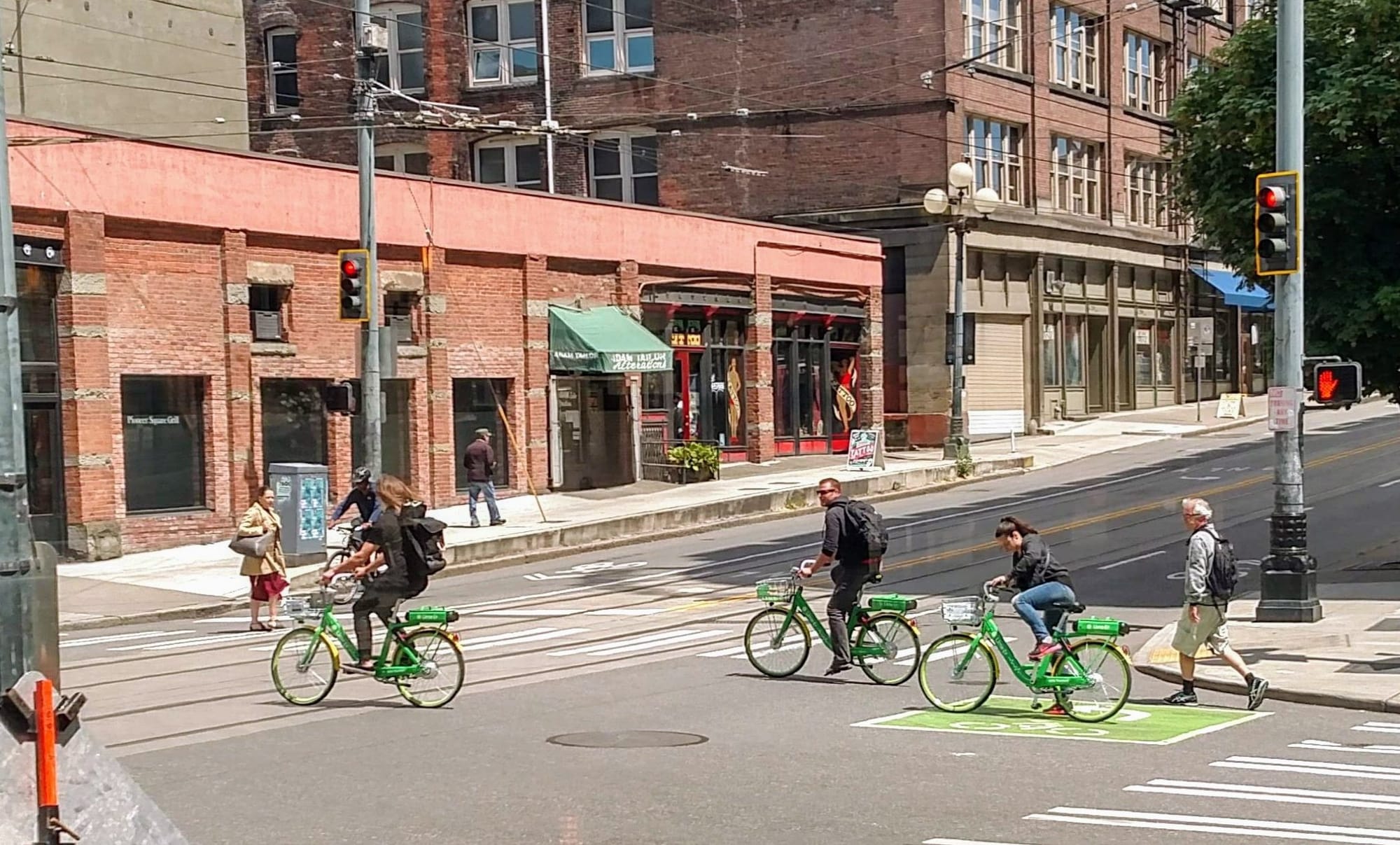
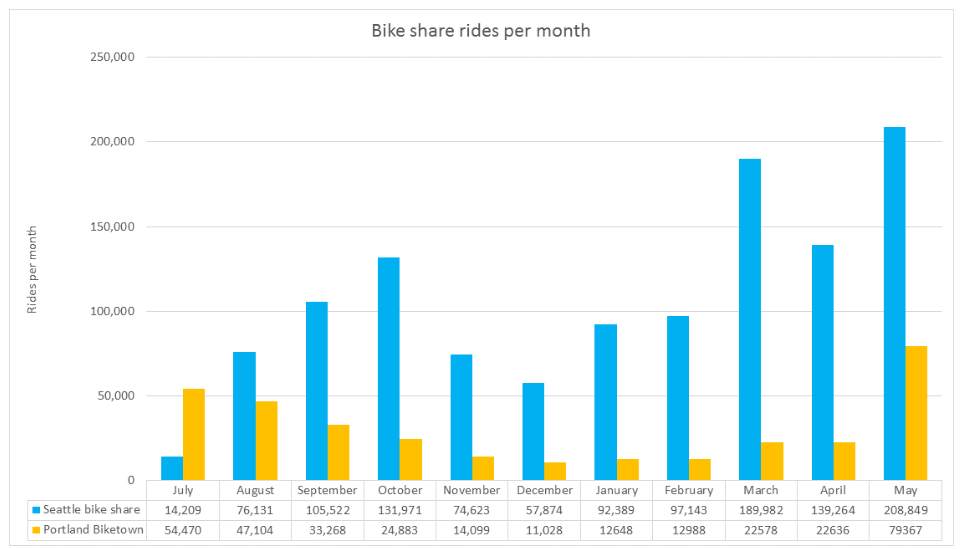
The Urbanist has been inquiring about 2018 bikeshare ridership figures for months. As the deadline approaches for a permanent bikeshare permit to be approved by city council, information on how often bikes were getting used recently was hard to come by. On Wednesday, Seattle Department of Transportation (SDOT) finally dropped a taste of those figures on its blog. Those numbers reveal stagnate ridership in winter months even as the number of permitted bikes topped out at 10,000. Numbers started to climb in March again but plummeted in a wet April before setting a new high in a sunnier May at 208,849 rides. Despite the winter dip, it’s clear bikeshare ridership is on the rise.
Later this month, the Seattle City Council will decide the fate of the dockless bikeshare pilot program that replaced the defunct dock-based City-operated Pronto Cycle Share. SDOT is proposing to double the number of permitted bikeshare bikes to 20,000 in the permanent program. The Urbanist had been making the case that 2018 ridership figures would help inform the council’s decision on how to continue the program. So, it was good to see them released, albeit in the eleventh hour, just ahead of a big presentation to council on July 17th and a potential full council vote on July 25th. The program could be set by the end of the month with permanent bikeshare operator permits in place by August 31st.
Rides Per Bike
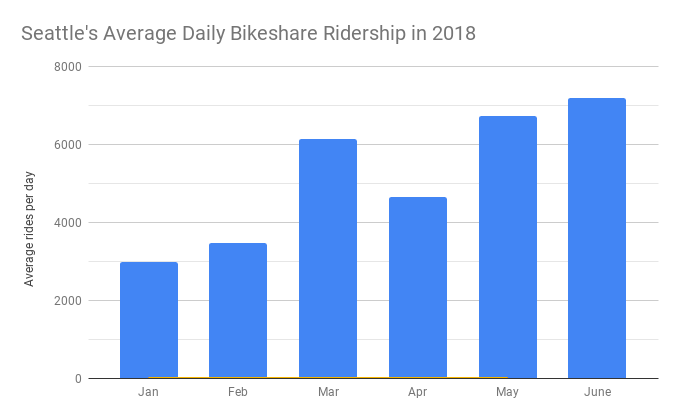
Displaying Seattle’s ridership figures next to Portland’s dock-based Biketown figures is a bit misleading. Portland has just 1,000 bikes in its system compared to the 10,000 bikes Seattle has permitted, and a limited service area compared to the entirety of Seattle’s city limits. SDOT has argued that rides-per-bike figures don’t matter for dockless bikeshare (since private companies are funding the bounty of bicycles) but do matter for dock-based systems. But if we look at the 2018 rides-per-bike figures, Biketown had the edge, particularly in the booming May when its 2,560 rides per day worked out to 2.56 rides per bike per day–buoyed by its ride free for bike month promotion. Seattle posted an impressive 6,737 bikeshare rides per day in May, but, spread out over our 10,000 bikes, the per-bike figure is 0.67. Last summer, that figure was 2.25 amid the hype of Seattle’s dockless rollout, free-ride promotions, and fewer bikes to go around. We already noticed a drop in per-bike figures at the “mid-pilot check-in” as more bikes hit the streets faster than ridership increased.
With three bikeshare operators in Seattle currently, it looks like that number will be allowed to expand to four with the permanent permitting program, and an initial cap of 20,000 bikes citywide. With Uber-owned JUMP looking to enter the market as soon as possible with their electric-assist bikes, that may be all the companies that Seattle has room for–at least until somebody drops out.
Jump is already in a handful of cities including San Francisco and DC. They use a locked dockless model. Better get adding bike racks, @seattledot 😋 #SEAbikes pic.twitter.com/RyickuQK8Y
— The Urbanist (@UrbanistOrg) June 20, 2018