Kettle is the most anti-housing candidate running for Seattle City Council; if he wins, he’d represent the city’s fastest-growing district: D7.
As Seattle City Council candidates take swings and try to rally in the closing week, urbanists of all brands can feel some relief knowing that the resident advocate of slow-growth and “neighborhood character,” Councilmember Alex Pedersen, will soon be out of office. At a time when Seattle has regained its title as the fastest growing American city, and needs 120,000 new housing units today just to meet current demand, we need visionary leadership on the City Council to challenge the status quo and build more (way more) housing. While the City Council finalists differ on exactly how to increase housing supply, the debate has been far more favorable for the pro-density crowd this election cycle.
Perhaps that is because recent polling has found overwhelming support for increased housing density, making it less acceptable to be anti-density. Despite the strong support amongst future constituents, there are bright red flags for one of the candidates, Bob Kettle, that are deeply concerning for the urbanist housing vision of a district that needs a major jump start to recover from the racist history of redlining.
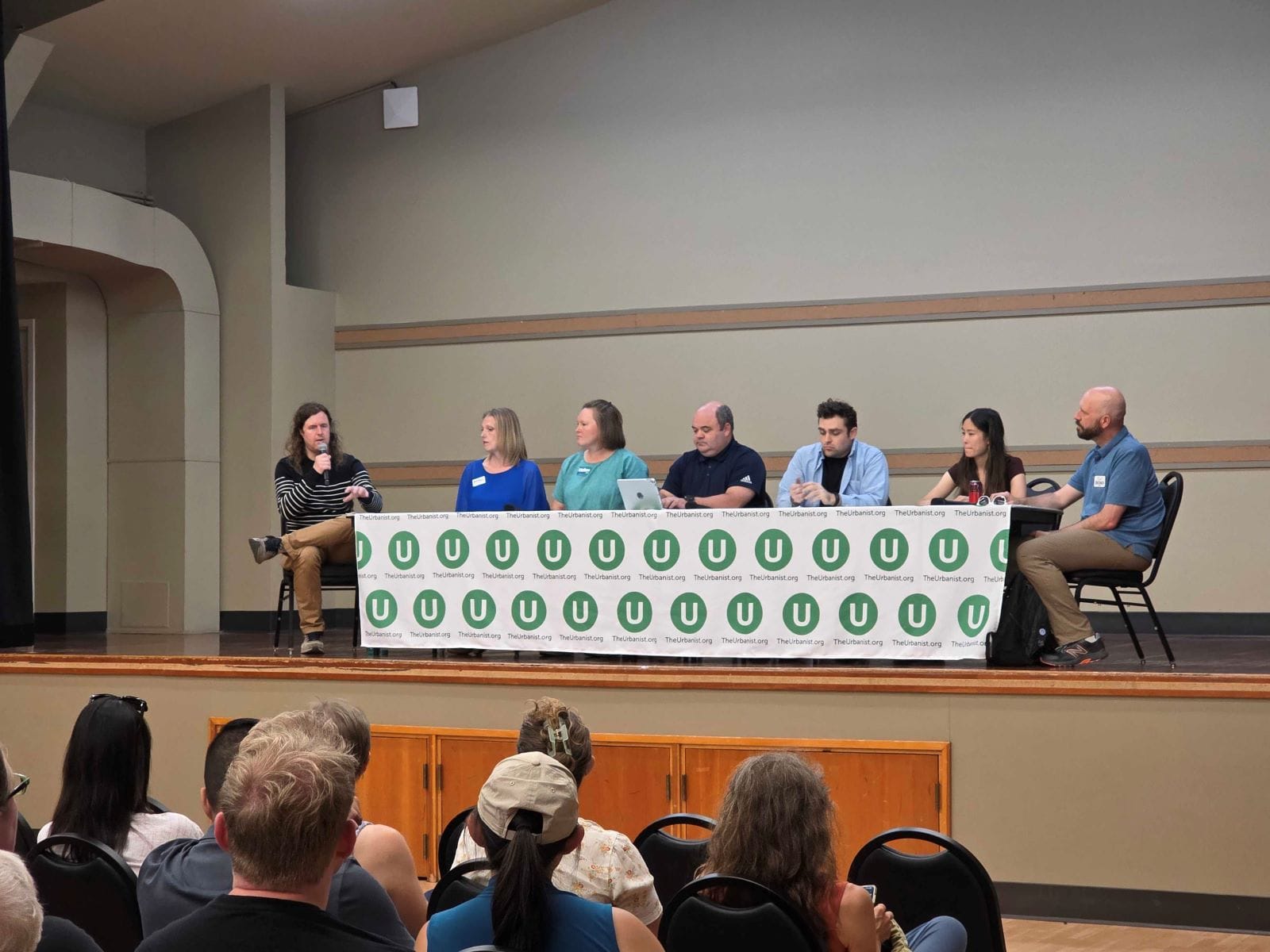
Kettle’s campaign has not focused on his past anti-housing advocacy. Instead, he has almost exclusively promoted a vision of a carceral and police-centric approach to homelessness and addiction, downplaying the issue of housing and land use and declining to even debate the issue. Kettle was the only candidate out of all 14 in the general election to decline an invitation to participate in a forum on the Comprehensive Plan hosted by The Urbanist, Real Change, and the Housing Development Consortium, among others.
Kettle was also one of only three candidates to decline to make themselves available for an interview with Real Change and answer questions directly from vendors, most of whom have experienced homelessness themselves. It is deeply troubling for someone to refuse to engage with key community members on the biggest crisis facing us and the process that will either set the stage for decades or set us back decades.
The rare occasions where Kettle has answered questions about land use have not been reassuring. In an interview with PubliCola’s Erica C. Barnett, Kettle engaged in revisionist history of the well-documented delay of the Queen Anne Community Council on nearly every significant density fight of the last 20 years.
“The Queen Anne Community Council and the Queen Anne community, we’ve always been for densification,” Kettle told Publicola, which is shocking to hear after years on said council — trying to advocate for densification has been an uphill battle for me.
A basic Google search reveals the litigation efforts of the Queen Anne Community Council to block the modest move to allow broader construction of accessory dwelling units, better known as backyard cottages. This action was actually part of the catalyst for me to join the council in hopes of diversifying opinions. The Queen Anne Community Council was the only named plaintiff in that lawsuit, and while they were unsuccessful, their efforts delayed implementation of a pro-housing policy for months.
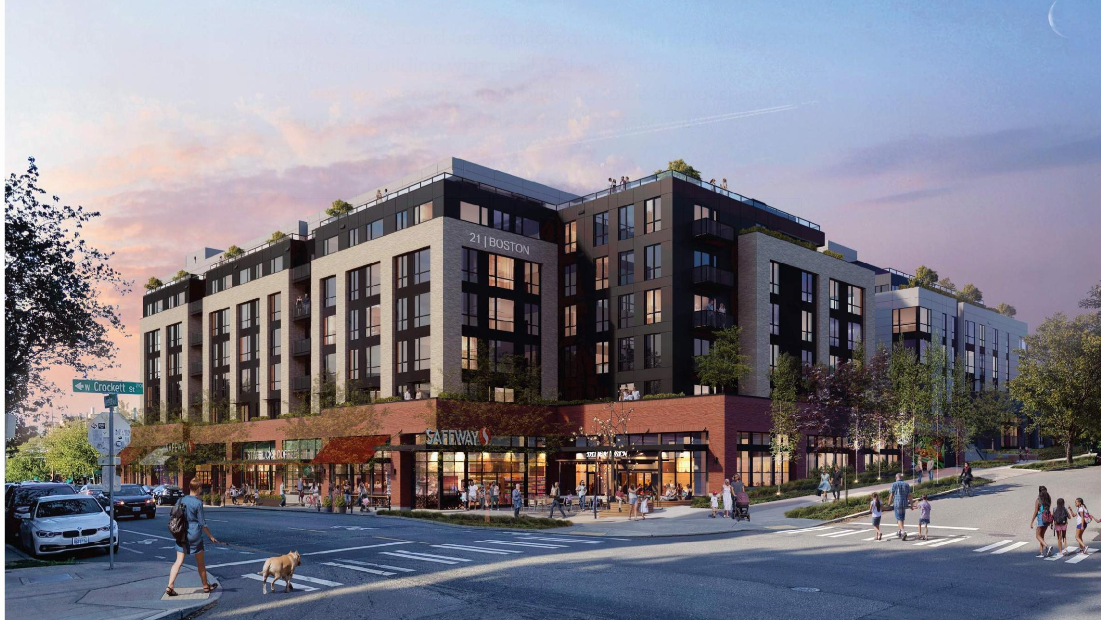
It also ignores the Queen Anne Community Council’s support for several years of delay of 323 new homes above the Queen Anne Safeway for reasons as trite as the color tone of bricks, the aesthetic benefits of a parking lot, and concerns that the height (read, additional housing) of the building would diminish the “neighborhood character.” In his interview with Erica C. Barnett, Kettle described the Safeway project as “a perfect example… of the community and a developer working together…”
In actuality, Kettle spoke in opposition to the project during a 2018 community meeting arguing the housing would pose a safety threat for children and arguing 75 feet is too high a height for a building in an urban village. A recent photo posted on social media shows Kettle at a community meeting, pictured with former Land Use Review Committee Chair and Kettle donor, Marty Kaplan, pushing back on the plans to build more housing in Queen Anne.
At a time like this we cannot afford to have anyone on the Council that won’t support the housing we desperately need, including Bob Kettle. Housing supply is badly constrained because of bad laws and racist zoning. The Comprehensive Plan next year gives us the opportunity to reshape our housing policy to allow more density, make room for social housing, relieve pressure from the few urban areas of the city where growth has traditionally been allowed, and to undo a century’s worth of exclusionary housing policies. These major changes only occur every decade or so, which is an excruciatingly long time to wait if we get it wrong.
And don’t for a second think one Not In My Backyard (NIMBY) activist can’t do significant damage on a Council with a pro-housing YIMBY majority. Councilmember Alex Pedersen has single-handedly used his control of the transportation committee to raid transit funding for his pet projects, pressure the Seattle Department of Transportation to pull the plug on planned bike lanes, and doggedly rail against the Center City Connector. When a chair controls what is, and isn’t, on an agenda it makes a big difference. If elected, freshman Kettle could chair the land use committee. A frightening thought.
At the end of the day, the stakes for the next Comprehensive Plan are huge. It will determine if you get to live here, if we will meaningfully do our part to fight climate change, and if you can walk or bike to a basic local amenity, like a grocery store. Do we really want someone in charge of that process who thinks more housing makes a neighborhood unsafe for children? Or, that going up to 75 feet in an urban village is too high? We need leaders who think that is not enough!
Bob Kettle has a concerning track record on housing and land use, especially for someone seeking to represent the fastest growing district in Seattle. At this time, and in this place, someone holding those values puts an equitable and sustainable future for our city at risk. We can’t let that happen. We need people aligned with our values that will take action to build communities that support us all, not someone touting revisionist history and fear mongering. Vote!
Jazmine Smith is a member of The Urbanist Elections Committee, which endorsed Andrew Lewis in D7, and she is a D7 resident.