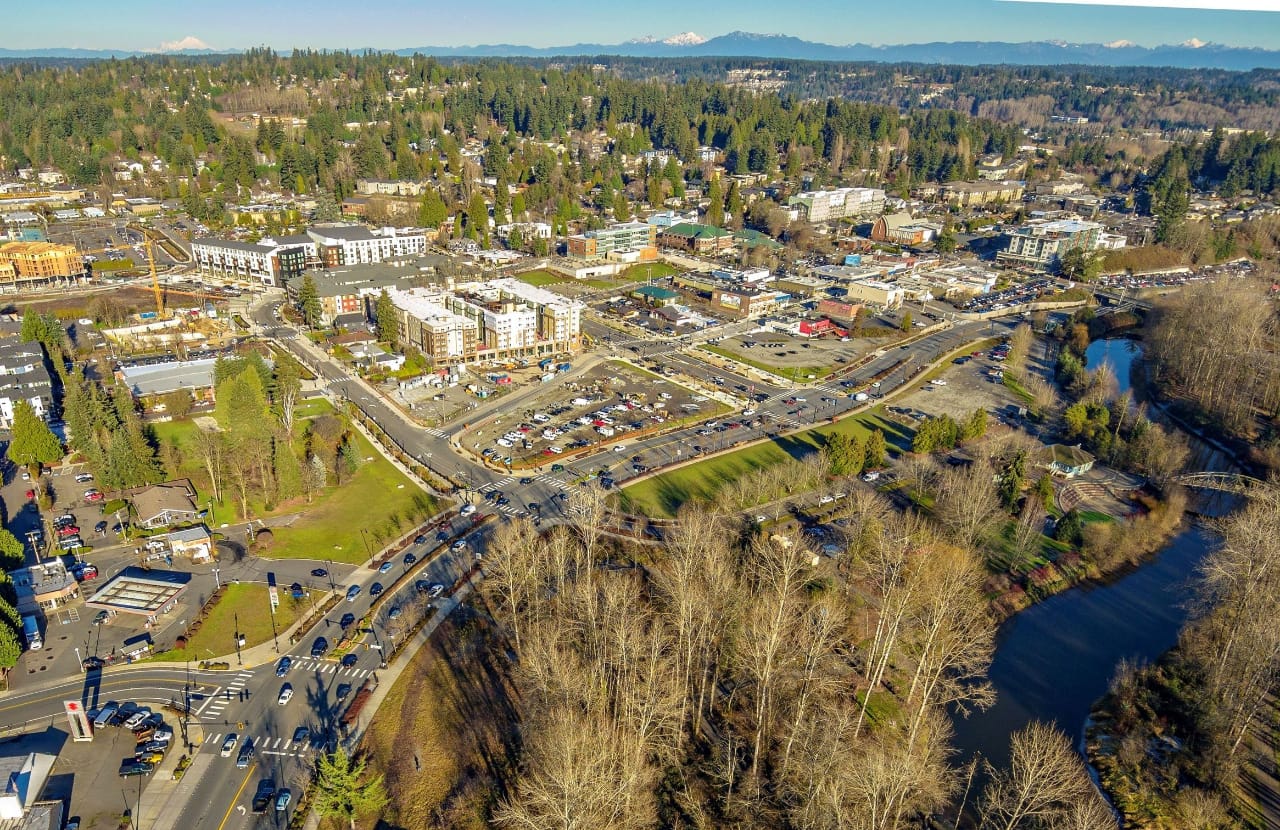
Bothell is poised to become the latest Puget Sound city to set a speed limit of 20 miles per hour on non-arterial streets, a move intended to increase safety and reduce the severity of collisions. Last week, the Bothell City Council provided clear direction to the city’s Public Works Department that they’d like to see the reduction from Washington’s default 25 mph limit implemented everywhere, and declined to sign onto an initial proposal to pilot the change on certain residential streets for a few months.
The move comes just after Bothell voters approved a nine-year Safe Streets and Sidewalks Levy, providing needed funding for new sidewalks, crosswalks, bike paths and bike lanes, and traffic safety improvements along with basic street maintenance. City leaders kept the renewal of a 2016 measure of the same name at the same rate. The ballot measure passed easily and is on track to win nearly 70% of votes this November.
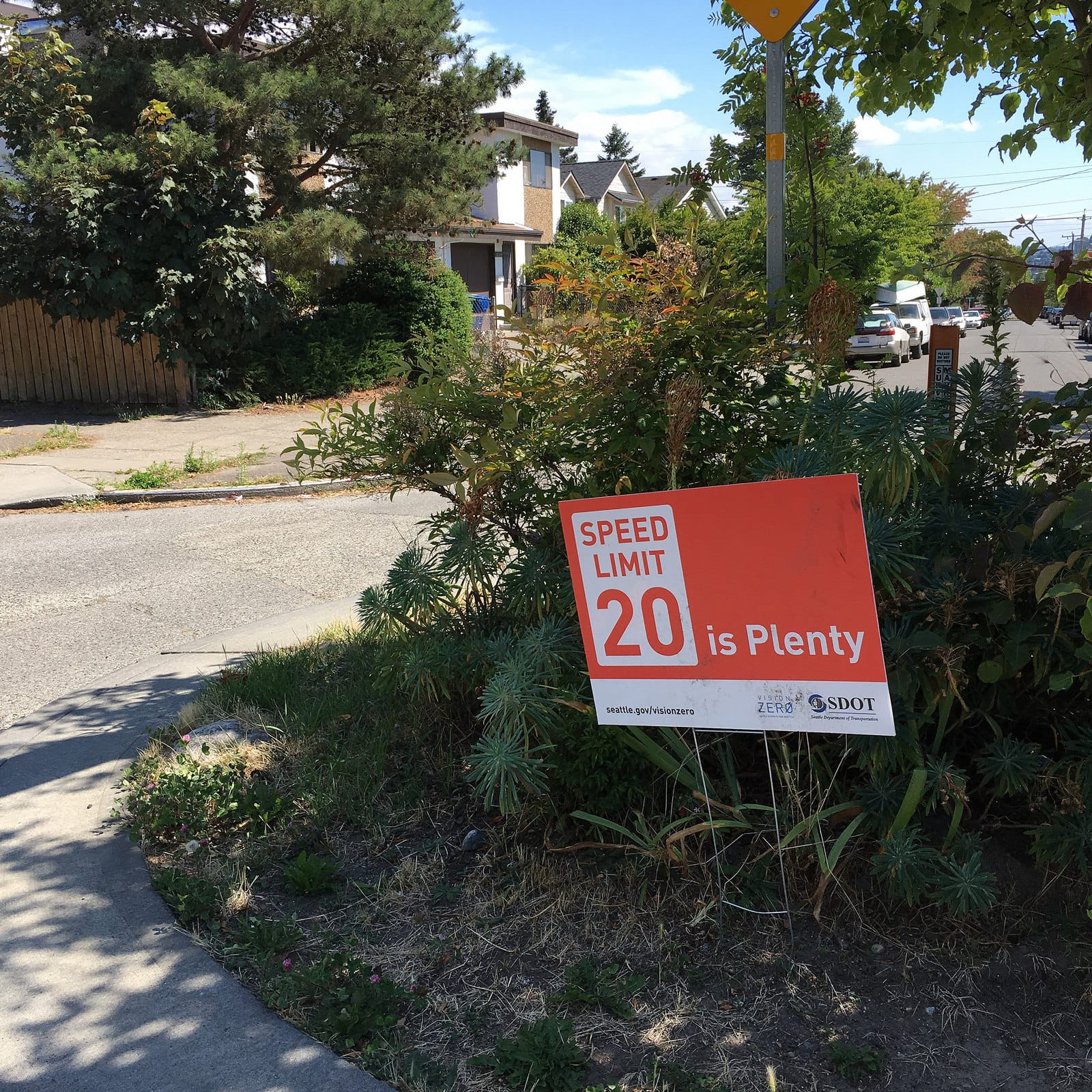
In safety-conscious cities across the U.S., 20 mph residential speed limits are becoming the standard, including Seattle, Portland, Tacoma, and Denver.
Seattle has had a default 20 mph speed limit in place since 2016, which was implemented at the same time as the default speed limit on arterial streets was lowered to 25 mph. Road safety advocates, including the Insurance Institute for Highway Safety, have touted Seattle as a success story, citing reduced crash severity, particularly downtown. However, the speed limit reduction’s impact on residential areas has been less clear.
Portland’s implementation of the same policy, in 2018, produced more conclusive data on the positive impact of the small change. While average speeds on residential streets remained virtually unchanged, the city saw a statistically significant drop in the prevalence of higher-end speeding, with a 49% drop in residents observing a driver exceeding 35 mph in a residential zone.
“Before and after data show that lower percentages of people drove above 25, 30, and 35 mph on streets subject to the speed limit reduction,” the Portland Bureau of Transportation wrote in its assessment of the independent review of the change, conducted by researchers at Portland State University.
“It is most noteworthy that the reduction in the percentage of vehicles faster than 30 mi/hr and 35 mi/hr are larger in magnitude than the other changes,” the PSU study authors Jason C. Anderson, Chris Monsere, and Sirisha Kothuri noted. “These changes are more meaningful for the Vision Zero speed reduction efforts than the change in average speed, given the link to crash severity for vulnerable road users.”
In declining to support a limited pilot, which has been the approach to reductions like these in other cities, Bothell Councilmembers framed the change as a no-brainer. That’s in spite of concerns raised in a Public Works staff report that warned of a “false sense of security” that could come from streets where design speeds — how fast drivers are typically comfortable going based on the design of the road — are significantly higher than posted speeds.
“The only real concern that I particularly have is if we miss a street that has a lot of [high-end speeds], and we don’t know about it, and we try to put this on there, and it doesn’t do anything. […] A guest comes to your house and they drive on the road: they see 20 miles per hour and they say, ‘my kids can play,’ and do all kinds of things. And that’s just not true,” Steve Morikawa, Bothell’s Deputy Public Works Director, said. “Those are the ones we’re mostly worried about. I think we’ve got the bulk of them. I think it’s those outliers that we really want to test and make sure we’re doing OK.”
“Listening to the presentation, I’m just struck by how doing a phased approach is just — we know what the outcome is going to be, and it’s going to be deployment of 20 mile an hour speed limit signs on every local road eventually,” Councilmember Carston Curd said. “If this is something truly that the research shows is going to reduce unsafe speeds, which it does, I think we need to get all in and just do it, rather than piloting and then hearing complaints and then slow rolling around the rest of the city when we know that ultimately it has to be done.”
“I think not enough people know about the difference between 20 and 30 miles per hour, because I didn’t know that until I did the police department’s Community Academy, and that sort of completely changed the mind frame that I had around the speed I was going as a driver,” Councilmember Amanda Dodd said.
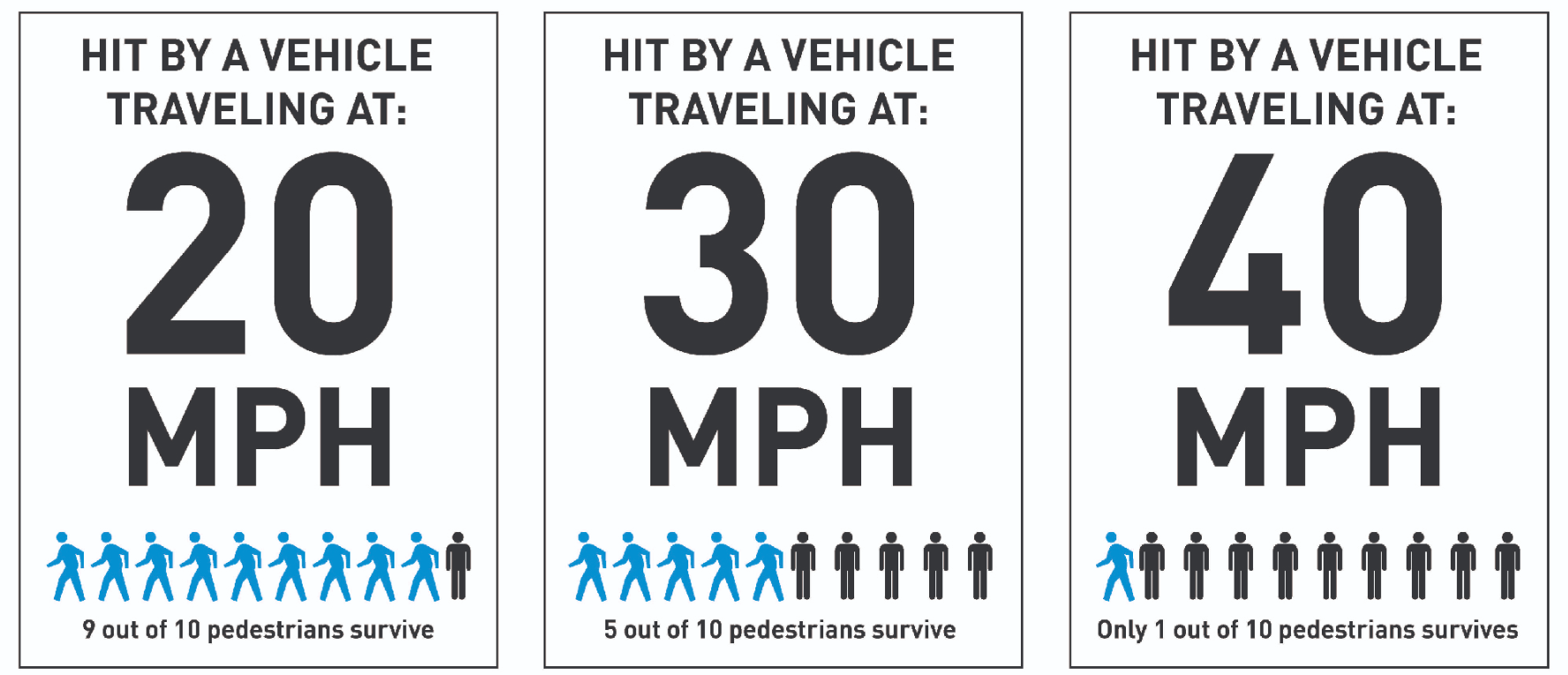
That 10 mile per hour difference has a big impact of a driver’s field of vision, and on the chances of a pedestrian hit by a driver surviving the incident — only around 10% of crashes at 20 mph result in a death, compared to around half of crashes at 30 mph.
In the Council’s eyes, the risk created by not broadly lowering speed limits is larger than the risk created by the possibility of a false sense of security on some streets.
“I would be siding with my colleagues who would like to see [this change made] citywide,” Councilmember Jenne Alderks said. “I think that that’s the approach that that saves the most lives soonest, because if we reduce speed limits in some on some streets, and what I’m hearing is just a couple, which I don’t know even think that would be a big enough pilot, then that means we’re neglecting all of the other streets. And if there was a traffic death or a serious injury on one of those other streets during the pilot program, I would say we missed the opportunity to prevent that injury from occurring.”
But Alderks pushed city staff to consider a broad change in speed limits in the context of other traffic safety improvements, and called this change alone not a “true Vision Zero plan.” And while Morikawa pointed to the city’s new Transportation Safety Plan, adopted this summer, Alderks clearly wanted to see more direct changes put on the table while they considered a speed limit reduction.
“I thought that we would be receiving a plan that would be about, what are all of the multi-pronged approaches, all of the strategies that we can employ and choose from when working to achieve zero traffic deaths, one of them being 20 miles an hour,” Alderks said. “This feels taken out of context. And like, sure, we could reduce speed limits in residential areas to 20 miles an hour, and say we did one thing, and then go back but, I would like to see how it all fits together, and how it all works together. So I’m just surprised that this is the approach that we’re taking.”
In shying away from the incremental approach, Bothell’s city leaders appear ready to go even bolder to tackle traffic safety issues, and the main question is the pace at which the city’s administration is able to keep up.