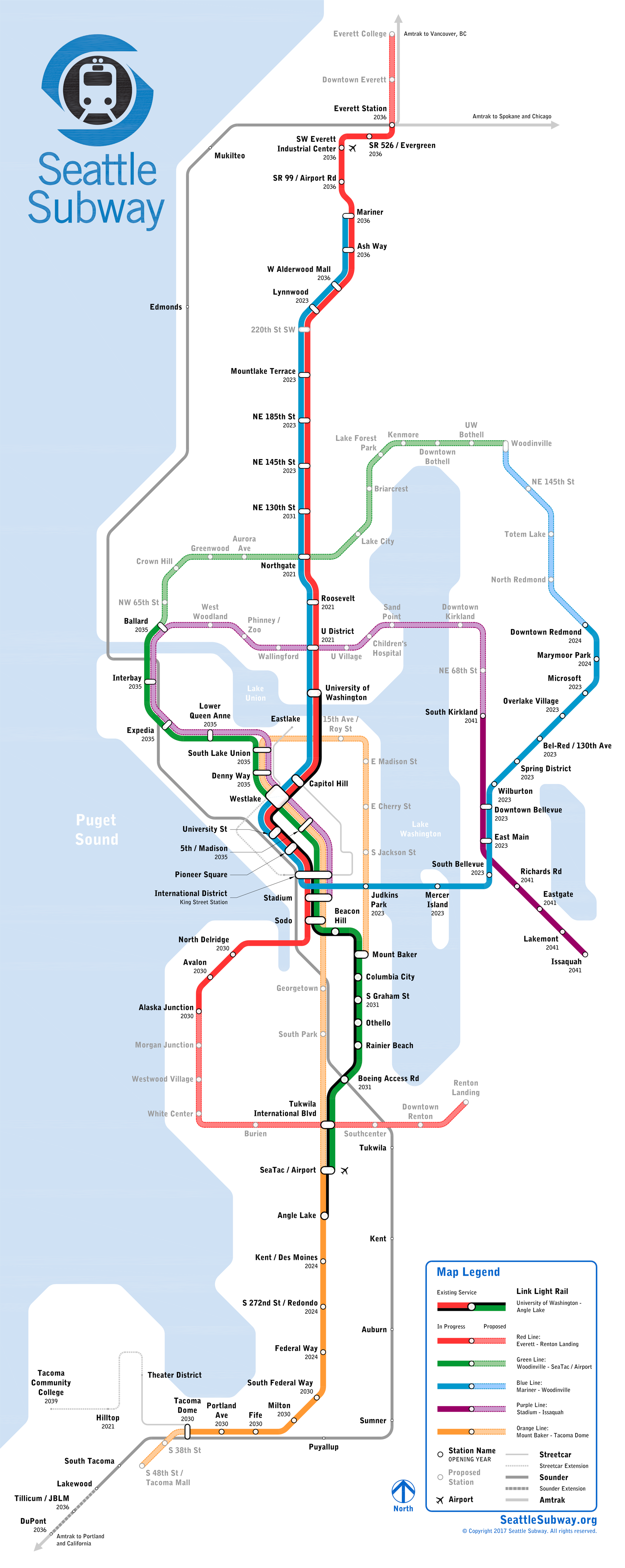
Seattle Subway’s Vision Map generated a great deal of attention and that’s great for growing the transit-advocacy movement as we seek to build our success in passing ST3. That said, some neighborhoods were conspicuously missing from the vision, such as First Hill and Belltown. Generally, the principle in building high capacity transit should be start with your highest transit-use neighborhoods and then work your way out. Almost invariably the highest transit use neighborhoods are dense in housing, jobs, and/or entertainment. First Hill and Belltown are definitely in that category–the densest census tract in Washington state is in Belltown–we should definitely be including them in our rail plans. One way to do that would be upgrading the RapidRide E to elevated rail and then extending it to First Hill and potentially on to the Central District or Capitol Hill.
High Ridership
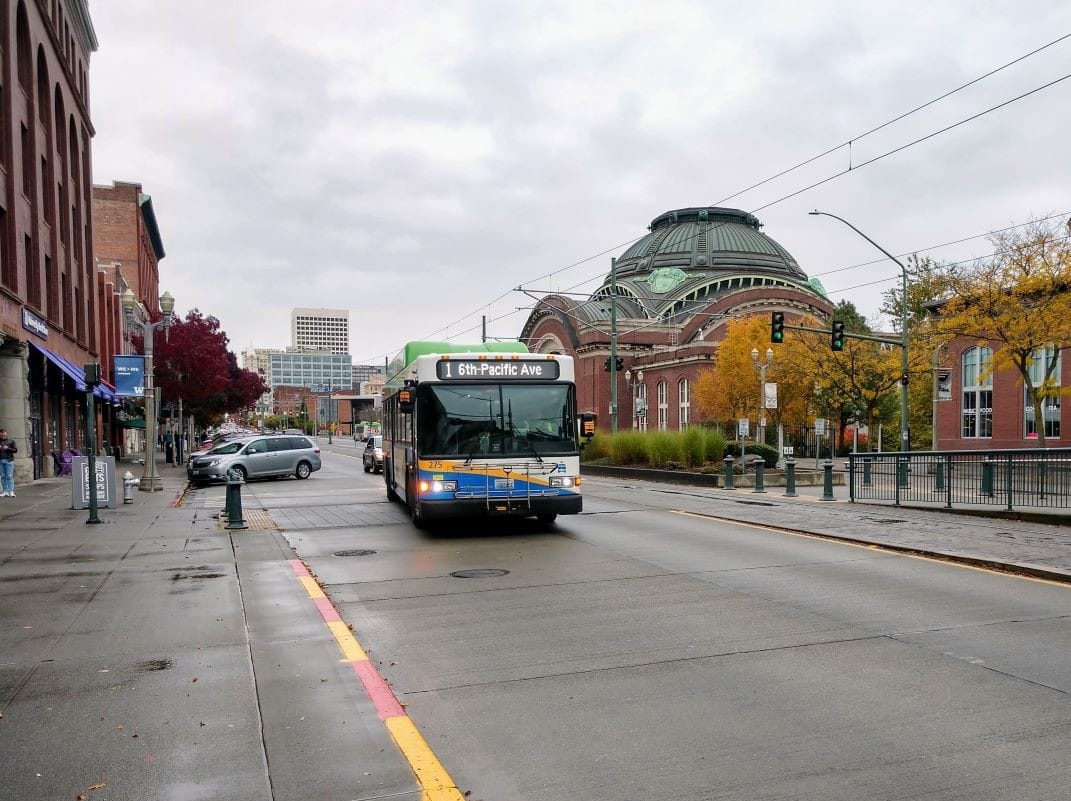
Jane Jacobs advised transit planners to look to their network’s busiest bus routes when deciding where to build rail. The RapidRide E fits the bill as Metro Transit highest ridership bus route, hitting 17,000 rides in 2016. (Highest ridership even without a N 38th St stop to serve Lower Fremont, the busiest neighborhood it crosses before reaching downtown.) The Aurora Avenue corridor carried 29,500 rides when Routes 5, 26, and 28 are included since they use it to and from downtown. For perspective, South Kirkland to Issaquah light rail is projected to get daily ridership of 12,000 to 15,000 in 2041, not even surpassing today’s RapidRide E.
Obstacles
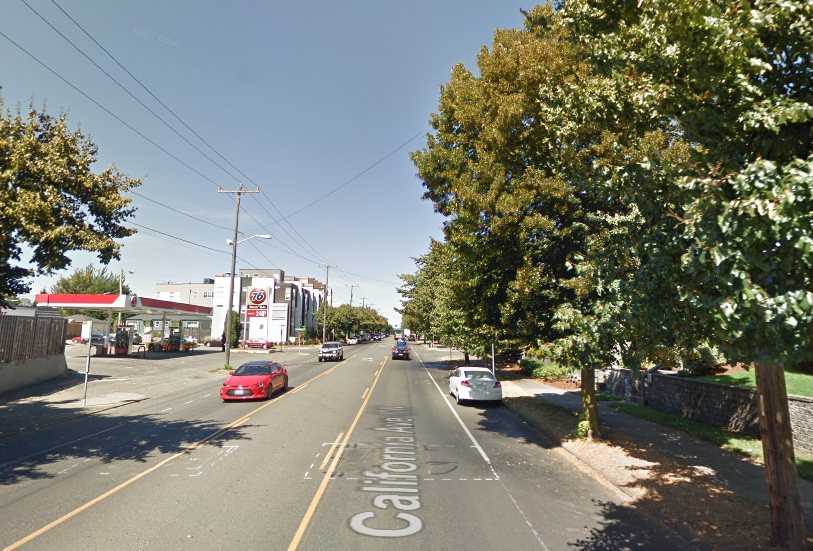
Seattle Subway sites engineering challenges when explaining why Aurora Avenue wasn’t included in their plans. However, building elevated would seem to minimize many of those issues, such as tunneling under the Fremont Cut and avoiding the Bertha tunnel (by going over it rather than deep under it.) Building elevated rail rather than a subway on Aurora Avenue makes the problem more clearly political; we may have to take a lane away from general traffic to build the support structure for elevated rail and the associated stations. Sounds far-fetched. But what if Sound Transit did WSDOT a favor and purchased SR-99, or at least the center lanes, reducing their maintenance load? Controlling SR-99 right-of-way, Sound Transit would have the power to realize an elevated light rail plan. The pinch point would likely be the George Washington Bridge, which is aging and not necessarily light rail ready but perhaps could be reinforced and retrofitted. If not, perhaps we have to assess whether we’re approaching the time to plan a replacement for the bridge, which was dedicated in 1932.
The obstacle E rail still faces if it ventures toward First Hill is that old Seattle nemesis–a steep grade–and its newer nemesis: crossing I-5, but those challenges may not be so insurmountable. Compared to engineering deep tunnels and stations, smoothing out the grading of the elevated track toward Capitol Hill and First Hill doesn’t sound so bad. That routing would require gaining about 250 feet in half a mile. Making a 8% or 9% grade out of that is conceivable.
Bolder, please. pic.twitter.com/Y9dkeqk8og
— Qagggy! (@Qagggy) July 18, 2017