Last month, Urbanist reporter Ryan Packer wrote about how the massive SR 99 tunnel project in Seattle is bleeding money due to traffic being far below projections. Tolling was supposed to be a moneymaker to help cover bonds, but instead it’s not even covering operating costs, which suggests a bailout is needed. That $4 billion blunder invites a lot of what ifs.
For me, a big one is: what kind of people-centered mobility improvements could we make if we weren’t suffering from a bad case of car brain? What kind of investments would actually accrue real benefits for our city rather than continue to cost us over time? In an era of droughts, heat waves, and floods caused by climate change, how can we best use public streets to adapt to changing conditions?
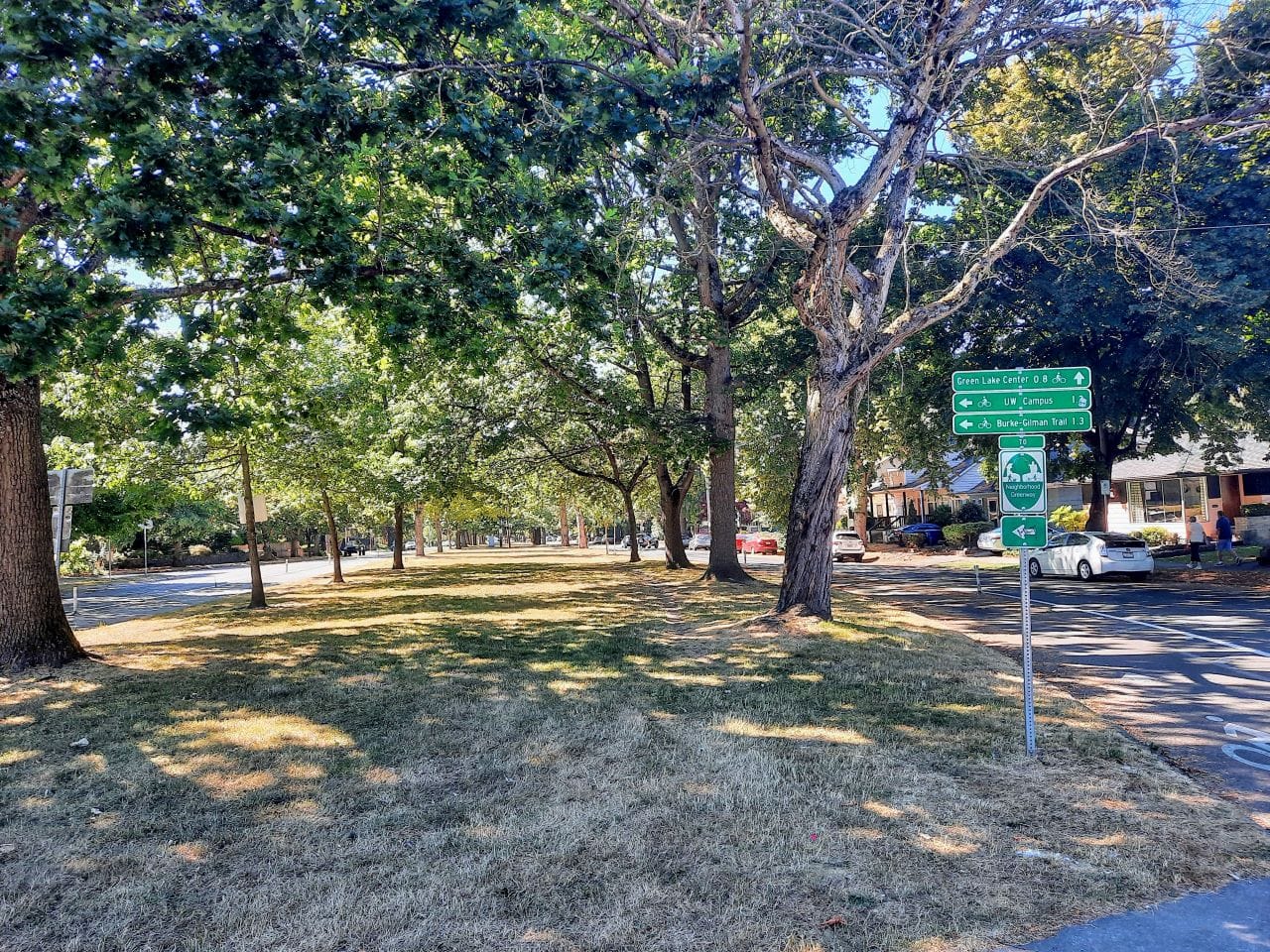
For Seattleites, the recent heat wave brought into stark relief areas of the city lacking adequate tree cover and shade and underscored the resilience of streets that have sufficient canopy. Conversely, it showed how parts of the city with wide expanses of pavement and concrete trap more heat. Ashli Blow demonstrated this point with a video accompanying her street tree article in The Urbanist, which showed how her thermometer went up as she biked from shady tree-covered areas to more pavement-heavy parts of town.
Highways and interstates were some of the biggest heat magnifiers of all, and it’s important to point out that all the vehicles on busy roads contribute heat of their own. On the other hand, large stands of forest like Discovery Park, Carkeek Park, and Washington Park Arboretum barely show up in heat maps and offer relative comfort to people walking and biking during high temperatures.