On October 29, leaders from across the Pacific Northwest reaffirmed their commitment to building high-speed rail linking the three largest metropolitan areas of the region at the annual Cascadia Innovation Corridor Conference. Speakers shared ideas for advancing the project and overcoming headwinds created by the Trump administration, which has slashed transit grants and slapped tariffs on trade imports from Canada.
These moves have created obstacles for funding the massive undertaking and finding a path to cross-border collaboration with the Canadian province of British Columbia, which would be needed for the rail line to cross the Canadian border to Vancouver. If that wasn’t enough, large infrastructure projects — from freeway expansions to light rail — are facing massive increases in construction costs, which is likely to greatly impact high-speed rail projects as well.
Conference talks remained high-level and largely sidestepped the issue of how to finance the project. A 2017 feasibility study commissioned by the Washington State Department of Transportation (WSDOT) estimated Cascadia “ultra-high speed rail” would cost between $24 billion and $42 billion — and that was before the era of high construction cost escalation hit.
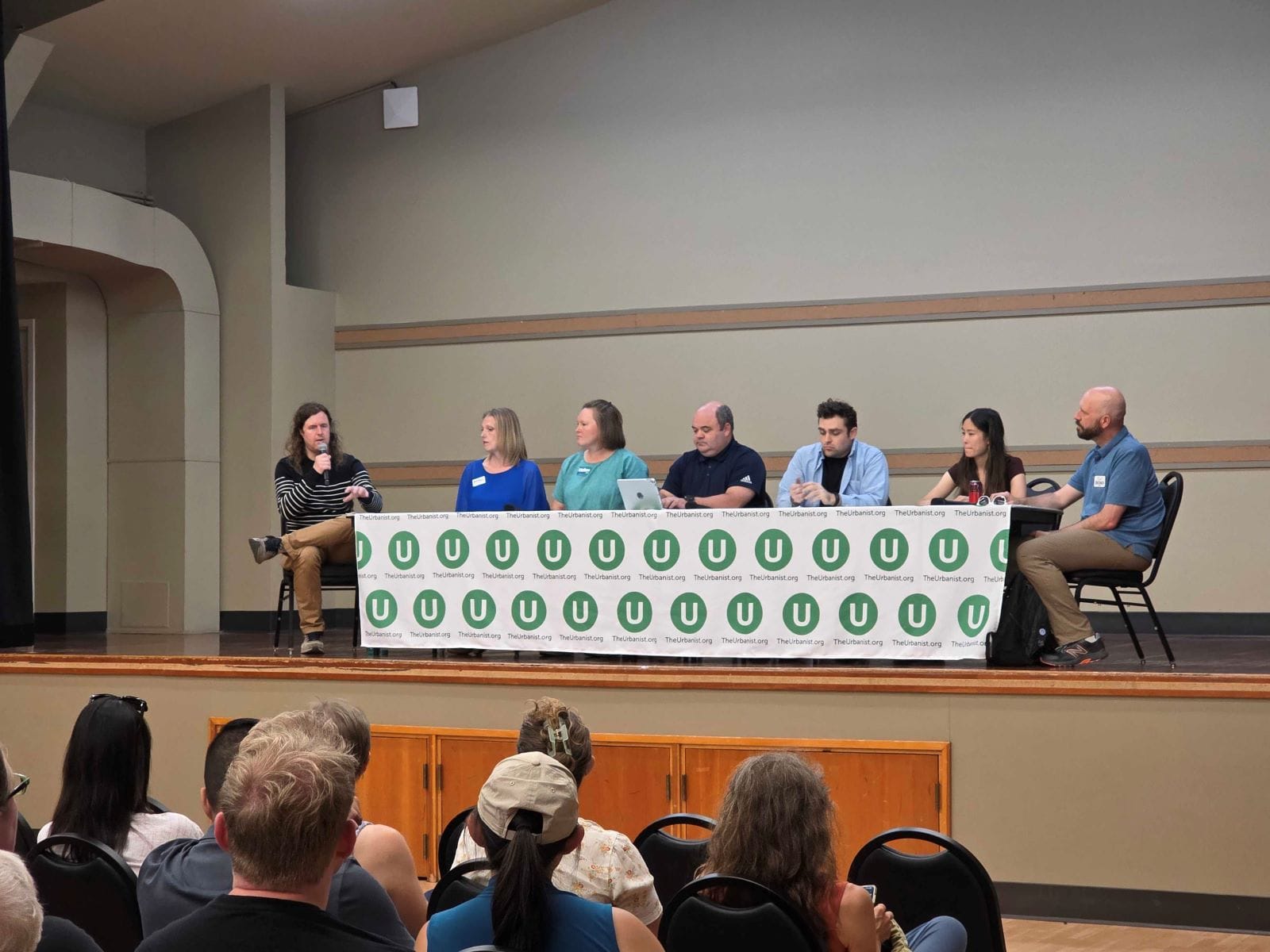
The two-day conference, held in Downtown Seattle at the Sheraton Grand Hotel, included many top state and local officials and several senior corporate executives in attendance. Several speakers hinted that a public-private partnership was the way to go and would be able to leverage private investment to surmount funding challenges, but nobody unpacked exactly how that would work at this preliminary phase.
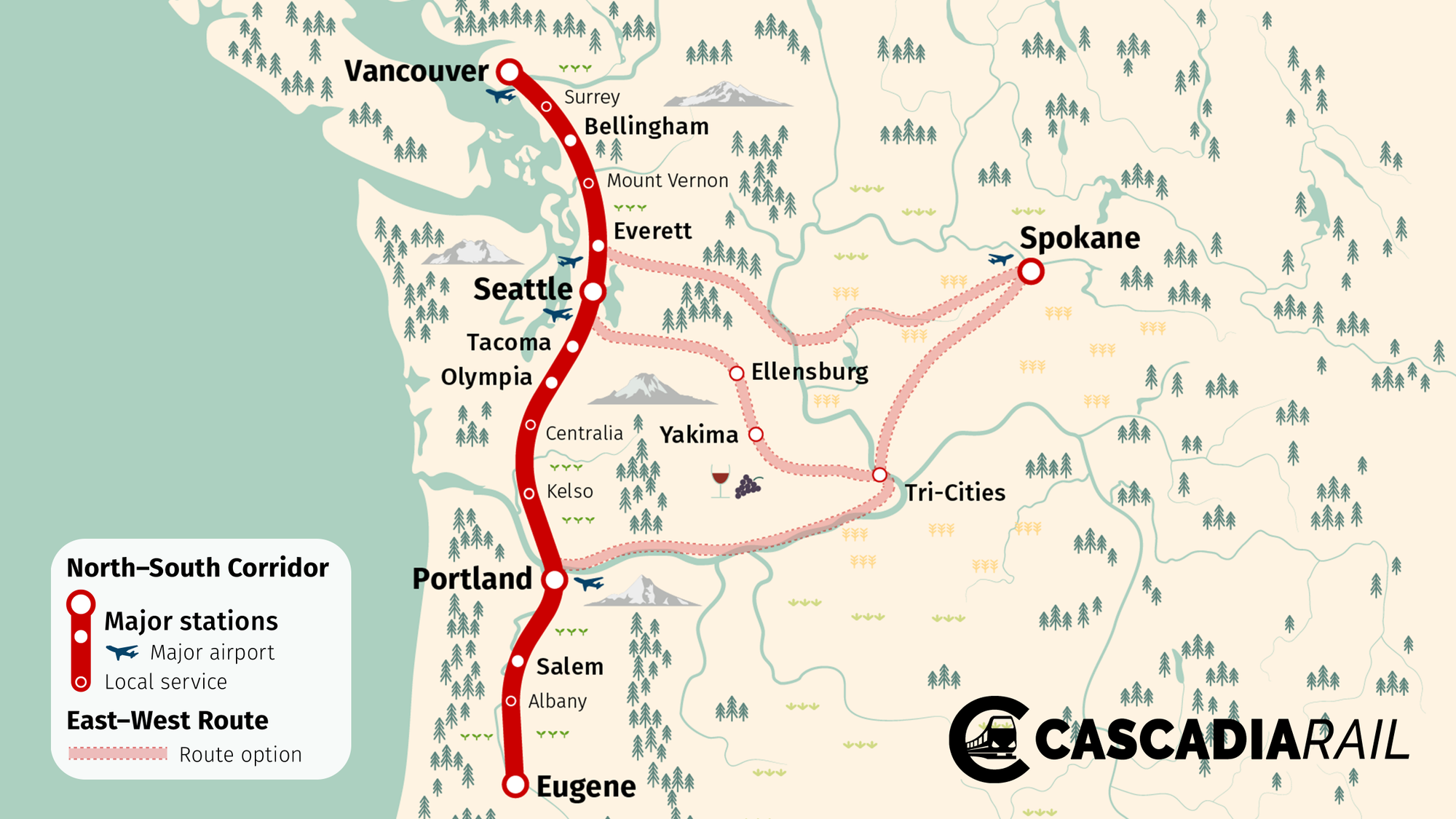
Many speakers stressed that the need for a high-speed rail was still acute, given the traffic gridlock common on I-5. Those issues are only likely to snowball as the Cascadia megaregion grows. Defined as stretching from the Portland metropolitan area to British Columbia’s Vancouver metro area and the swath of Western Washington in-between, the Cascadia megaregion is a fast-growing area with a population of nearly 10 million. The region is expected to grow by 3 to 4 million residents by 2050.