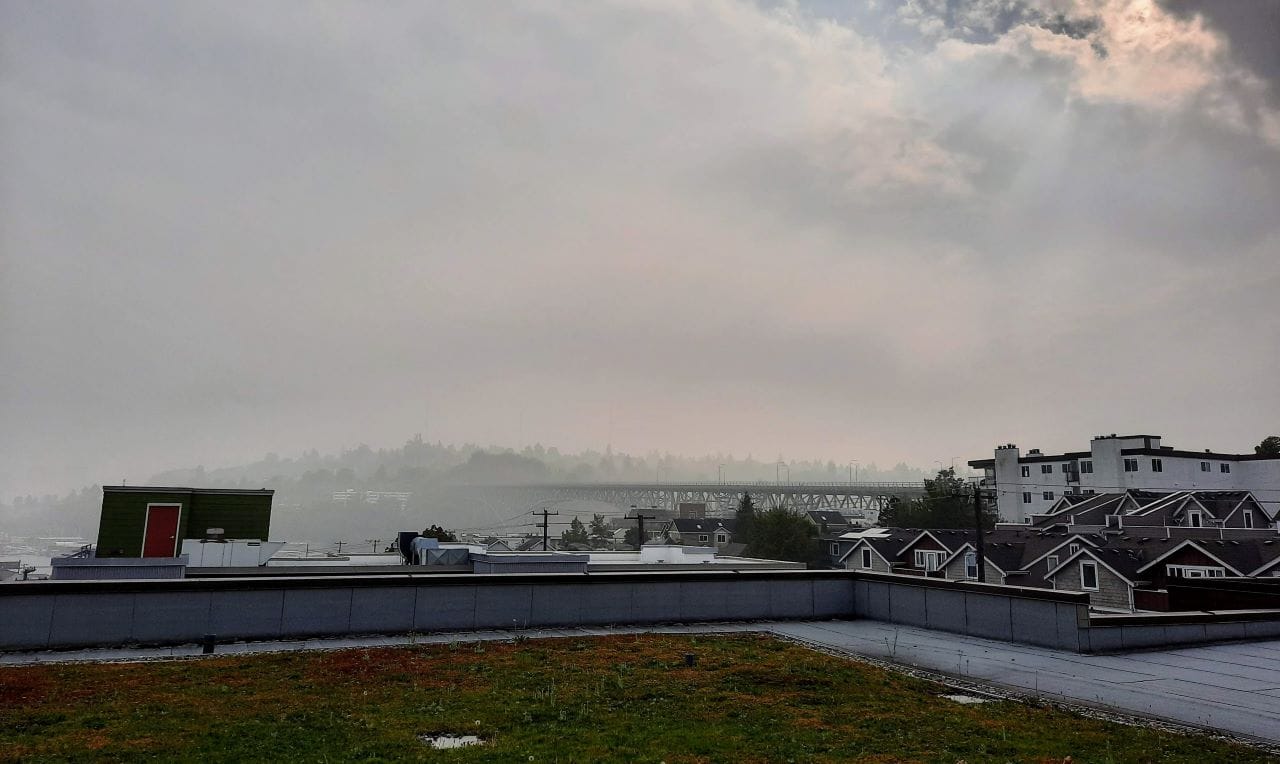
A week of forest fires and skies choked with toxic smoke was a sobering reminder of the fragility of our environment.
An incredible amount of Cascadia is burnt or ablaze. More than three million acres have burned in California, one million acres in Oregon, and 800,000 acres and counting in Washington. To put this in perspective the five million acres up in smoke across the West Coast equate to more forest land than in the entire portfolio of Washington Department of Natural Resources (DNR)–Washington has 45.6 million acres of land in all. It would seem unbelievable if we were not breathing the effects on a daily basis and choking on the proof.
Climate change’s terrible effects are upon us much faster than we imagined. Our poor environmental stewardship is increasingly looking like a runaway train and we badly need to build new tracks to avert utter catastrophe. Luckily, solutions exist.
One way we have gotten off track is that Washington’s State Environmental Policy Act (SEPA) tends to speed highway sprawl projects on their way and encourage copious amounts of parking in new buildings rather than encouraging emission-free transportation and sustainable building.
SEPA also does little to prevent rural and suburban development in areas vulnerable to fire. Dense infill housing projects and citywide reforms in Seattle have been challenged and delayed under SEPA. The wheels tend to be greased for sprawl, and squeaky for the walkable sustainable construction we need. To go along with SEPA safe harbors, local jurisdictions must create incentives for sustainable building projects, as Conor Bronsdon outlined.
Likewise, the Growth Management Act (GMA) is not doing enough to curb sprawl and encourage dense walkable city building. The Seattle metropolitan urban growth boundary is quite large and is predominantly single-family zoning therein, undermining the intent of the law. The smallest counties are exempt; medium-sized rural counties tend to implement the law half-heartedly and let sprawl continue. Groups like Futurewise fight to tighten up these county growth plans, but a more carefully crafted law wouldn’t need such constant gardening.
Futurewise is on the case with a campaign called Washington Can’t Wait to amend the GMA to promote walkable urban development and tighten up controls for sprawl and promote climate justice. Thinking it terms of urban planning is important because electrifying cars isn’t going to sufficient on its own. We also need to decrease vehicle miles traveled by moving people more efficiently with transit, biking, rolling, scooting, and walking.