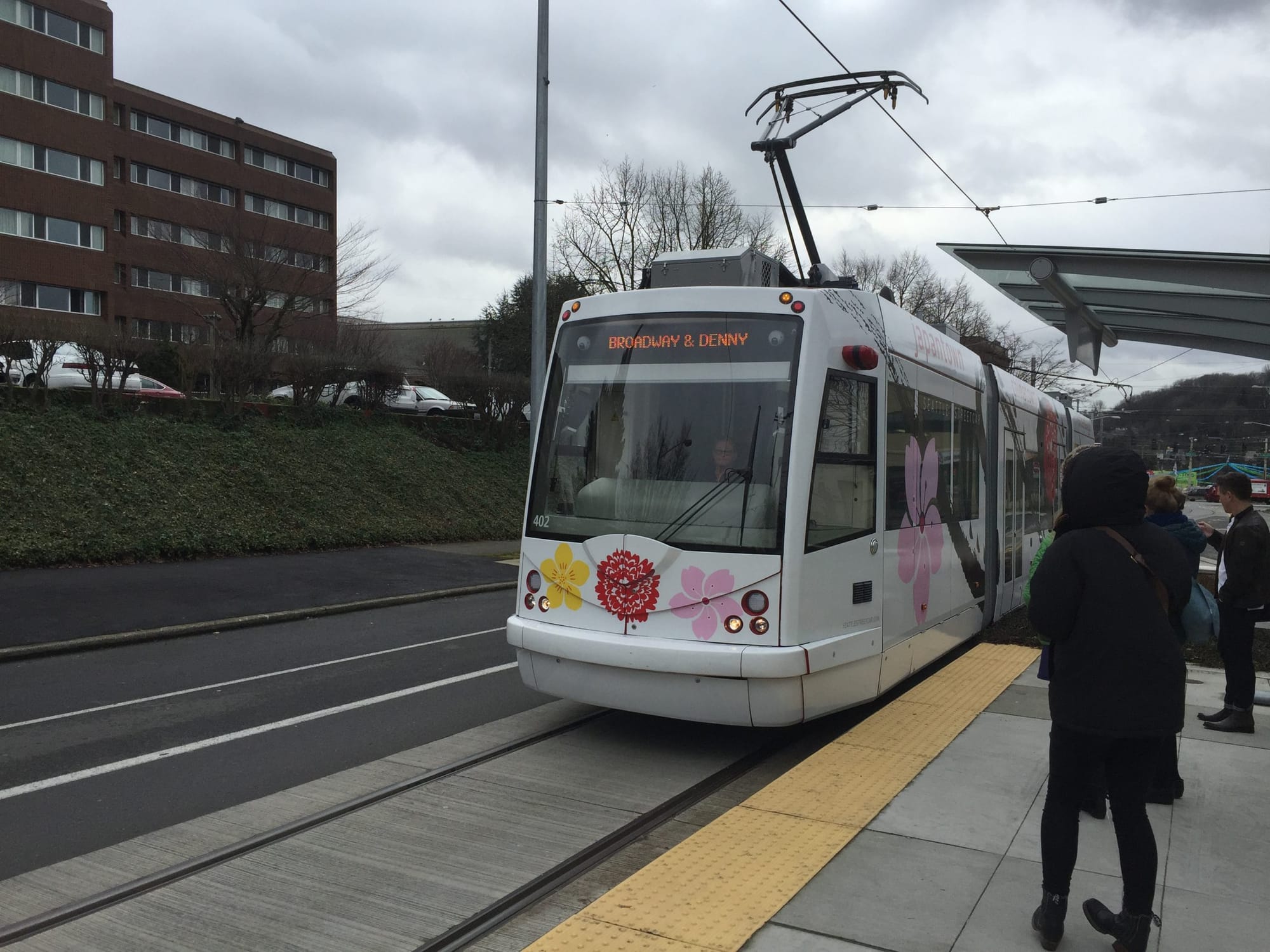
On Tuesday, the Sustainability and Transportation Committee of the Seattle City Council received updates on the downtown circulator and streetcar system speed and reliability improvements. Ben Noble, director of the the city budget office, was also on hand to address operations cost dispute for the Center City Connector project.
Downtown Circulator
Staff from Solid Ground and the Seattle Department of Transportation (SDOT) provided an update on the downtown circulator. The circulator has been operated by Solid Ground since 2012 as a free bus service for low-income riders who need access to health and social services in Pioneer Square, Belltown, and First Hill. The service operates on weekdays at half-hourly frequencies in one direction and is funded by $350,000 in grants annually.
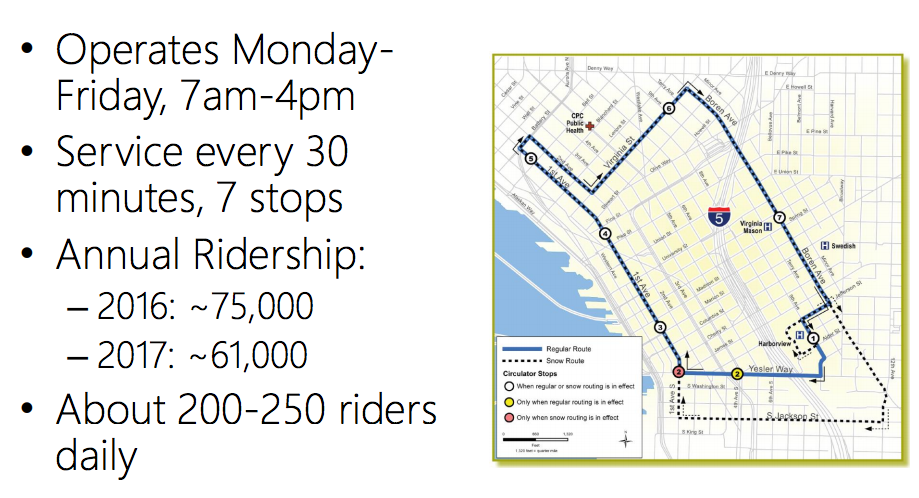
Results of a rider survey and data were released at the meeting, fulfilling a budget proviso by the city council. Year-over-year, ridership fell from 75,000 in 2016 to 61,000 in 2017.
The rider survey was in depth and reached a good chunk of riders. Riders indicated that they were very pleased with the service and greatly appreciated the operators. The average rider used the service five rides per week and found out about the circulator by word of mouth (37.5%), from a service provider (11.6%), or news-flyer (10.3%). That word of mouth is the main advertising may partially explain the drop in ridership. Medical (22.0%), shopping (18.8%), other services (18.6%), and commuting (18.0%) trips were the primary reasons why riders chose the circulator.
Riders indicated a strong preference for riding the circulator over discounted fare services on other transit agencies. A full 53.6% indicated that preference. Riders also indicated ways thought the circulator service could improve, such as adding weekend service (37.6%), expanding the route (24.2%), and extending hours of operation (20.5%).
In considering future actions of how to operate the circulate, presenters suggested three things to evaluate further:
- Creating specific focus groups to find out what the needs of riders are;
- Looking at other alternatives to provide service to riders; and
- Changing how the circulator operates to encourage more riders.
Councilmembers at the meeting expressed support for the program. The service remains funded for the next year.