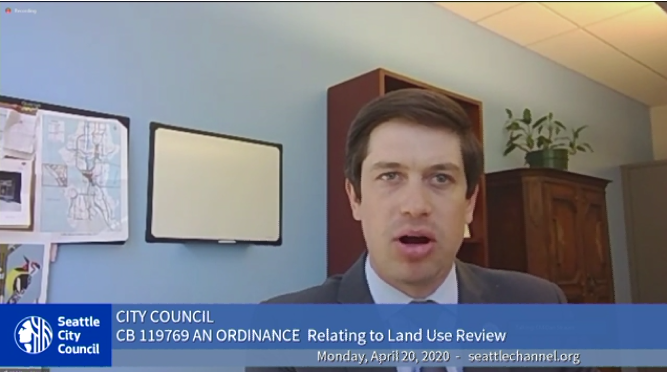
Onlooker and Seattle City Councilmember alike seemed to wonder what just happened yesterday after the city council rejected an emergency ordinance intended to continue design review via administrative and electronic means during the COVID-19 crisis. Since the pandemic may preclude normal in-person design review for several months, the legislation was intended to keep housing projects advancing rather than leaving the development pipeline snarled to a halt.
The ordinance had the backing of Mayor Jenny Durkan and Land Use Chair Dan Strauss, who said he was willing to compromise on amendments to ensure the legislation passed without delay. In fact, six councilmembers voted for it, but because it was an emergency ordinance, it needed seven votes to satisfy the Seattle City Charter.
The stumbling block seemed to be the framing around affordable housing. Supporters argued this was good for affordable housing developers and for ensuring the flow of Mandatory Housing Affordability (MHA) on-site units and in-lieu payments from developers in the years ahead. However, opponents contended affordable housing projects already had sufficient prioritization, questioned the urgency, and argued developers would abuse the legislation to ram regrettable projects through.
“We know right now it takes far too long for affordable housing to get through, and we wouldn’t be setting up this office to steward affordable housing projects if they were being prioritized more,” Councilmember Teresa Mosqueda said, responding to the opponents. “Affordable housing is critical for creating the ability for people to social distance. You cannot social distance in overcrowded shelters or in supportive housing that is at capacity.”
News of an outbreak of COVID-19 among King County’s homeless population, which has reached 112 confirmed cases, underscored Mosqueda’s point.
Surprising no one, Councilmember Alex Pedersen–who was elected on a wave of homeowner activist support–was among the opponents and took issue with many aspects from watering down process to its legality to the alleged ramping up of economic displacement. In his speech, he claimed the affordable housing exemption would lead to low-quality housing–a dubious claim since design review focuses on the public-facing aspects of the project rather the private residences, which have exacting building codes to meet independent of the design review program.
Councilmember Lisa Herbold’s opposition was sealed when her colleagues in a 5-4 vote rejected her amendment to remove the exemption for affordable housing projects. Again not terribly surprising for Herbold to oppose pro-development legislation as she has done with some of the MHA rezones in her district and with some aspect’s of parking reform. After the emergency ordinance was rejected, Herbold motioned to reintroduce it with her amendment, but the City Clerk ruled that the bill couldn’t be reconsidered at the same meeting, citing the city charter.
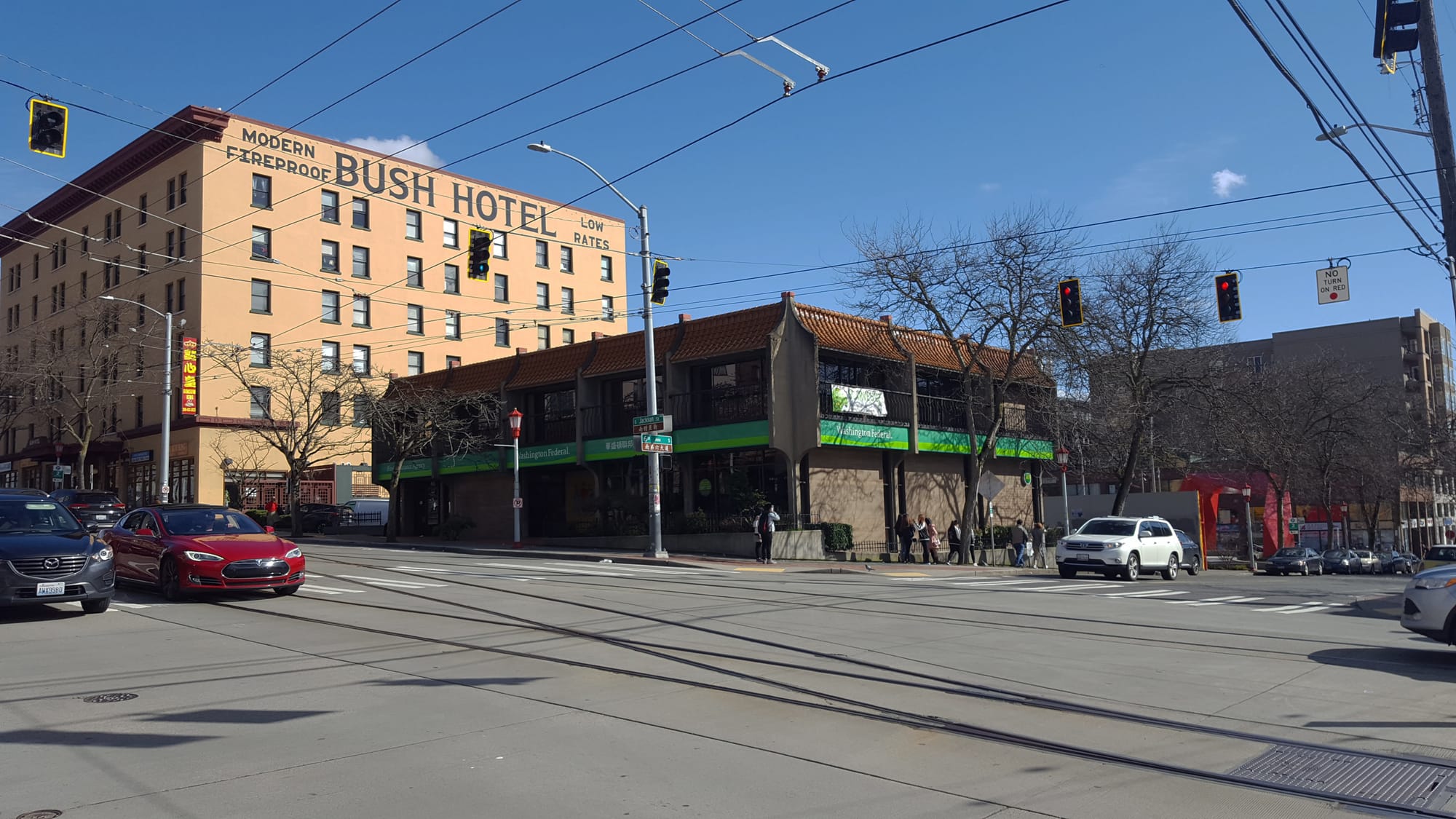
The more surprising opponent, was Councilmember Tammy Morales’s motioning, who first opposed Herbold’s amendment before then rejecting the bill. In fact, Morales seemed interested in revising her vote after the ordinance failed. But that will have to wait for another council meeting. Still, Councilmember Morales laid out a strident case in her speech and it’s important for housing advocates to understand her argument, which focused on centering low-income Asian constituents in the Chinatown-International District (CID).
“I believe we should not be pushing projects through without community process, especially in the CID in the South End where the prospect for disaster gentrification is especially high,” Morales said. “I asked Central Staff to craft an amendment that would remove the ISRD, the Special Review District, and preserve the status quo during the crisis. It would allow the community to expedite certain projects that they prioritize for administrative review.”
Morales said Strauss incorporated her amendment (keeping the status quo in the CID’s Special Review District) into his substitute bill. Still, her opposition seemed to be deeper than that issue alone since she still voted against the substitute bill.
“That’s why this bill is concerning to me, and I really see it as a vehicle of promoting Downtown development,” Morales said. “There are eight projects in the CID and one those projects is for affordable housing… Councilmembers, I want you to understand that neighbors are worried about a very real existential threat to the historic nature of the community and for what it means for the preservation of their culture and their community. Neighbors there don’t want a Disney-fied version of the CID where hotels and chains move in and look Asian-y. They want to preserve the ability of the low-income Asian families that have only ever known life in the CID to stay in their neighborhood.”
Morales also raised the issue of affordable housing projects earlier in the process that haven’t yet gained certification.
“In none of the memos that we have seen related to this bill is there a real explanation of what the bill addresses,” Morales added. “We’re still not achieving our goal of moving forward affordable housing projects that haven’t received their certification.”
Finally, Morales argued affordable housing issues should be grappled with separately, seeming to agree with Herbold on that point.
“I am glad the amendment is included in this language, but I still believe firmly that this should have been two separate bills and that it conflates the issue of participation with the issue of affordable housing,” Morales said. “While I am very supportive of affordable housing and know that that is not going to be problematic in this process, I do believe that we need to be very clear that protecting the ability of community members to participate in this process is important.”