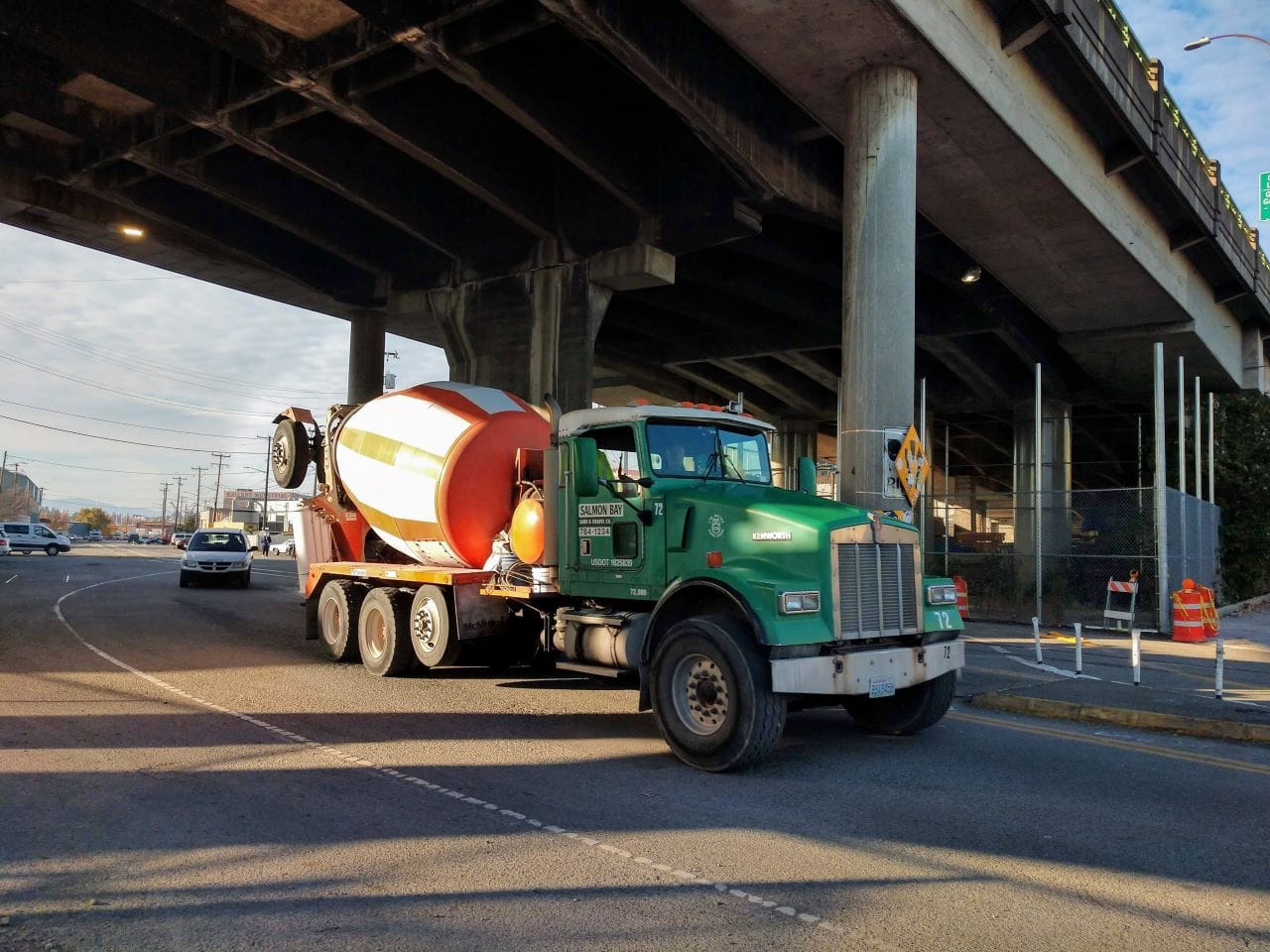
Concrete is not flowing in King County and several high-profile infrastructure projects threaten to be delayed as a result. Concrete mixer drivers are striking for higher compensation on par with other building trade unions and a health plan that lowers cost for retired members, but the six largest concrete companies have refused to meet their terms.
“We’re building a city that we’re not able to live in anymore,” picketing mixer driver Brett Gallagher said in an interview with More Perfect Union. “Inflation, the cost of living around here has gone through the roof. My local Safeway just up the hill in West Seattle they’re selling ground beef for $7.99 a pound.”
Although the companies claim to be be negotiating with workers, they had refused to meet with Teamsters union representatives during most of the two-month strike and demanded a federal mediator. Some companies have turned to strikebreakers to deliver concrete to projects.
The two sides finally returned to mediation on Thursday, KIRO reported — albeit with the same mediator that failed to reach a deal in January: Beth Schindler, regional director of field operations with Federal Mediation and Conciliation Service. But with construction delays and layoffs on major infrastructure projects piling up, the pressure to reach a deal is higher, which may lead to a resolution this time around.
Mayor Bruce Harrell mentioned the concrete drivers strike in his state of the city speech earlier this month, but seemed to place equal blame on both striking workers and the companies refusing to bargain with them. Reopening the West Seattle Bridge and keeping other Seattle Department of Transportation (SDOT) projects on schedule appears to be a driving concern — less so the wellbeing of workers.
“The [West Seattle] Bridge remains one of the City’s most pressing priorities, even, as I announced last week, that the re-opening schedule is threatened by the ongoing concrete work stoppage,” Harrell said. “So many of our projects involve concrete – from our Waterfront Seattle Program to our Ship Canal Water Quality Control project, and just about every major SDOT priority, including the Madison Rapid Ride Line, and curb ramp and sidewalk installation improvements.”
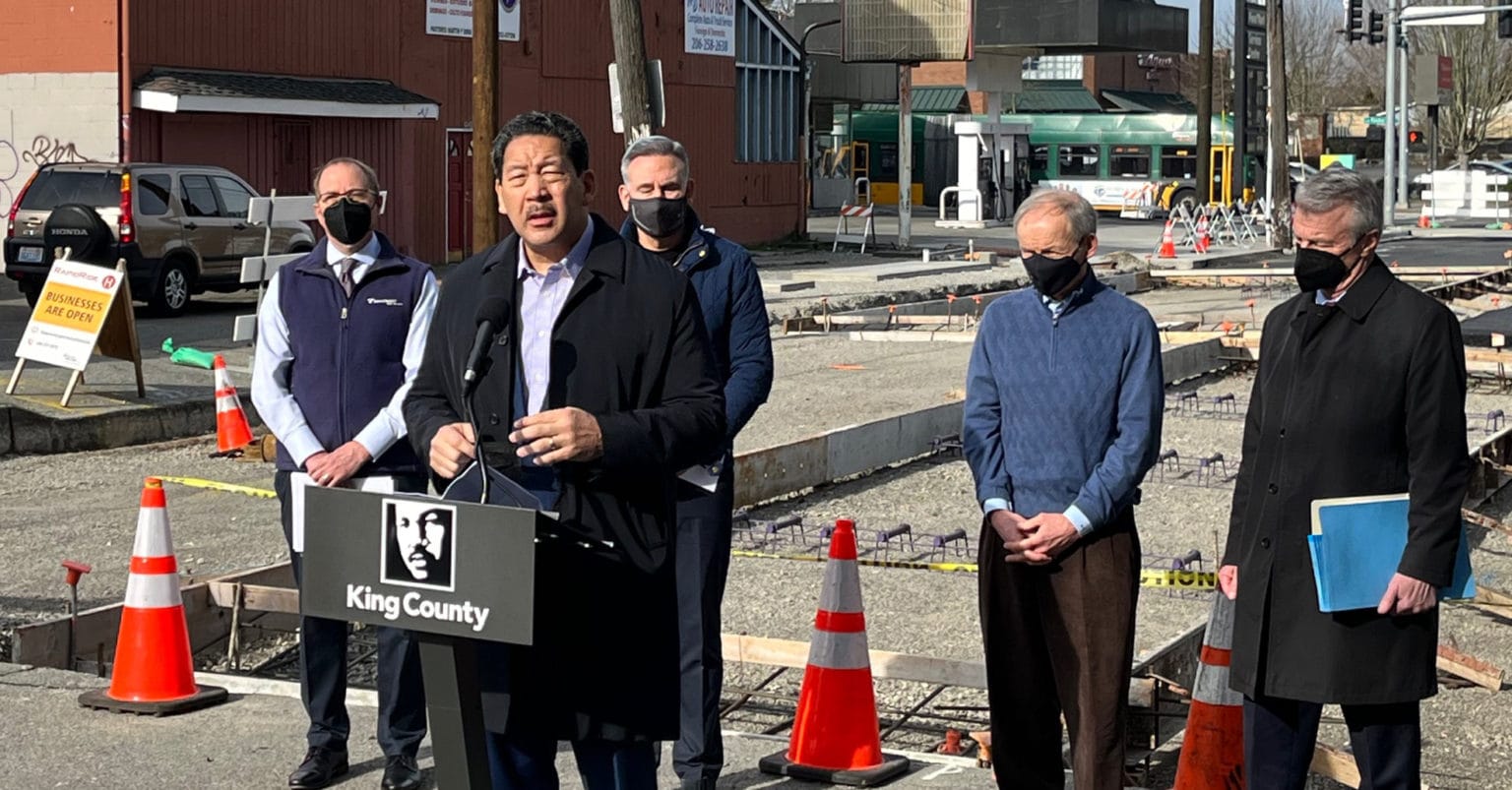
The February 20th deadline that Harrell set has come and went, with no resolution in sight. The Mayor welcomed news Thursday of resumed mediation.
“The Mayor was very pleased to see the two sides return to mediation yesterday and hopes they will urgently reach a fair and just agreement,” spokesperson Jaime Housen said in an email Friday morning. “The mayor and staff have been in frequent communication with Teamsters throughout the strike.”
SDOT’s West Seattle Bridge Project Director Heather Marx appears to walking back the significance of the Mayor’s deadline a bit. The City set mid-2022 as the reopening the West Seattle Bridge when Mayor Jenny Durkan chose the repair rather than replace option for the cracked and sagging bridge, which has been closed since March 2020.
“It’s not a situation where every day past the 20th means another day on the end of the schedule,” Marx told KIRO’s Chris Sullivan. “There still may be things we can do to skinny it up.”
Marx said the City and its contractor haven’t had to lay any workers off yet because they’ve been able to shift attention over to the Lower Spokane Street Bridge, which also needs repairs and is part of the same contract.
Construction stoppage could spread
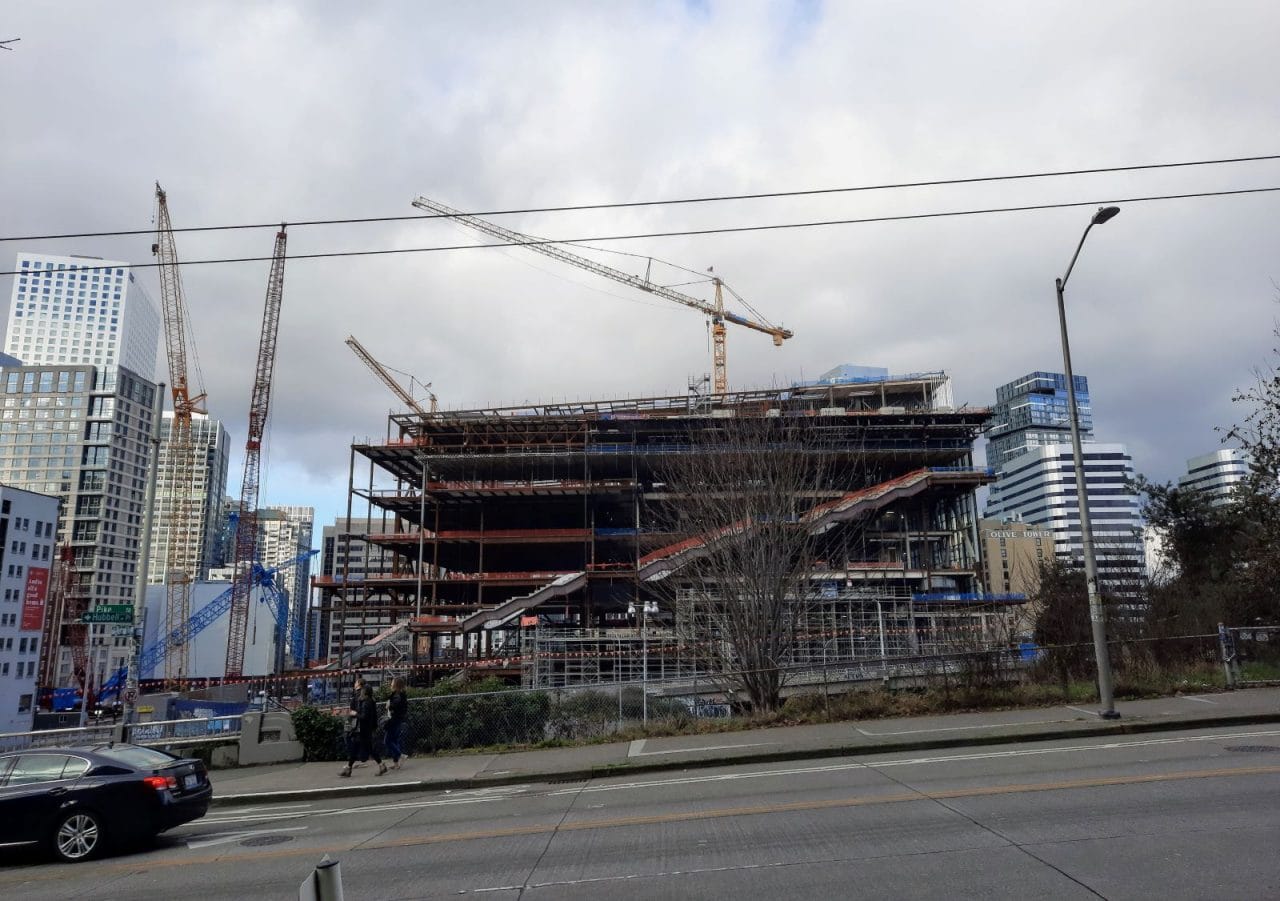
Other projects haven’t been so lucky. Some highrise construction sites have had to shutter without concrete to support their continued rise and lay their decks. Among them is a new office tower in the Meta (a.k.a. Facebook) campus in Bellevue’s Spring District and Microsoft’s big campus renovation in Redmond. Sound Transit’s light rail construction projects across the region — including East Link, Downtown Redmond, Federal Way Link, and Lynnwood Link — are also affected with some work paused due to the concrete stoppage, as are the I-405 freeway expansion in the Eastside and the Washington State Convention Center Addition, which had already faced financing issues as its budget has ballooned to $1.9 billion. The new Seattle Aquarium is at risk of delay, as are other elements of the Seattle Waterfront overhaul.
“The inability to get concrete to Sound Transit job sites is causing serious delays to needed transit expansions and pushing construction workers into unemployment,” said Sound Transit CEO Peter Rogoff in a statement on February 9th. “On Sound Transit’s projects alone, we’ve missed more than 2,200 deliveries, equivalent to a line of concrete trucks more than 14.5 miles long. Our contractors have laid off more than 200 workers, and another 165 jobs are threatened. It’s critical that the parties to this dispute work together to negotiate a resolution.”
Other building trades workers have been impacted and laid off as some construction projects have ground to halt as a result of lacking concrete to lay their foundations or pour their decks so towers can rise. The concrete stoppage could continue to affect more trades and eventually the whole construction industry as it lingers.