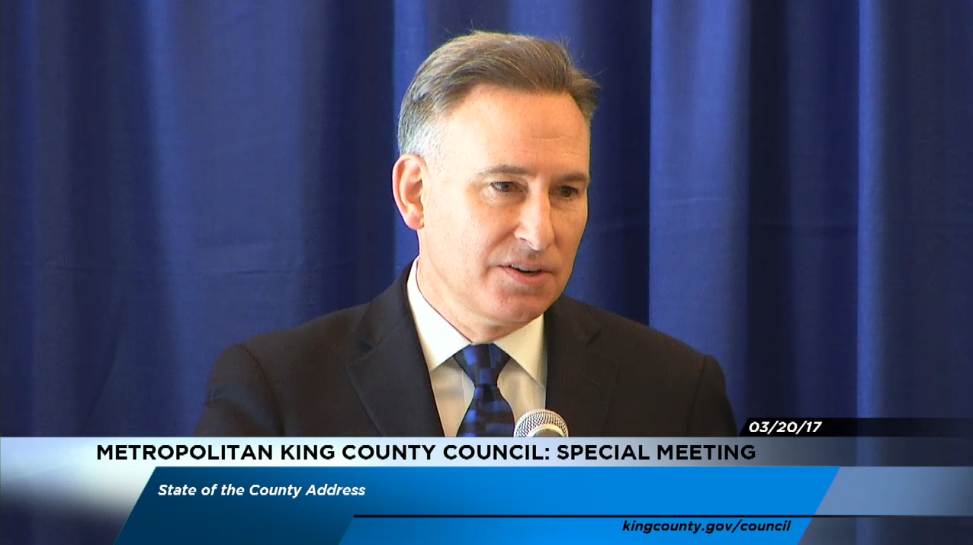
During his State of the County speech yesterday, King County Executive Dow Constantine unveiled plans to open two reception centers for youth accused of minor crimes as part of a larger strategy to seek zero youth incarceration in King County. The plan responds to the criticisms that criminal justice activist groups like Ending The Prison Industrial Complex (EPIC) have raised as Constantine presides over voter-approved plans to construct a new Children and Family Justice Center, often referred to as the youth jail, in the Central District.
By the way, another thing Executive Constantine is presiding over this year is a re-election campaign as he seeks his third term in 2017.
The new County facility would replace the older youth jail at 1211 E Alder St and pair it with 10 courtrooms, but critics say its price tag, which has ballooned to $225 million, is too expensive and, by maintaining 112 jail cells for kids, doesn’t serve Seattle’s and King County’s goal of reaching zero youth detention. Notably, King County Councilmember Rob Dembowski has joined ranks with youth jail opponents and co-authored an op-ed against it with Seattle City Council President Bruce Harrell.
In his speech, Dow Constantine fired back at those critics:
To navigate the rest of this journey, to reach our goal, we need a map. A plan. Saying “we’ll try to do even better” is not a plan. Shouting “Zero Youth Detention” is not a plan either. I will invite this Council, community members, and criminal justice leaders to join me in creating that Road Map to Community Safety and Effective Alternatives to Detention. (I warn you ahead of time there may very well be day-long Peacemaking Circles!)
The subtext being Constantine sees nothing wrong with spending $225 million on a building rather than investing in people as EPIC and Black Lives Matter activists have argued would be wiser.
Road Map To Effective Alternatives To Detention
Constantine contends he is the one with a road map to zero detention, not the activists shouting “zero youth detention.”
Today, I call for the creation of two community-based reception centers that we will call “Safe Spaces”–where police can bring a youth accused of a lesser offense instead of to booking and detention.
These facilities–one in Seattle, the other in South King County–will be welcoming places where young people can also come in on their own, or with a parent or relative, or via a community organization.
Trained professionals will interview the youth, determine the best way to help, and coordinate appropriate assistance and intervention. And then the police, if they are involved, can finish their report and leave.
Safe Spaces, based on a successful model in Portland, will be staffed around the clock, and will offer food, clothes, even a safe place to stay the night. There will be connections to housing, education, and the services youth and families need to get back on track.
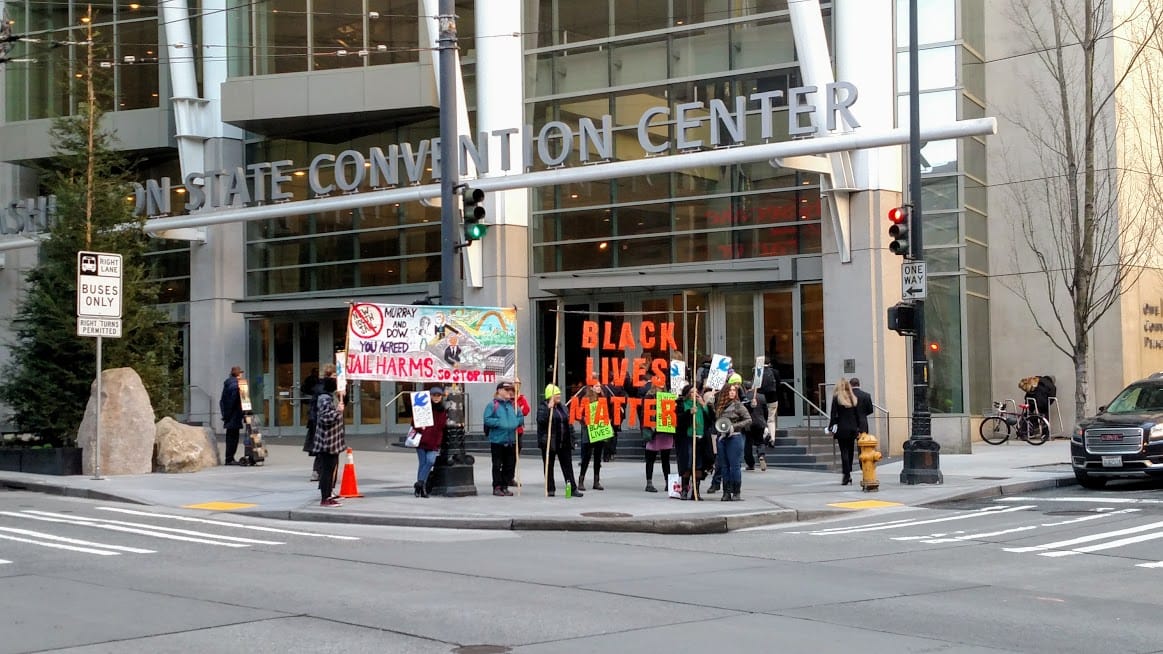
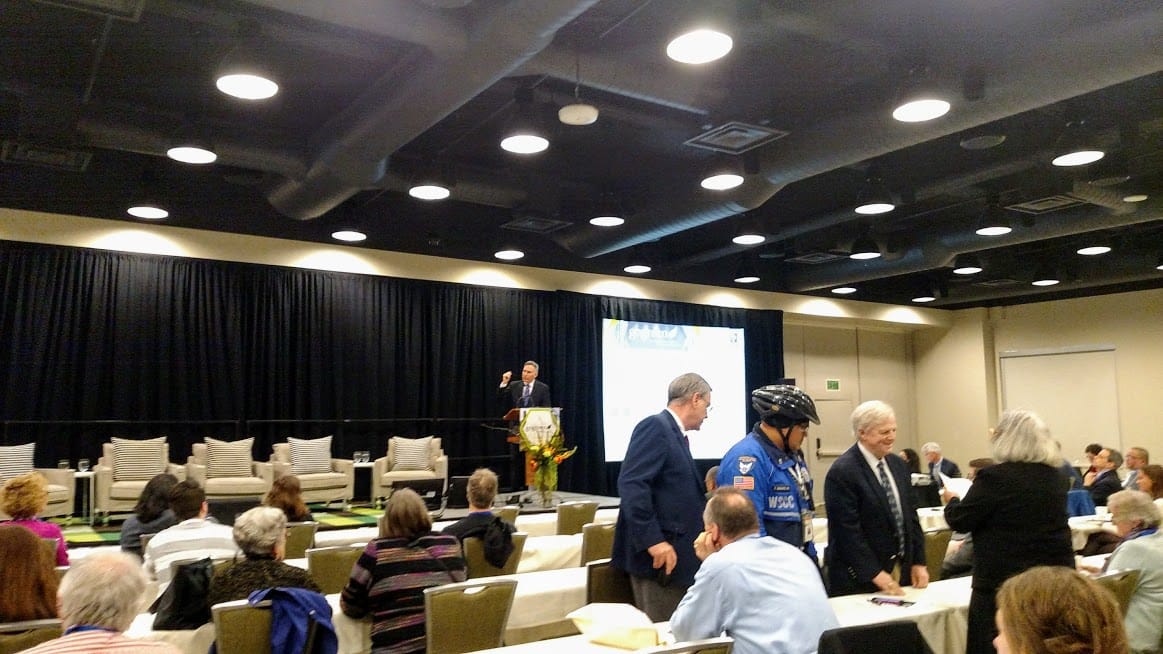
Constantine addressing no-new-youth-jail critics head-on is understandable. Those critics have increased their presence and interrupted his public appearances to protest his moving forward with the youth jail. At the Go Green Conference on March 16th, Constantine had to cut short his speech as a series of protesters shouted him down and interrupted him with protest songs. With his State of the County vision, Constantine seems to be charting a route forward for the planned new youth jail for which he as county executive is ultimately responsible while still being seen as making progress on the “journey” to zero detention and hearing concerns of minority voices in the county.
The Slow March Of Progress
Toward that goal, Constantine touted the County’s juvenile justice successes.
“I should say ‘the rest of the journey’, because it is a fact that King County is a recognized leader in the nation in alternatives to detention and prosecution. Our judges, prosecutor, community organizations and many others have helped King County reduce the average daily youth detention rate to among the lowest of any major jurisdiction in the nation,” Constantine said. “And, we are one of the first major jurisdictions to simultaneously reduce the rate of detention and racial disproportionality.”
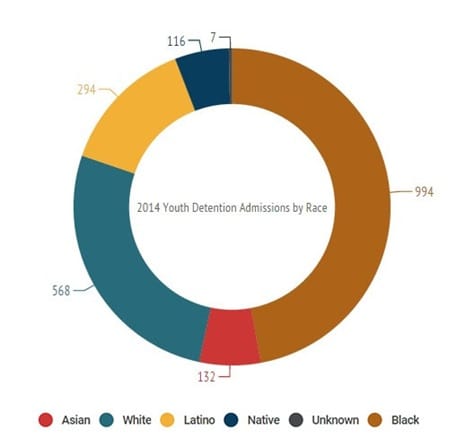
Even a few years back, that disproportionality was staggering. Using 2014 numbers, EPIC pointed out in a lawsuit that “eight percent of county youths are black, but they represent about half of those detained.” Apparently the County has begun turning that around.
Meanwhile, even Constantine acknowledged that restorative justice alternatives are superior: “We have better, safer, more therapeutic options than detention–but must also prevent earlier conditions in life that lead to detention.” Nonetheless, Constantine reiterated a practical need to maintain a youth jail and to proceed incrementally: “Until we reach zero youth incarceration, there will be a need for secure detention–both for the public and youth.” In essence, he’s expressing a chicken and egg problem. Until, you stop jailing kids, technically you still need a youth jail to contain them.