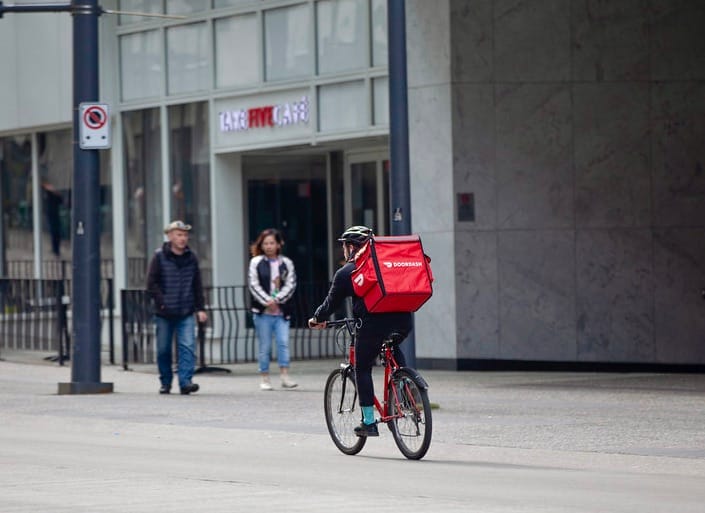
Yesterday battle lines emerged around Pay Up, the proposed suite of legislation aimed at ensuring Seattle’s growing number of app-based contract workers earn at least the minimum wage and receive basic protections similar to those held by employees. At a meeting of the Seattle City Council’s Public Safety and Human Services Committee, a packed roster during public testimony demonstrated the strong reactions being generated by the proposed bills.
Many representatives of major corporations like Uber and InstaCart, as well as industry groups including the Seattle Metropolitan Chamber of Commerce, Washington Technology Industry Association, and Technet, an organization promoting the growth of the “innovation economy,” all voiced concerns about the legislation’s potential impact. At the same time, many app-based workers themselves spoke out in favor of the proposed bills, citing the stress and precarity of being employed in the sector as reason to push for reform.
On the industry side, concerns followed a common theme. Lobbyists and executives from Uber and InstaCart complained that while groups like Working Washington, an organization advocating on behalf of app-based workers, had participated in meetings leading up to the draft legislation, industry representatives had been shut out from the process, which they claimed had resulted in “one-size-fits all” legislation that fails to take into account differences in business models. They warned that the alleged oversight could result in a decrease in demand for app-based services, negatively impacting the workers themselves, as well as some of the small businesses, notably restaurants, that rely on them.
“Worker earnings in this sector are highly complex… Cooperation is necessary for such a complex topic,” said Molly Jones, Vice President at the Washington Technology Industry Association during public testimony.
Councilmembers Teresa Mosqueda (At Large) and Lisa Herbold (District 1), one of the bill’s sponsors, pushed back against the criticism, calling the stakeholder and City staff led process that had led to the draft legislation “robust.” Co-sponsor Andrew Lewis (District 7) also defended the steps taken, while also conceding that more public dialogue, including with industry, would be necessary as the bills advance forward.
City staff clarified for The Urbanist that network companies such a DoorDash, TaskRabbit, Uber, Rover, InstaCart, and GoPuff had been in fact invited to participate in stakeholders meetings and also attended them.