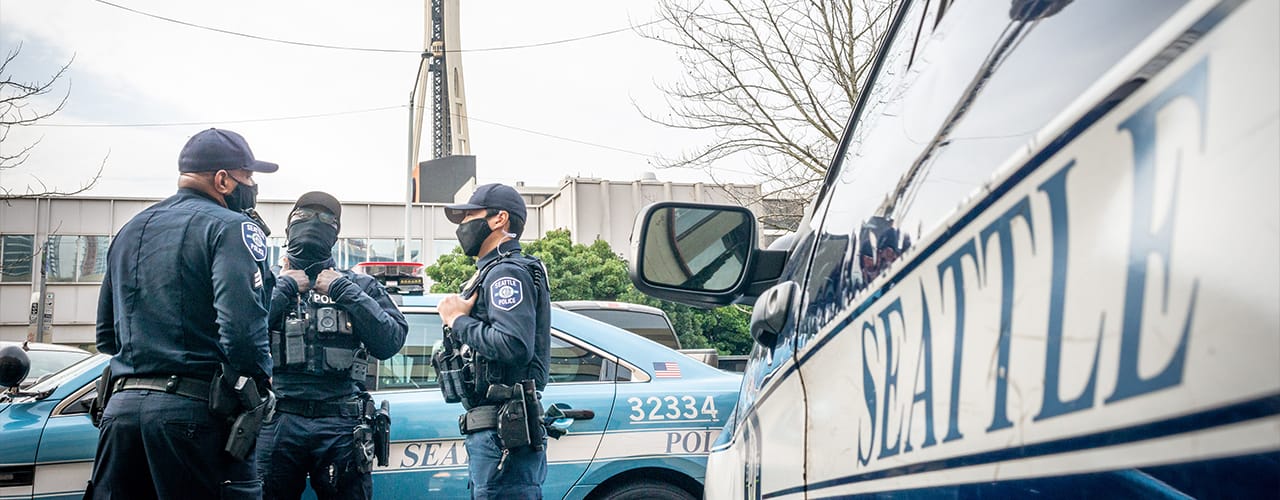
Yesterday, the Seattle City Council’s public safety committee voted unanimously to advance a bill releasing $1 million in Seattle Police Department (SPD) salary savings to pay for hiring incentives aimed at growing the ranks of sworn officers. The move comes after a wave of retirements and transfers during the pandemic have depleted SPD’s ranks. The bill and accompanying resolution are scheduled to go to full Council on May 24th.
In a statement, Mayor Bruce Harrell commended the progress on the bill and promised release of “his more comprehensive recruitment strategy to City Council and the general public before summer, with further specific funding recommendations for Council’s consideration for approval.”
SPD pushes back against civilianization
The public safety committee also heard a report from Harrell’s Director of Public Safety Andrew Myerberg and other SPD staff providing a risk assessment and analyzing opportunities to civilianize more functions of the department. The SPD has been resistant to the City Council’s efforts to civilianize more of the City’s emergency response, which could help them make do with fewer officers and focus on higher priority calls. Utilizing a barrage of acronyms and jargon, SPD insisted that most calls can’t be civilianized, reiterating they disputed the outside report that 12% of calls could shunted out of the department almost immediately and requesting more time and study.
Councilmember Andrew Lewis pushed back at the conclusion, noting that Denver has gotten a civilian response pilot program off the ground and has two years of data that SPD could review and consider as a model to implement their own program.
“Denver, Colorado has been doing this for two years. Denver has responded to 2,700 calls without any incident or problem — that are dispatched through 9-1-1. They have figured a way to triage those calls during their pilot. Did they go through a similar data analysis project as this? Why haven’t I heard from any of the panels over the last two years a site visit or analysis or discussion from anyone from Denver about how they respond to these calls?”