The veto overrides preserve $17 million for community safety programs, $3 million for participatory budgeting, and budget provisos intended to trim 100 positions from the Seattle Police Department (SPD).
The Seattle City Council rebuked Mayor Jenny Durkan’s attempt to collaborate by veto, overriding the Mayor’s rebalancing budget veto in a 7-2 vote Tuesday. Councilmembers Alex Pedersen and Debora Juarez dissented, but joined their colleagues for the two remaining unanimous override votes on new allocations for community investments.
The outcome of the special meeting was in doubt after several councilmembers played it close to the vest and didn’t announce their positions ahead of the vote. Nonetheless, when the dust cleared after a long and contentious meeting, the Mayor’s vetoes were erased.
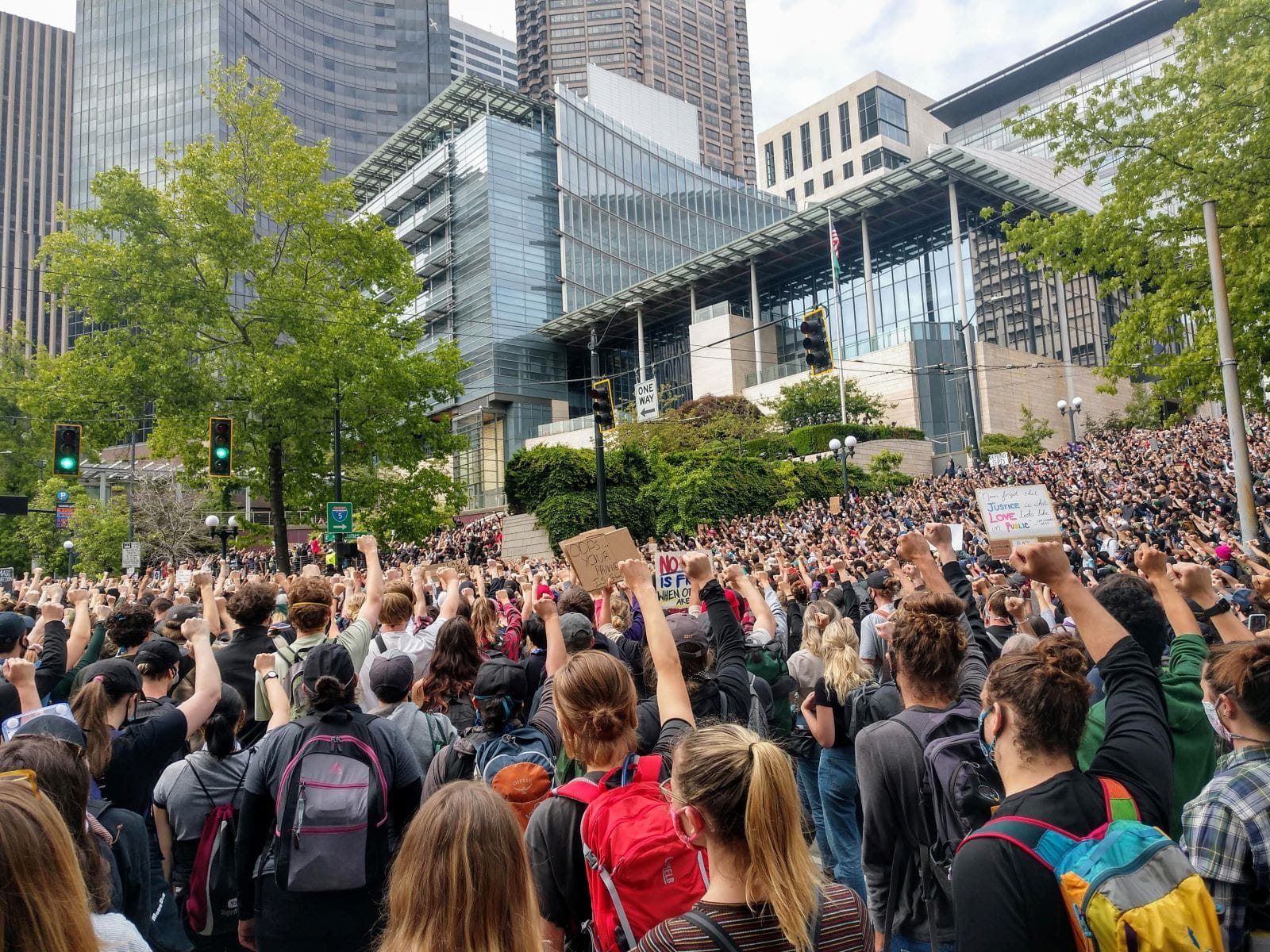
Facing a troubling setback, backers of the effort to defund SPD and invest in community safety instead rallied support. In addition to phone and letter-writing campaigns, more than 70 people signed up for public testimony in favor of “holding the line” and overriding the veto. The Urbanist joined the chorus in sending a letter we also published yesterday. In comparison, only about 10 commenters argued for sustaining the veto.
Pro-veto vote-whipping was fierce, too–if ultimately ineffective. Mayor Durkan took the rare step of issuing a press release during the meeting directly appealing to councilmembers to collaborate with her–on her terms. The invitation came with more sharp criticism for the City Council and a far-reaching ultimatum, which took most of the CIty Council’s rebalancing budget off the table.
“While Council may not be concerned about the details, I am. And they actually do matter,” the Mayor said in one breathe, while in the next pivoting to “Our community is demanding that we work together…” and “I hope Council takes this moment to chart a path forward together.”
Though she supported overriding the Mayor’s vetoes, Council President M. Lorena González offered an alternative bill that incorporated the ultimatums from the Mayor. González said she wanted to ensure at least some of their progress was retained if the veto was sustained. Ultimately, the alternative bill was not needed with the votes to override.
Public Safety Chair Lisa Herbold (District 1) emphasized that the City Council’s budget provided much greater funding to community safety groups led by Black, Indigenous, and People of Color (BIPOC).
“The alternative short-changed community members and organizations who have the expertise we need to build community safety, by proposing a mere $3.5 million investment instead of the $17 million Council had appropriated,” Councilmember Herbold said in a statement. “The $2 million the Mayor proposed for investment in violence prevention and crisis intervention is wholly inadequate to the need, given the increase in gun violence that Seattle is experiencing. Funding the Seattle Community Safety (SCS) Initiative to scale up gun-violence intervention and prevention is necessary now for true community safety efforts like the work of BIPOC-led organizations like Community Passageways, Urban Family, SE Safety Network Hub Boys & Girls Club, and the Alive & Free Program – YMCA.”
Herbold also included an appeal to Durkan to implement the budget: “With today’s vote the Council can’t force the Mayor to spend these dollars. But I plea with her to do so.”
Negotiating by veto
Councilmember Andrew Lewis (District 7) worried a pattern of the Mayor “negotiating by veto” was emerging and hurting the chances of real compromise, for which he was still holding out hope.
“This process of veto, negotiate, and then insist on sustaining is wearing and it has been unproductive,” Lewis said. “It has contributed to be frayed relations between the Mayor and Council, and there have to be better ways to resolve our differences.”
Councilmember Dan Strauss (District 6) noted SPD forced their hand with its violent response to protests over the summer and lack of ability to control their budget. “It was as if eight years of reform didn’t occur,” he said. “And the 45% budget increase in those last eight years went unchecked. The changes proposed in the 2020 rebalancing package are not radical or earth-shattering; they are reasonable, responsible first steps to the long process of re-envisioning how we handle public safety.”