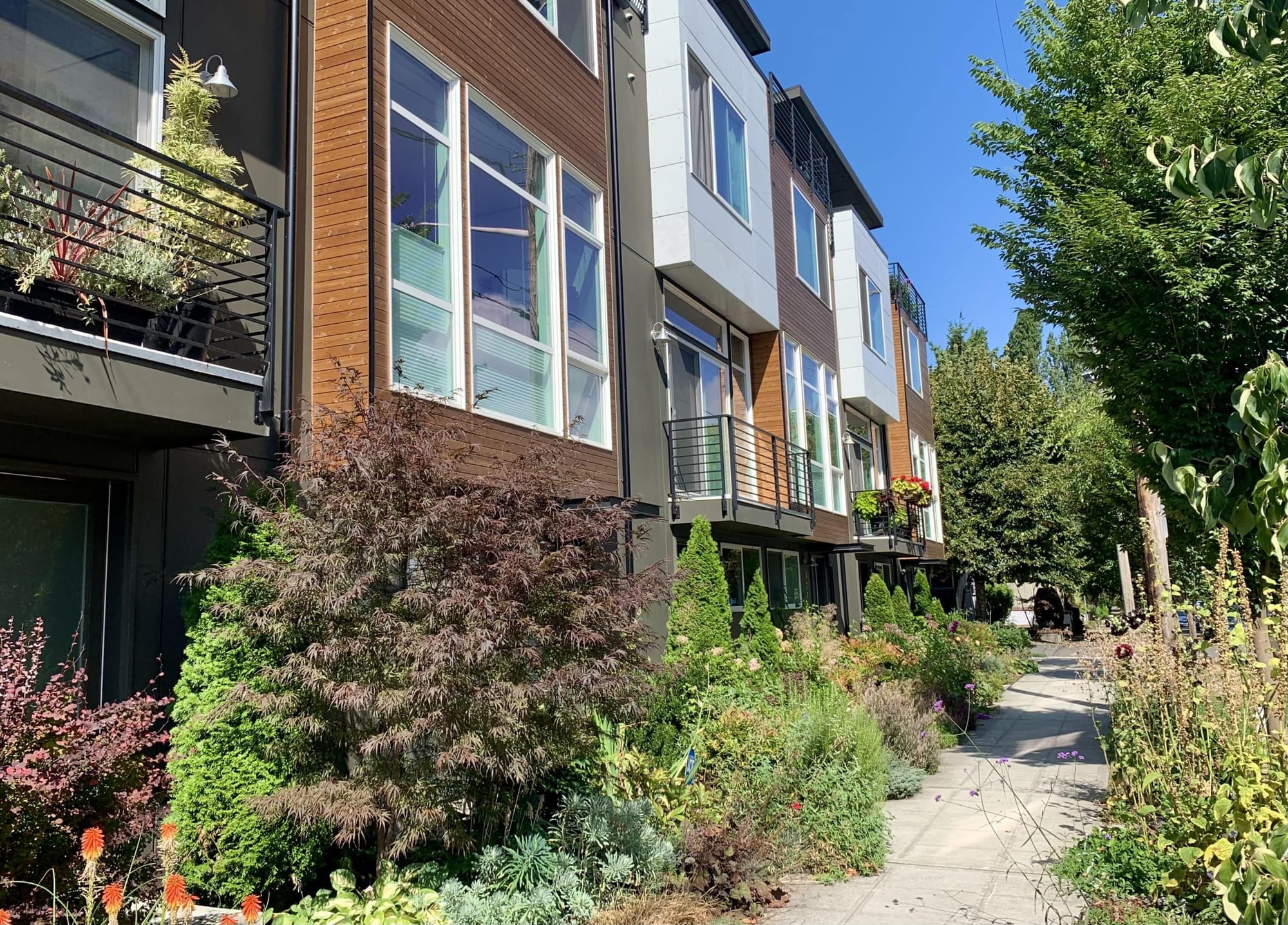
The Seattle City Council took the first step toward reforming single-family zoning on Monday by renaming it “Neighborhood Residential” in a unanimous vote. In an action-packed agenda, the Council decriminalized entheogens (also known as plant-based psychedelics or magic mushrooms), passed a land use change in Interbay that will clear the way for the Seattle Storm WNBA team to build a practice facility there, set the public hearing for a North Rainier alley vacation for Grand Street Commons development, and expanded a transfer of development rights program to include Snohomish and Pierce counties.
Neighborhood Residential: A skirmish before a rezoning battle?
Councilmember Teresa Mosqueda (Position 8, Citywide) led the charge on the Neighborhood Residential name change, and she stressed that accuracy was part of the motivation.
“The legislation passed today brings us one step closer to a more inclusive Seattle,” Mosqueda said in a statement. “Today, we recognize neighborhoods across our city are home to diverse housing built before increasingly restrictive zoning went into place. This includes small businesses, parks, schools, and services, as well as diverse households that expand beyond the ‘single-family’ designation – that was a misnomer. ‘Neighborhood Residential’ reflects that diversity more accurately.”
Councilmember Strauss, who chairs the Land Use Committee and co-sponsored the bill, agreed and underscored that this move doesn’t change zoning. “This name change more accurately identifies existing zoning, as some of the most vibrant places in ‘single family’ zones have legacy duplexes, triplexes, and corner-stores, all of which are not currently allowed,” he said in a statement. “This proposal is in response to the Seattle Planning Commission’s Neighborhoods for All report which recommended this name change. This legislation does not change zoning, it only changes the name that we call these areas.”
The Neighborhoods For All report came out in 2018. Seattle Planning Commission, echoing other housing advocates, urged the city to re-legalize duplexes, triplexes, fourplexes, and corner-stores that had previously been allowed throughout the city.
Jazmine Smith recapped this history of exclusion in a column in The Urbanist: “When Seattle first established zoning ordinances in 1923 through the Comprehensive Plan, people had previously been able to reside in multifamily housing anywhere housing was permitted. After the introduction of the Comprehensive Plan, influenced by racist planner Harland Bartholomew, Seattle began to be downzoned with the introduction of single-family zoning and with that name and zoning change, dense and diverse housing options were relics of the past in areas focused on building neighborhoods of wealthier, White homeowners. The 1947 Comprehensive Plan downzoned swaths of multifamily housing to duplexes.”
The Seattle City Council did liberalize rules for backyard cottages and basement flats in 2019, which allows many single-family lots to fit three homes, but two would have to be accessory and capped at 1,000 square feet. Many housing advocates want the city to go further.
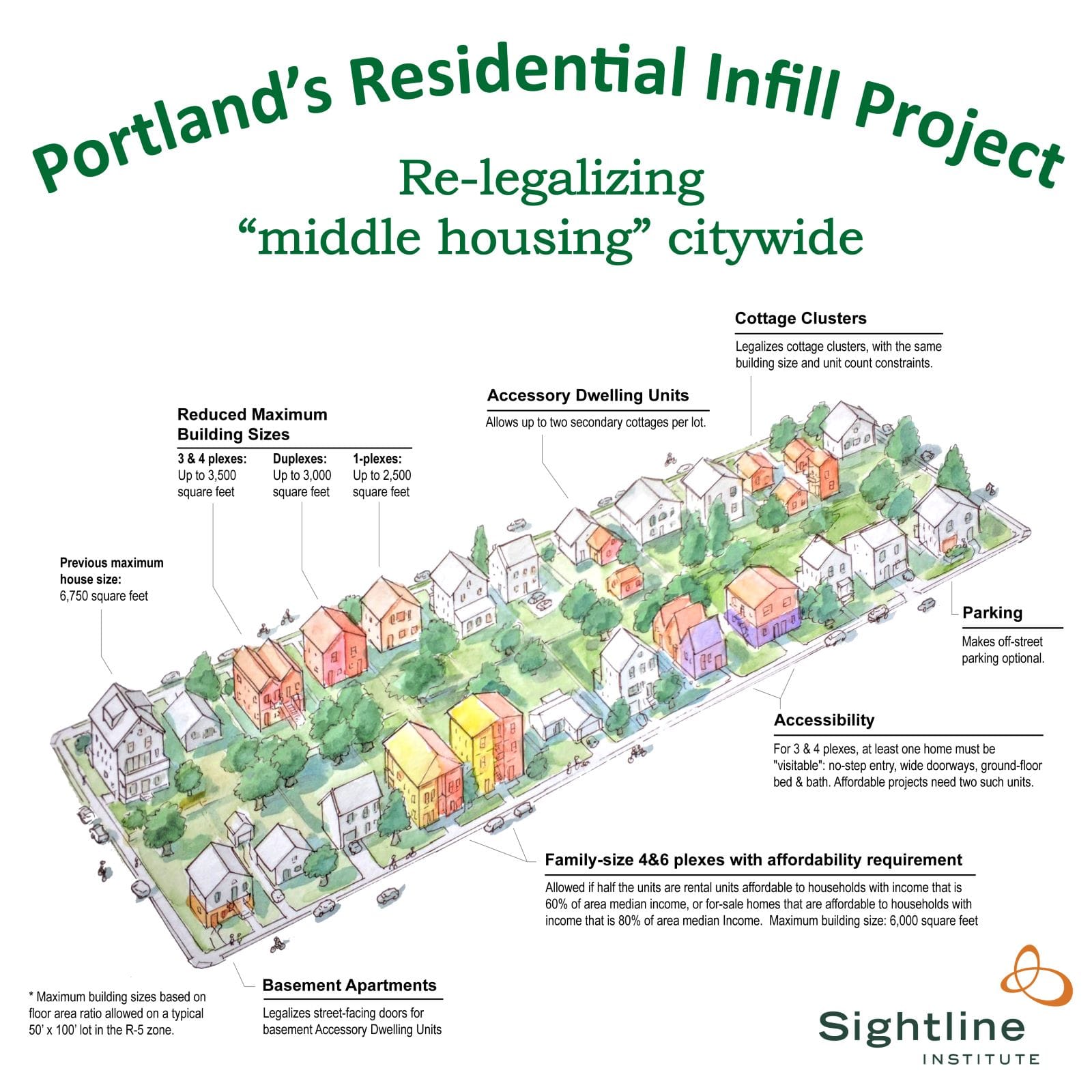
“A neighborhood is so much more than a single type of building — it’s a place people live and love and work and call home. This simple change reflects both the current reality of the way many Seattleites live and our vision of Seattle as a city rich with homes for all shapes and sizes of families,” said Brittney Bush Bollay, Chair, Sierra Club Seattle Group.
To move forward with even the renaming took extensive public outreach, as the Mosqueda press release summarized. “This legislation was accompanied by extensive public outreach, including two public hearings; four conversations in Council committees; a Community Housing Roundtable that included organizations working to reverse displacement and build affordable housing; meetings with myriad organizations focusing on housing, equity, the environment and community-driven development; a community letter that was sent to nearly 400 individuals and organizations who are connected with the 17 neighborhoods whose neighborhood plans currently reference the term single-family; as well as an open call to community organizations that were interested in a briefing on the proposal.”