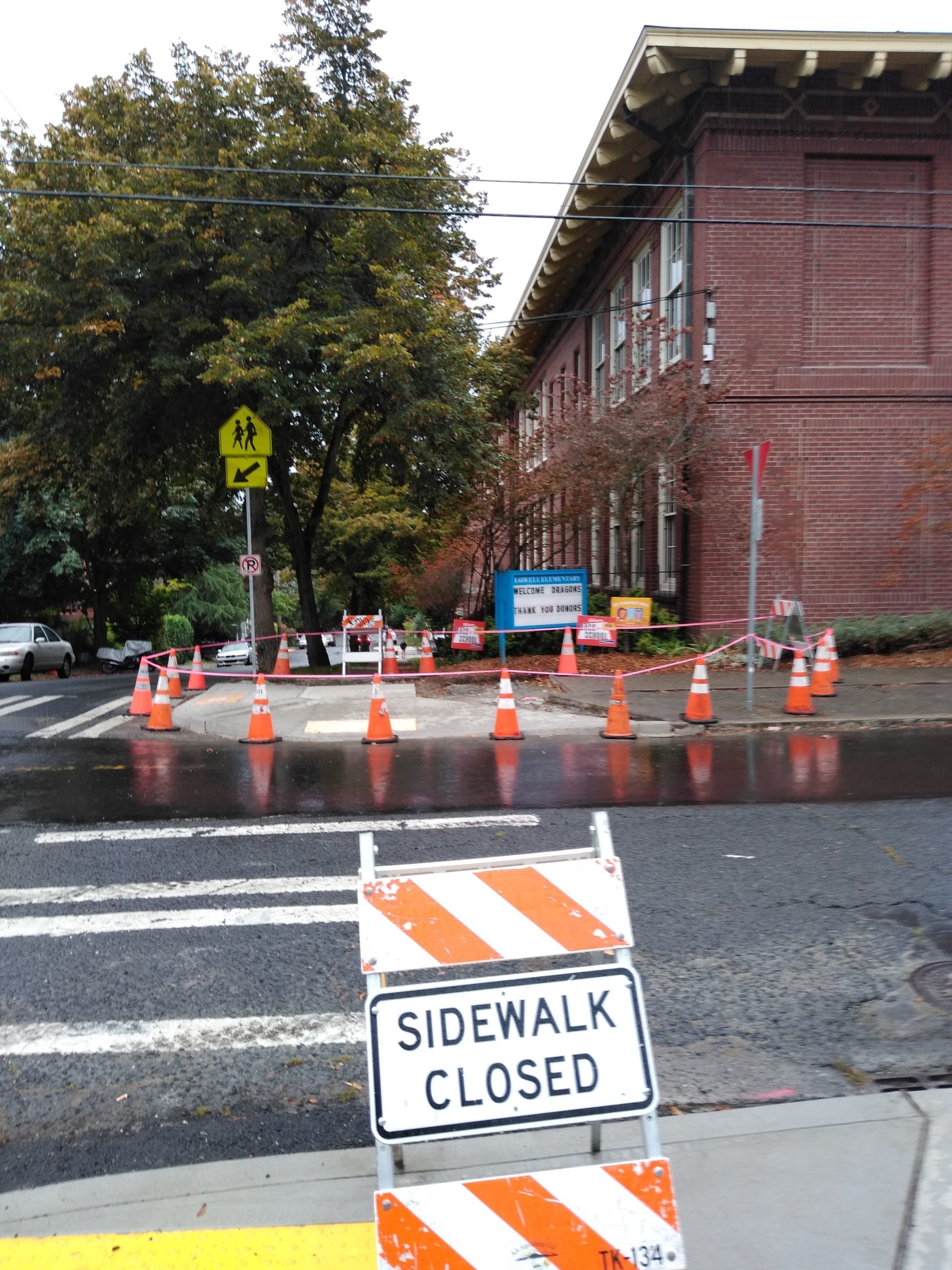
In the summer of 2017, every single sidewalk in Seattle was visited by a team of interns and assessed: 2,300 miles of sidewalk were inspected. They found, unsurprisingly, a lot of issues. There were 93,000 places where sidewalks were meeting at unlevel surfaces more than a half inch high, 3,600 spots where the sidewalk was itself sloping downward, and 20,000 obstructions preventing the sidewalk from being 36 inches wide.
This $400,000 assessment yielded a full accounting of problems that are estimated at costing $500 million to $1.5 billion to fix. Currently, Seattle spends a few million dollars a year to repair sidewalks, which pays for around 1,000 spot improvements and the equivalent of repairing five to 10 full blocks of sidewalk per year.
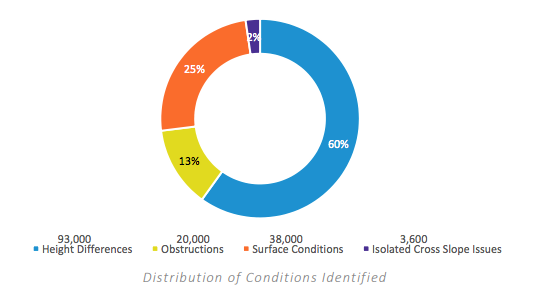
In other words, we are not even repairing sidewalks as fast as they can become, unusable. The poor quality of sidewalks impacts Seattle residents on a daily basis, particularly those who rely the most on sidewalks: people who use them to roll on (where obstructions and uplifts can literally prohibit movement) and people with sight challenges who may not be able to see obstructions and uneven surfaces to avoid being hurt by them.
Sidewalk Maintenance Resolution
The city council’s transportation committee is taking up a resolution, brought forward by the MASS Coalition (of which The Urbanist is a member) that asks the Seattle Department of Transportation (SDOT) to do more to address this. Bundled as part of the MASS Transportation Package, the resolution requests a report to be delivered to the council by March 31 of next year, and asks SDOT to look into:
- Assessment of strategies to implement an equitable cost sharing program
- An evaluation of the City of Denver’s sidewalk repair program
- Options for do-it-yourself maintenance and hiring an approved contractor
- Point of sale and lien options
The same resolution also seeks to address the issue of inaccessible sidewalks during snow and ice events, like the one that occurred this past February. Many neighborhood streets were impassable for nearly a week after the snow and ice event, despite city law requiring property owners adjacent to the sidewalk to clear sidewalks after snow and ice.
The resolution asks SDOT to implement a public messaging campaign around the sidewalking clearing requirement and requests they do it nearly immediately to get ahead of the start of winter, setting a deadline for the campaign to start no later than November 1, 2019. It also asks SDOT to analyze how it enforces the requirement to keep sidewalks clear and to present a report by New Year’s Day.
Council to SDOT: Develop Equitable Signals Policy
To people who roll and walk around the city, street crossings are just as important as sidewalk condition. Considering the fact that traffic signals exert a huge amount of control over how people move through the city along our busiest streets and districts, it is surprising that SDOT has not developed an overall signals policy that they use to guide their own decision making.
At today’s Transportation and Sustainability meeting, the city council will consider a resolution, also brought forward by the MASS Coalition, asking SDOT to develop one, in conjunction with the City advisory boards, community groups, city staff, and the general public. This request is also on an expedited timeline, with an intial policy requested by the 1st of December.
The Seattle Pedestrian Advisory Board has already outlined a number of the things that they would like to see from a new signals policy, as laid out by chair David Seater in this video: