There are probably a few King County Councilmembers kicking themselves right now for not running a countywide transit measure year. Seattle’s overwhelming 80.32% victory on Proposition 1 results suggests the city could have carried the vote for the entire county if that had been the proposition.
You can’t really blame them. The world was going to hell in a handbasket in March when King County voted to shelve the countywide measure as Covid’s first wave ripped through the country.
The pandemic is raging even worse now–though in a hopeful sign President-elect Joe Biden announced plans for a nationwide mask mandate to tamp down on the spread of the virus. Facing recession and another year of sickness and death, Seattle voted to stand by essential workers who rely on transit and make up one in three riders keeping society running so more fortunate folks can stay home. The revelation that people can be selfless and good is nourishing in cynical times when our ability to stand together rather than turn apart seemed in doubt.
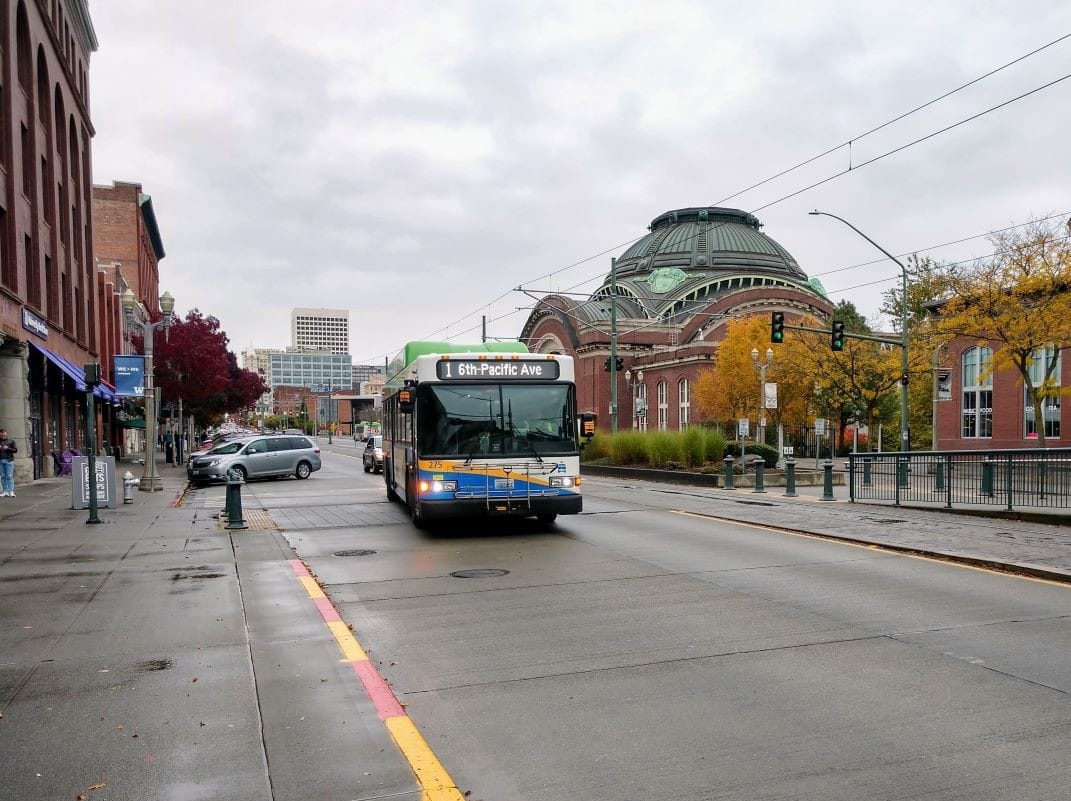
Seattle’s vote will help slow the rate of bus service cuts in the region, but without action by the King County Council’s deeper cuts will be on the way. They will hit transit-dependent families hard. Investing now would be a show of solidarity. It’s the right thing to do, and it seems likely to pass.
Doubters will point to the failure of the 2014 countywide transit measure, but support for transit has grown since then. Running the measure in March was likely a drag on the 2014 measure. We can craft a better package now and run it in November when turnout is higher.
Crafting a package
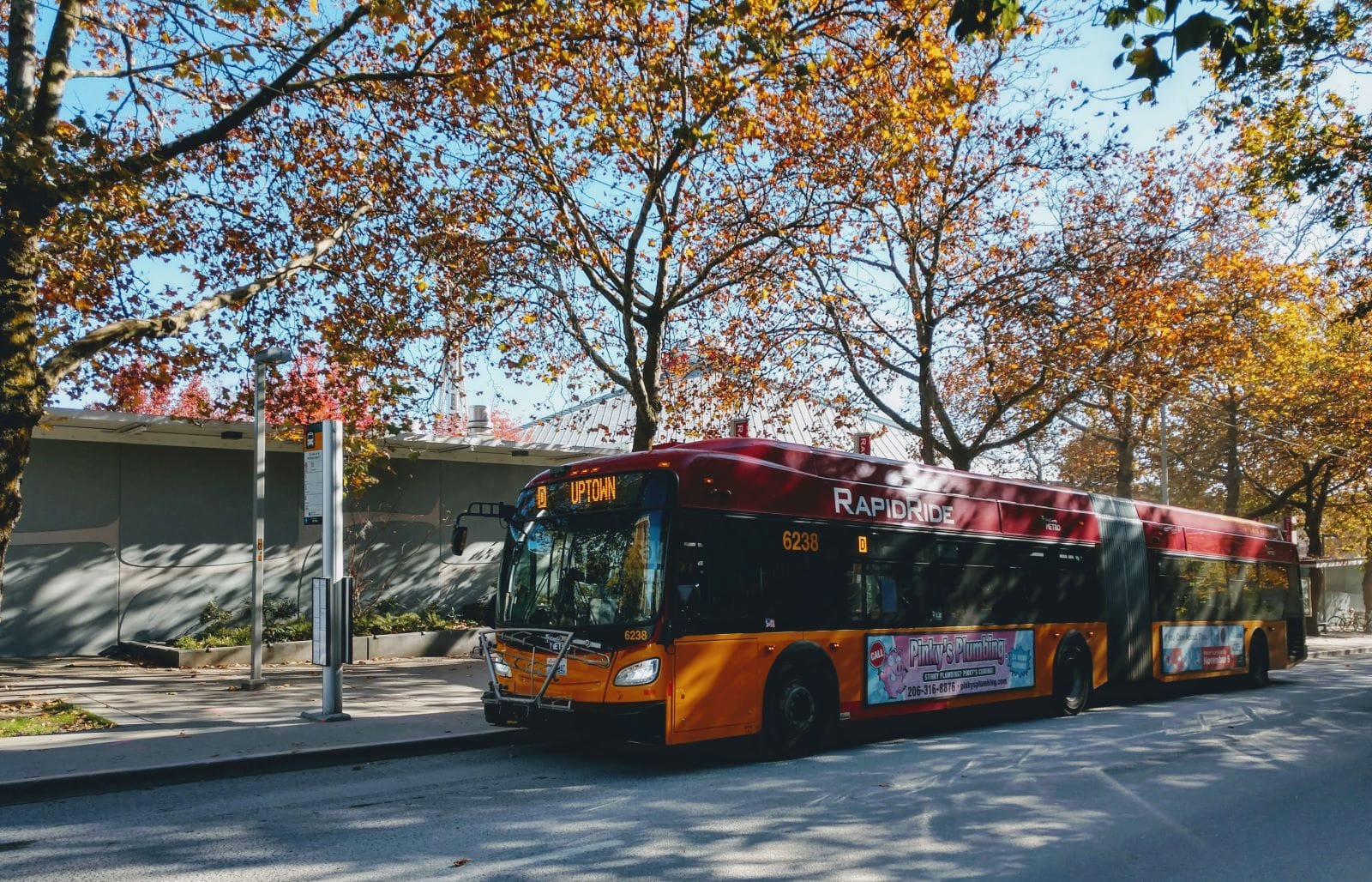
In 2017, Metro laid out a long-term “Metro Connects” vision planning transit investments to take the network to 26 RapidRide lines spanning the county and full electrification of the fleet by 2040, which also means remodeling and adding new bus bases, which is a major investment as well. The County estimated implementing plan would increase half-mile access to frequent transit by 60%, taking the share to 73% countywide–plus, the rate would be even higher in minority and low-income areas, which would reach 77% and 87% respectively. This would be a huge step to take, and a fitting commitment to county’s low-income residents and communities of color who have borne the brunt of the pandemic as essential workers on the frontlines.
Best to get busy building if we plan to achieve those visions, but unfortunately the agency latest actions have centered on scaling back the vision rather than realizing it. A recent update proposes cutting the pace of expansion in half, noting the need for a dedicated funding source.
A county transit funding package should be on our near horizon, but we don’t need to limit it to transit alone. Another exciting result at the ballot this year was in Austin, Texas where voters approved both a major light rail and rapid bus package (including a tunnel downtown) and another $460 million measure investing in the protected bike network, pedestrian and trail improvements, and road safety interventions citywide. Austin pledged to finish 70% of its bike master plan for an on-street all ages and abilities bike network with $40 million from the measure, another $80 million is set aside for trails, and $65 million for Vision Zero safety upgrades. King County has some nice trails intermittently, but it lacks a cohesive network like Austin has planned.