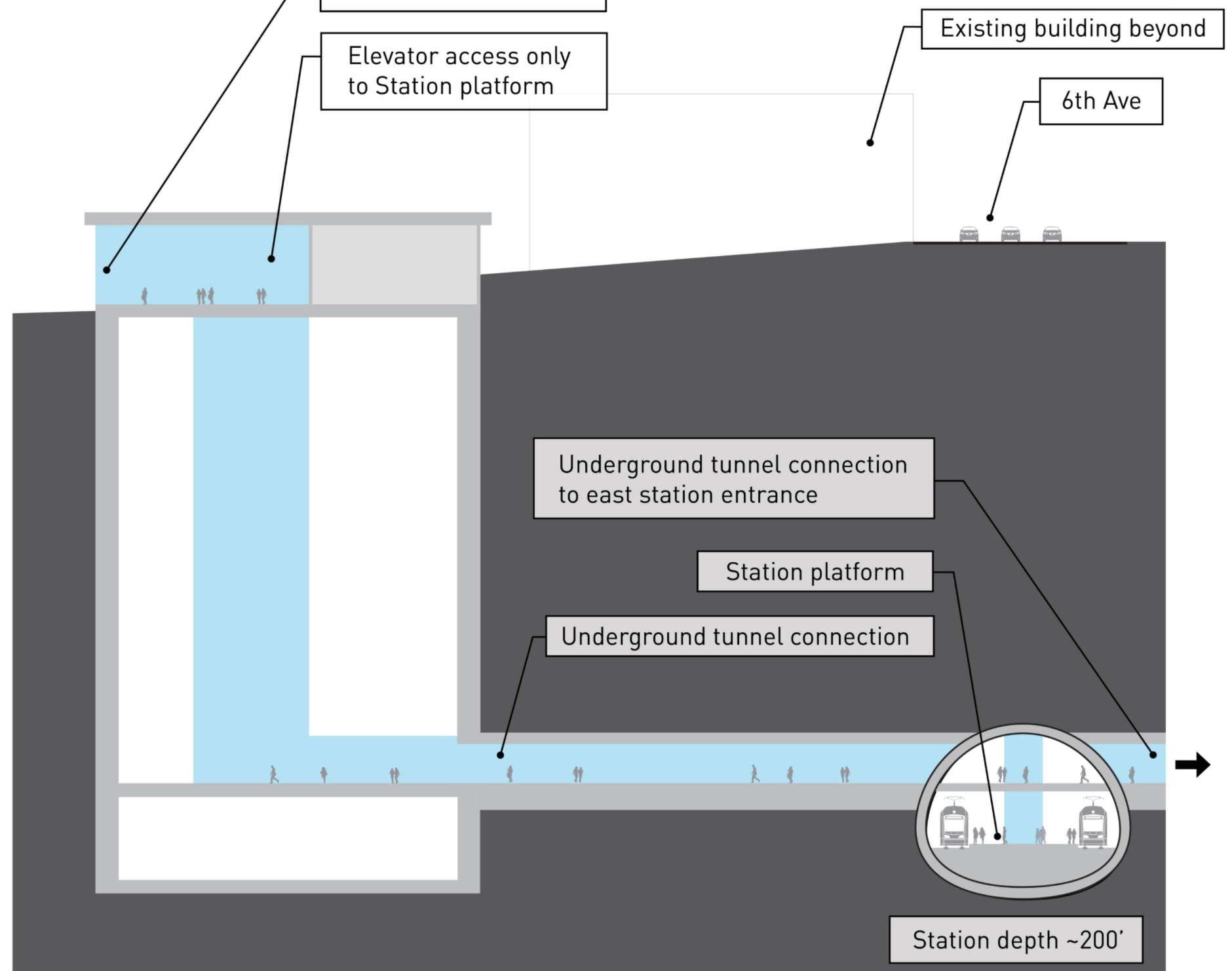
Sound Transit recently released updated alternatives for the Ballard and West Seattle light rail expansions. As Doug Trumm detailed here at The Urbanist, the agency has drafted up concepts for some of the most cavernous stations in not just North America but the entire world. Other concepts show urban stations many more stories above the ground than Northgate’s and accommodating status quo car infrastructure. What these concepts really show is that if you don’t have any first principles in station design, you can easily go awry in designing stations that will inconvenience riders for generations to come and dissuade some from either bothering.
Let’s look at some of these offenders and then discuss what can be done to course correct.
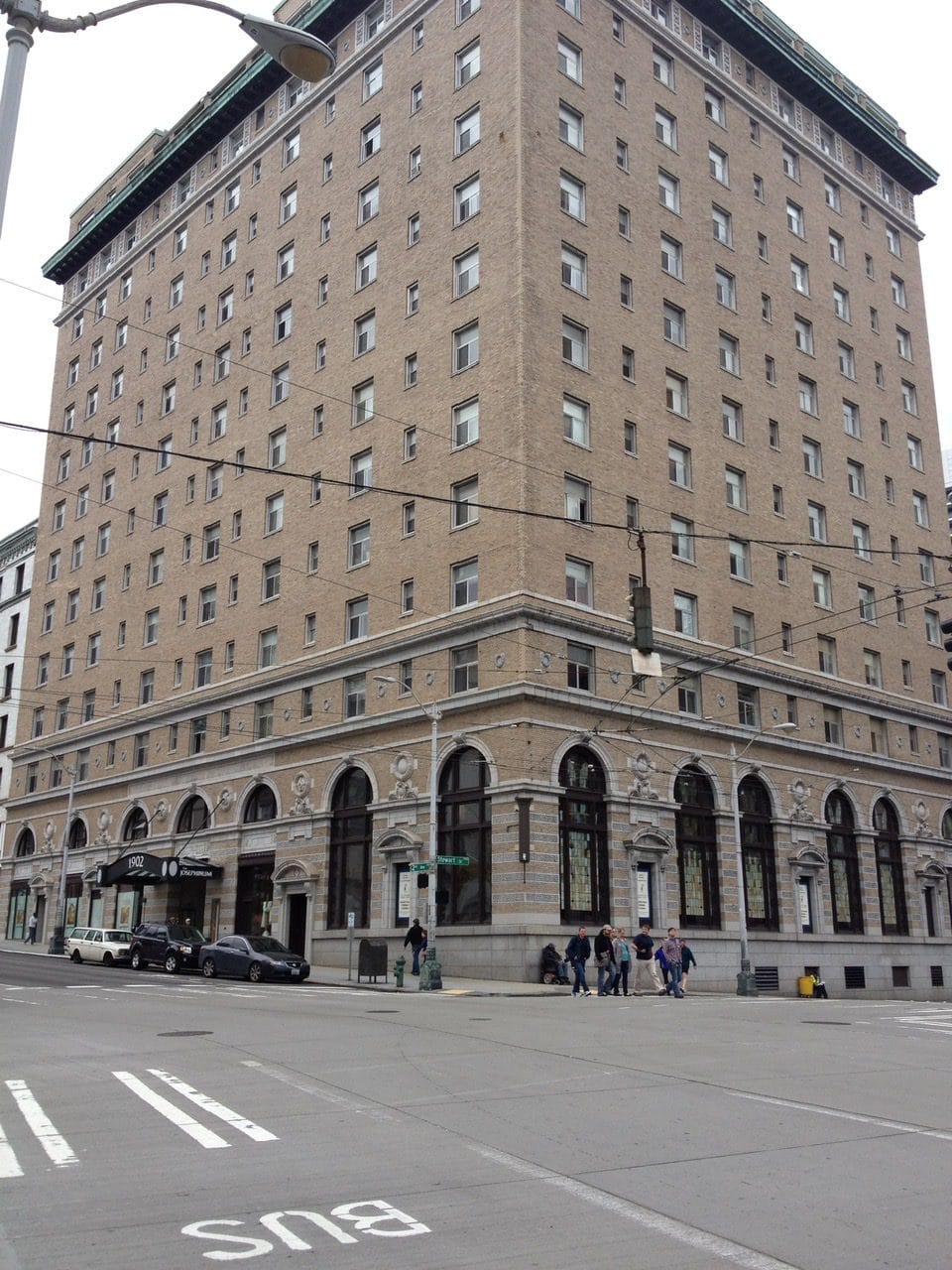
In Chinatown-International District, one station option seriously under consideration could be as deep as 190 feet below ground — that’s more than the height of the landmark Josephinum Building on 2nd Avenue. In the downtown office core, the preferred Midtown Station could be 170 feet deep — deeper than Beacon Hill’s station at 160 feet — and a competing alternative could be 200 feet deep.
In West Seattle, the preferred station in Delridge would needlessly take out a block of homes and situate the platforms 85 feet above because of an unwillingness to use the street and undulate guideway. In Interbay, an alternative station design would involve construction of an elevated station right above 15th Avenue W. You’d think they’d get this right, but incredibly it would retain the car sewer nature of the street, elevate platforms 50 feet above the ground, and put a pedestrian bridge above the platforms to reach the east side of 15th Avenue W.