Reaching the station platform could take six minutes at the deepest stations.
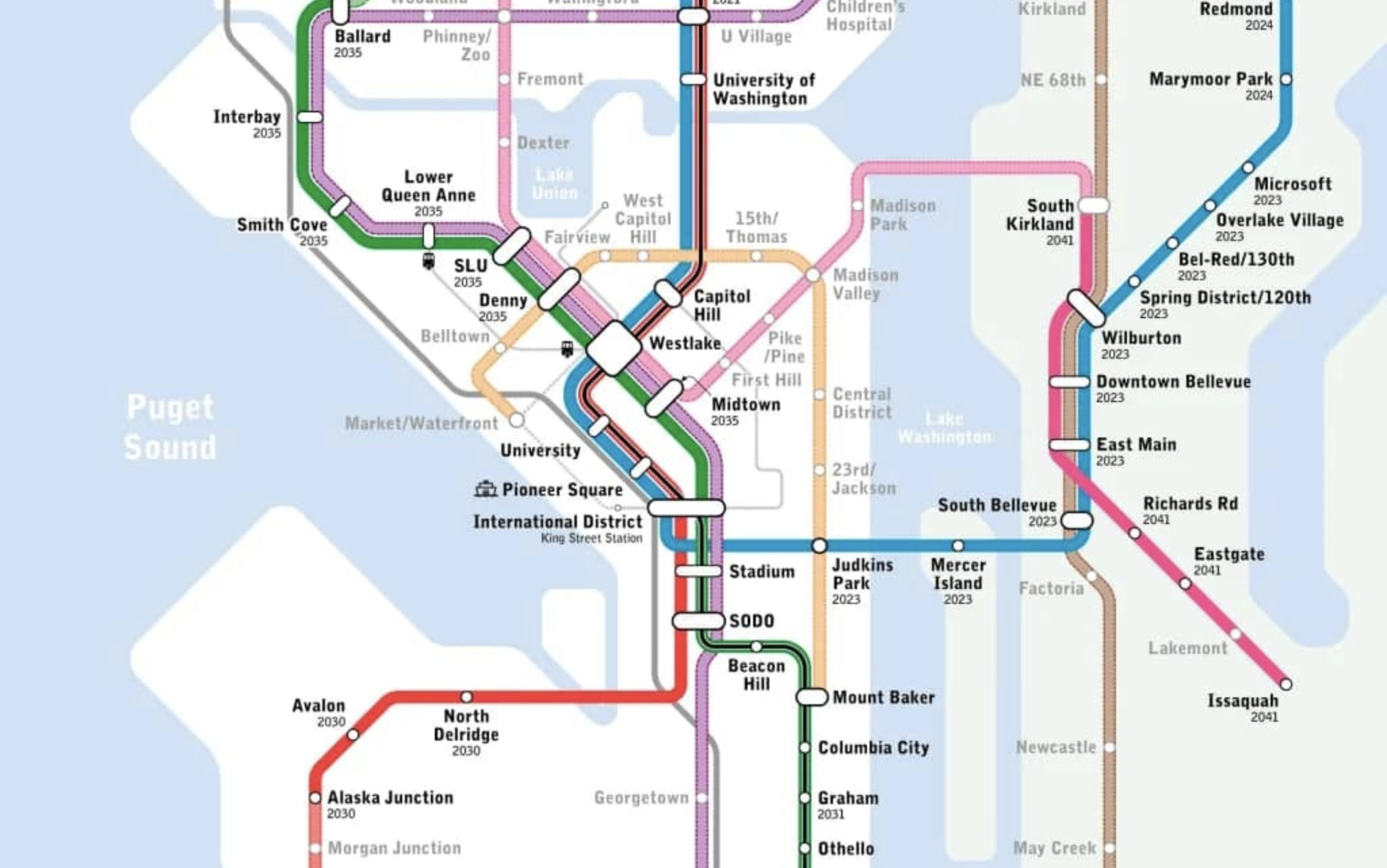
Sound Transit’s preferred alignment for the next phase of light rail in Seattle includes a Westlake Station that is 135 feet deep, a Midtown Station that is 140 feet deep, a South Lake Union Station that is 120 feet deep, and a Delridge Station platform that is 85 feet in the air. Chinatown-International District doesn’t have a preferred alternative yet, but one deep bore option is a whopping 190 feet deep.
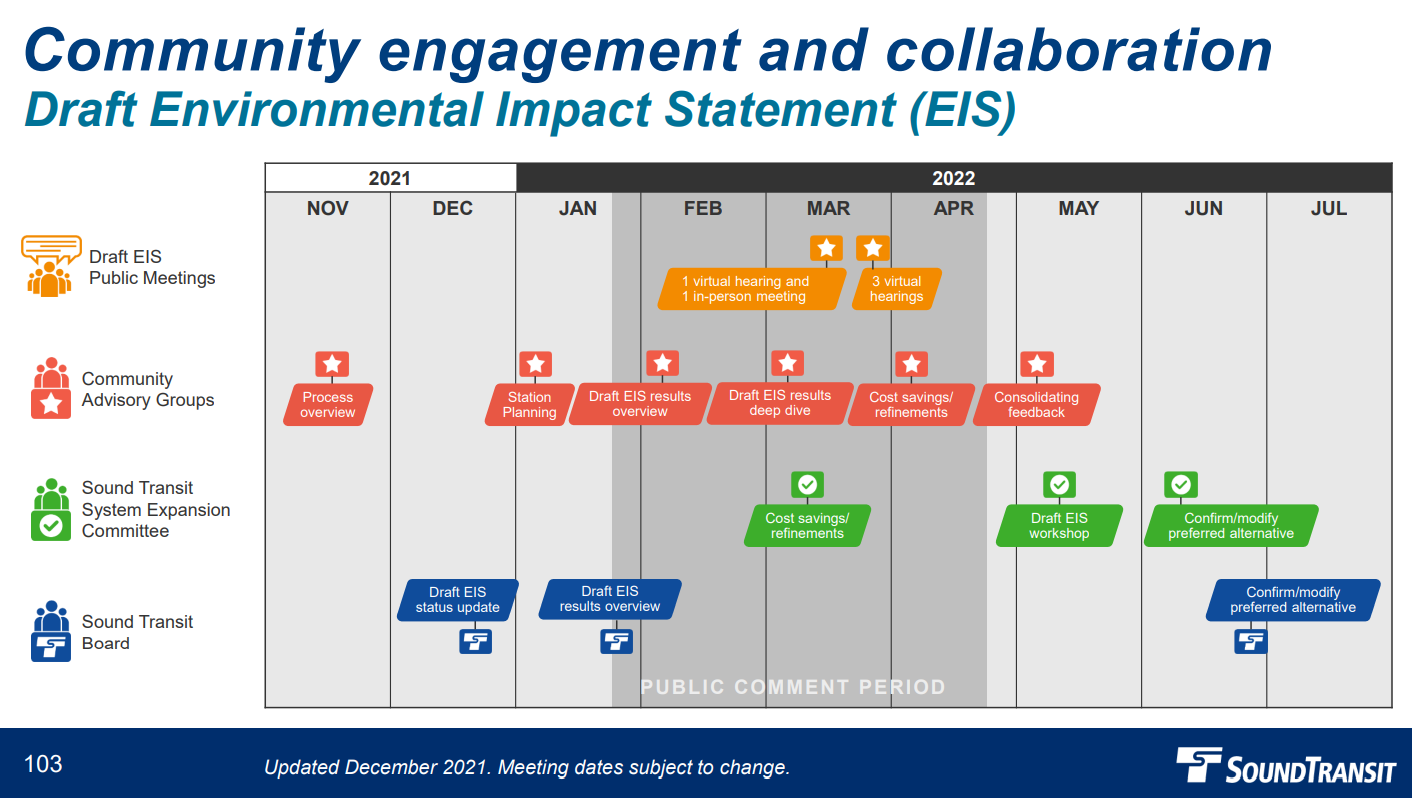
A fuller picture will emerge when Sound Transit releases its Draft Environmental Impact Statement (DEIS) for Ballard Link and West Seattle Link promised by January 28th, but the agency did reveal new morsels in presentations to its Community Advisory Groups over the past week. (Update: The agency released the Draft EIS on January 18th.)
“As one can expect with an elevator-only access configuration and deeper, those travel times do add up,” Sound Transit Land Use Planning Manager Sloan Dawson said in the agency’s presentation to the Chinatown-International District and SoDO Community Advisory Group yesterday. Dawson noted that shallower stations have shorter travel times.
Sound Transit has modeled travel times from the surface to the station platform at five to six minutes via escalator at Midtown Station and four to six minutes via escalator at the new Westlake Station, agency spokesperson Rachelle Cunningham said. Elevator times are two to three minutes at Midtown and three to five minutes at Westlake, but that quote does not appear to factor in waiting time in lines to get into the elevators, which can be very long at peak times, as users of the elevator-only Beacon Hill Station can attest. Sound Transit is considering elevator-only options for its deepest Midtown and Chinatown stations.
Already budget strain has pushed back Sound Transit 3 (ST3) some timelines a bit, which could be exacerbated by alignment decisions demanding more complex engineering and more costly construction. With the agency’s recent cost crunch, planning delays, and realignment decision, West Seattle Link is slated to open 2032 and Ballard Link is tentatively tabbed for 2037 (though it could potentially reach Smith Cove by 2035 under a phased opening scenario).
Unfortunately, super deep stations and awkward elevated alignments that require expensive land takings could be a recipe for further cost increases and engineering delays. It’s not too late, however, to correct course and fine tune the plan, as Sound Transit opens a round of public comment and engagement with the release of the DEIS.
Sound Transit’s preferred alignment in Ballard would cross Salmon Bay on a new fixed high bridge at 14th Avenue NW and place the station at 14th and Market Street. Three other alternatives have made it into the DEIS, but the two tunnel options require “third-party funding” — mostly likely this means Seattle raising additional funds or securing them from the state legislature.
On the other side of Salmon Bay, the preferred alignment sandwiches the Interbay Station against the BNSF rail terminal rather than on 15th Avenue W, which is where the alternate station is located. Either alignment cites the Smith Cove Stations on Elliott Avenue W opposite the new Expedia Campus.
Once the line hits Uptown, the preferred alternative opts for deep bored tunnels and increasingly deep stations as it heads toward a that cavernous 140-feet-deep Midtown Station. The other studied alternative at Midtown is even deeper at 170 feet, but would offer an easier walk to First Hill — once that pedestrian gets their turn in the elevator, as escalators are not proposed given the incredible depth. That alternate option would be the deepest station in the region, besting Beacon Hill Station’s 160-foot depth.