It wasn’t until the last two centuries that the advancement in mobility really took off globally. Before then, the mainstay of fast land-based mobility was the horse. If you were lucky, you could afford one; and if you were independently wealthy, you could afford enough of them to pull you by carriage. Most people had but their own two feet to get around on a day-to-day basis. Nevertheless, the 19th Century saw the introduction of major mobility changes: the locomotive in 1804, the bicycle (lovingly known as the velocipede) in the mid-1800s, and then the first electric streetcars in the 1860s. These were earth-shattering advancements in their own way because they expanded the speed and distance at which people could travel setting the stage for the rapid growth and industrialization of cities like New York, Cleveland, and even Spokane. It was the age of the city.
Meanwhile, the 20th Century took a completely different turn, so to speak, by transitioning to the car economy. Henry Ford’s Model T offered the first real independent alternative to shared modes like locomotives, streetcars, and horse-drawn carriages for mid- to long-distance travel. Not only was it durable and quick, it was relatively affordable to individuals. From there, the car industry grew rapidly and constantly refined its product for the masses. Cities again responded to the new changes that came with the car through the establishment of speed limits, separation of modes in right-of-ways, the institution of laws to impede the rights of pedestrians, and ultimately the decline of other modes. It was the age of the car.
Now, motorized vehicles are taking another big leap with driverless technologies.
There’s a lot to like about these advancements no matter how pro-walk, pro-bike, pro-transit, or pro-urbanist you are. A driverless future promises some really great things: elimination of human fallibility, a lower ratio of private vehicles to people, less emissions, additional street capacity, and reduced costs of vehicles. Stick with me and consider that driverless cars actually have complementary urban benefits to an existing public transportation, walking, and biking system.
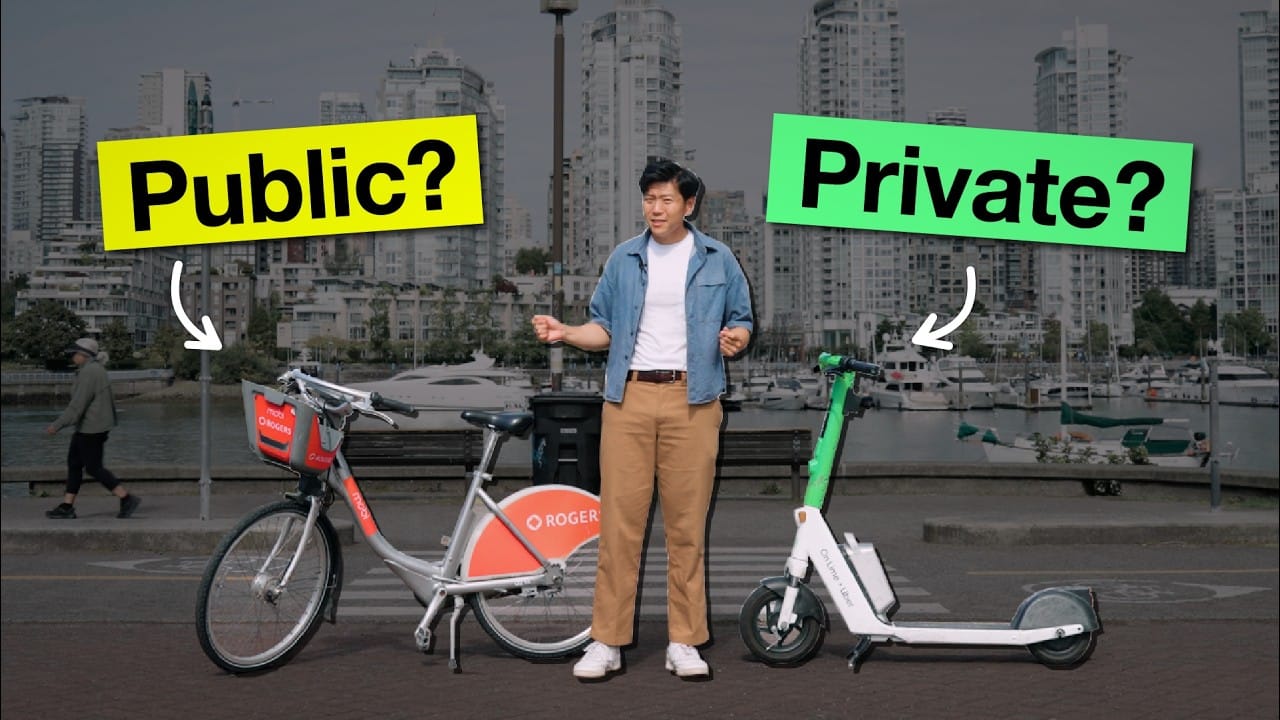
Like Uber or Car2Go, a shared driverless car network could provide a means to move many people around independently or together along a shared route. It’s conceivable that as mobile app technologies improve, this capability will be in a wide usage. In fact, Uber is already trying shared rides as part of their service in some markets with relative success. As an outgrowth of the sharing economy, the driverless car network is a natural fit given people’s willingness to not only carpool with co-workers, but couch-surf abroad with people they’ve never met.
Another brilliant aspect of this is that the desire for both redundant numbers of private cars and the storage of them (parking) will dramatically decline as shared driverless cars increase. In Seattle, data from Car2Go alone has shown that thousands of members have ditched their cars entirely. We have every reason to believe that this would hold true for a shared driverless car network. Meanwhile, from a cost standpoint, the absence of direct labor to managing driverless cars (that is, physically driving them) would extend to all sectors of the market that employs driver: transit, logistics, taxis, and more.
But perhaps the most compelling reasons for why driverless cars will be complementary to cities is their safety. People are inherently flawed: they break laws intentionally and unintentionally, they make poor choices like drinking or texting, and occasionally they simply become distracted or incapacitated. In all of these instances, there are chances for tragedy to strike. If programmed correctly, technology can serve the safety of all much better than any one individual can even on their best of days. The typical human flaws are not present in the decision-making and handling of a car operated by a computer. Instead, the car operates by the rules set by the manufacturer, local regulations, and upon the surrounding conditions.
Despite this though, it’s possible that driverless cars will be a victim of their own success. For one, declining vehicle ownership will directly impact the bottomline of car manufacturers and retails. For another, there are still limitations to what driverless cars can do. Like any mode in a system, there is a maximum carrying capacity for it–no matter how efficient it may be. But there are other reasons to give us pause for concern.