In November 2018, Councilmember Teresa Mosqueda, with the backing of housing advocates like us, succeeded in getting $500,000 added to the City budget to fund a racial equity analysis of the Seattle’s urban village growth strategy. That report was due in December 2019. That deadline came and went and then the pandemic hit three months later, which gave the Durkan administration a convenient excuse to continue to delay.
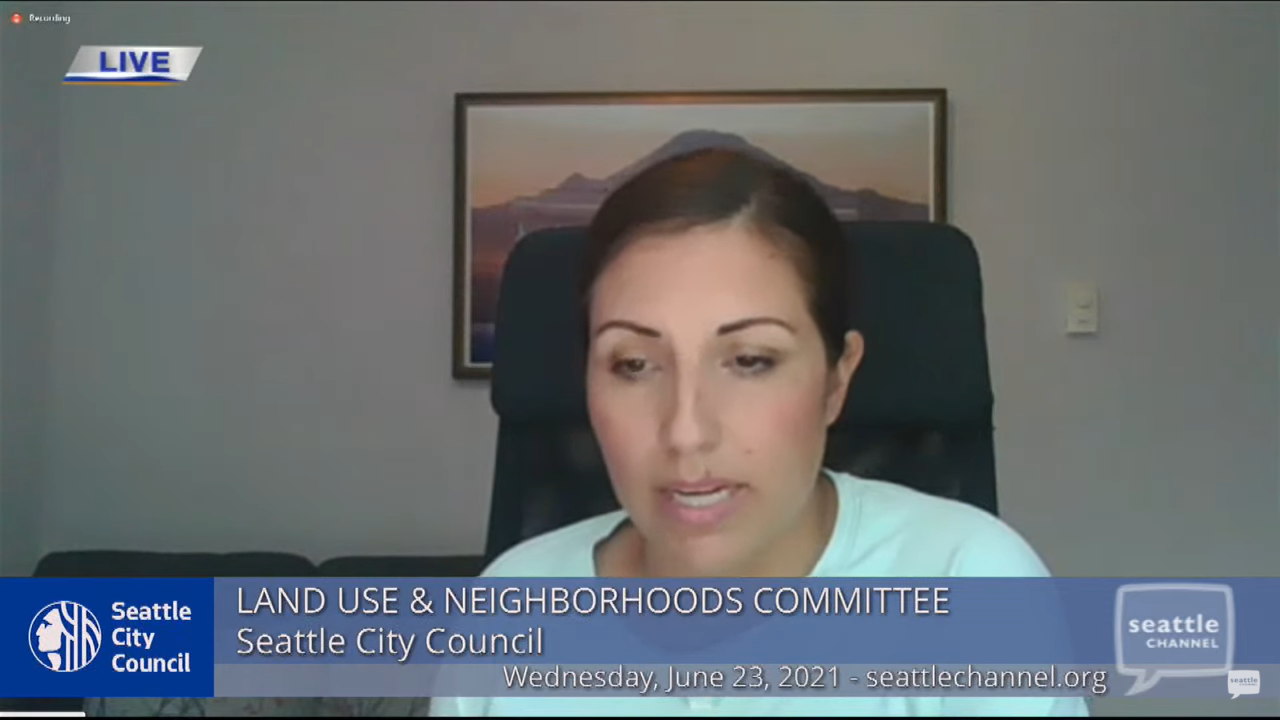
That report — which is now 18 months late — was supposed to finally be delivered to the City Council’s land use committee today. However, the Office of Planning and Community Development (OPCD) asked for yet another extension. Both housing advocates and Mosqueda expressed their frustrations and urged no further delays. They hope to receive the report in mid-July.
Mosqueda: No more delays issuing equity report
“We cannot afford any additional delays given that this critical report must be made public so that it will help us lay the foundation of what is needed in the Comprehensive Plan update,” Mosqueda said during the meeting. “That process begins this year. This report is critical for helping us understand and chart a course that makes sure we are on a path to true equity in our zoning policies. So that we can really understand the fundamental aspects of our zoning policies are where there are pitfalls.”
The Comprehensive Plan Major Update is due in 2024, but it will take two years leading up to it to put together the outreach process and Environmental Impact Statement. Mosqueda and other housing advocates worry the City will squander the chance to correct course on a housing system that is not leading to good outcomes for Black, Indigenous, people of color (BIPOC), working class folks, or younger generations.
“Seattle’s land use, like many cities, are rooted in a history of racist exclusionary zoning policies, racially restrictive covenants, and redlining that have locked Black, Indigenous, and communities of color individuals out of our [high opportunity] neighborhoods,” Mosqueda continued. “The effects of exclusionary zoning policies continue today. We know this. There’s no doubt about it.”
“The racial equity toolkit is a tool for us understand how we as a city can identify the ways to address the skyrocketing cost of housing,” Mosqueda continued, adding these policies have contributed to “the homelessness crisis disproportionately impacting BIPOC communities” and to the suburbanization of poverty and resulting car dependency.
Housing advocates join the call
The Urbanist joined a letter urging the report’s release that was spearheaded by the Housing Development Consortium and also signed by AIA Seattle, Futurewise, MOAR, Share the Cities, Seattle for Everyone, and Sierra Club Seattle.
“We are eager to review the analysis, on the 1994 Urban Village Growth strategy that has been treated as a ‘defacto’ growth strategy with no question of how its origination relates to the historic housing planning policies that exacerbate inequities,” the letter states. “The political and protectionist language of single-family homeownership shaped the Urban Village Strategy and was baked into the comprehensive plan. It has continued to be reiterated with each update. During the 25 years since adopting the growth strategy, the median price for a single-family home increased dramatically.”