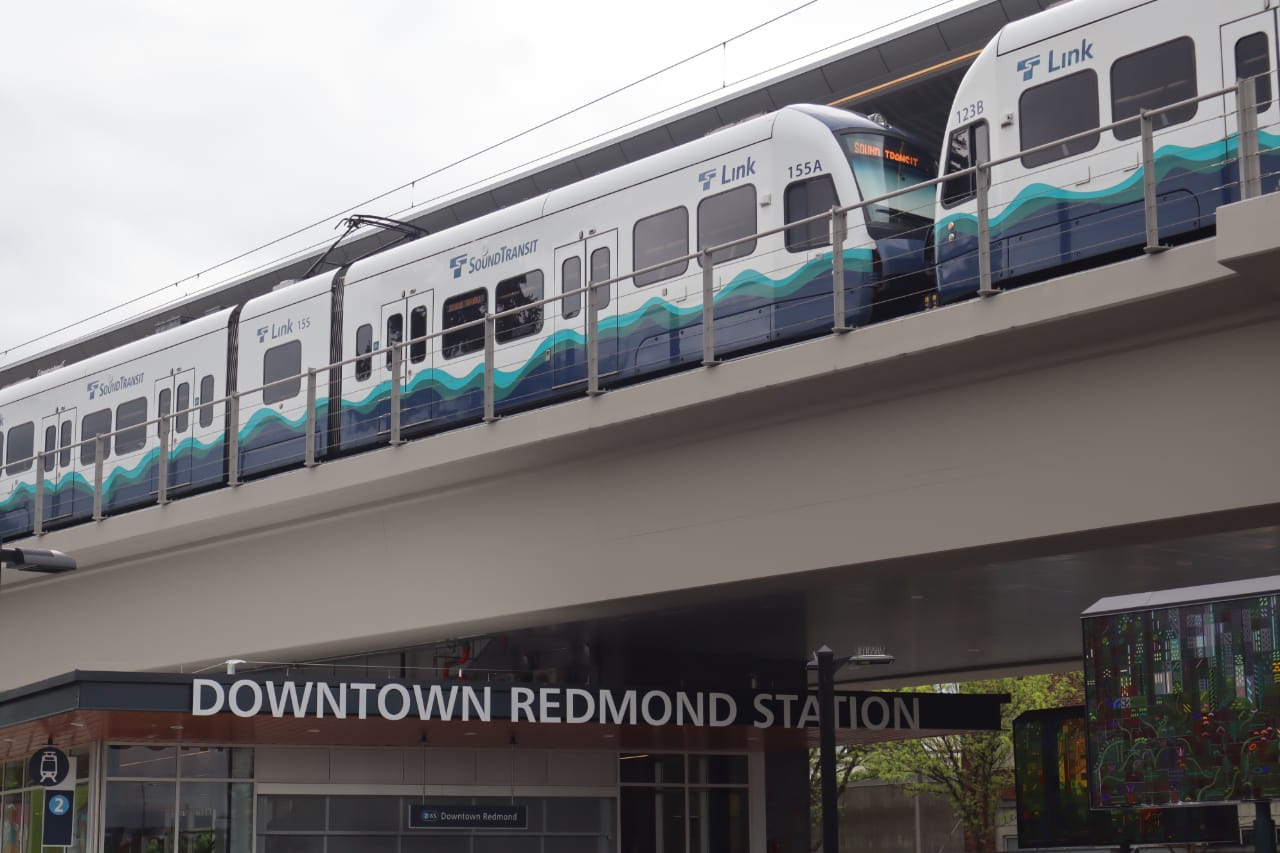
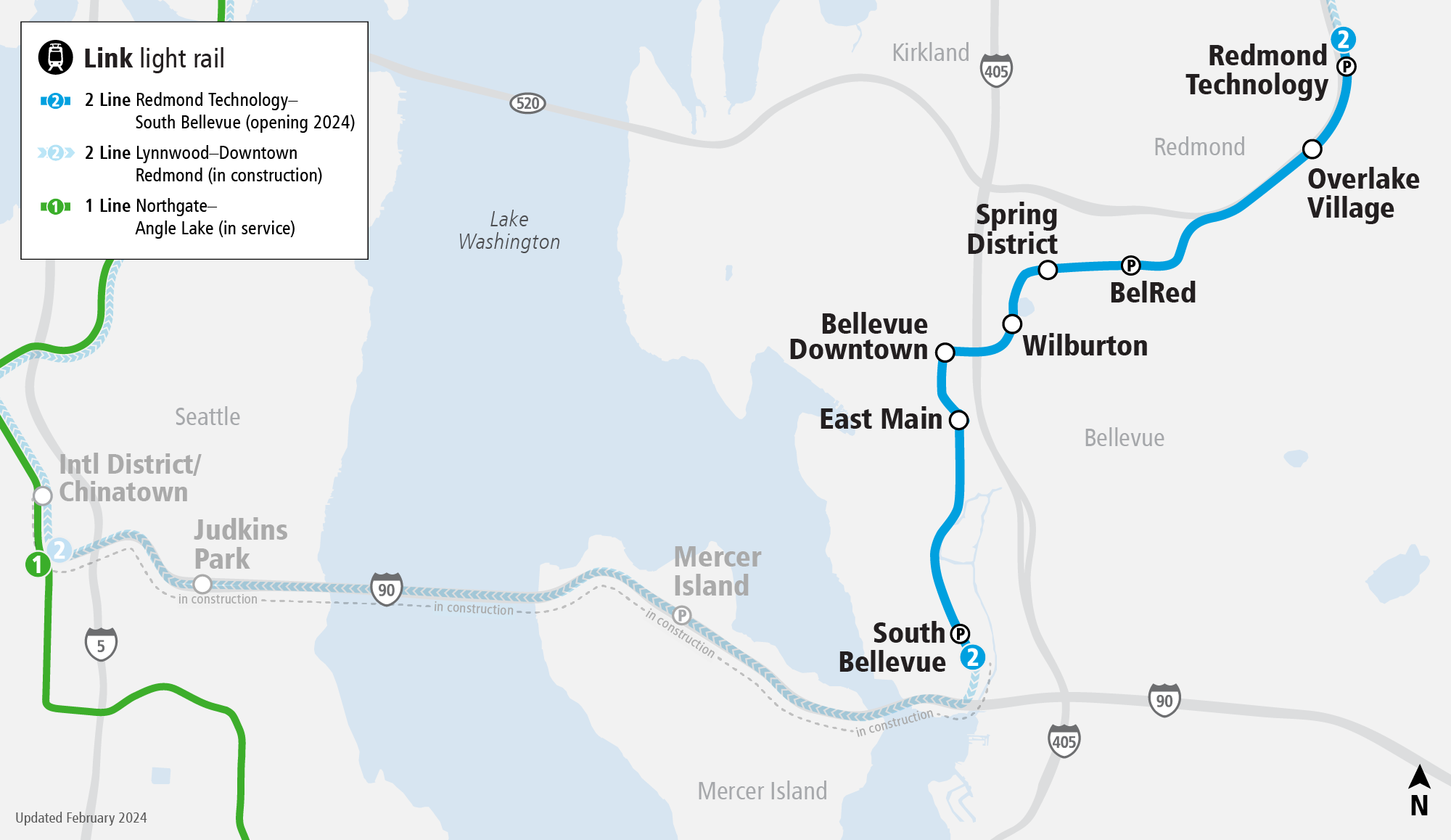
Today light rail arrives in downtown Redmond, as Sound Transit opens a 3.4-mile two-station extension of the 2 Line on the Eastside. Officials and advocates will be on hand to celebrate the occasion, and many groups (The Urbanist included) will be tabling outside of Downtown Redmond Station from noon to 4pm. The formal grand opening ceremony will start at 10:30am, with trains officially rolling north of Redmond Technology Station around noon. If past Sound Transit ribbon-cuttings are any indication, prepare for speeches to run long.
The two stations opening today are quite different. The new station at Marymoor Village features a 1,400-car parking garage that dominates the station area, a building that also features a loop for Metro buses and ample bike parking.
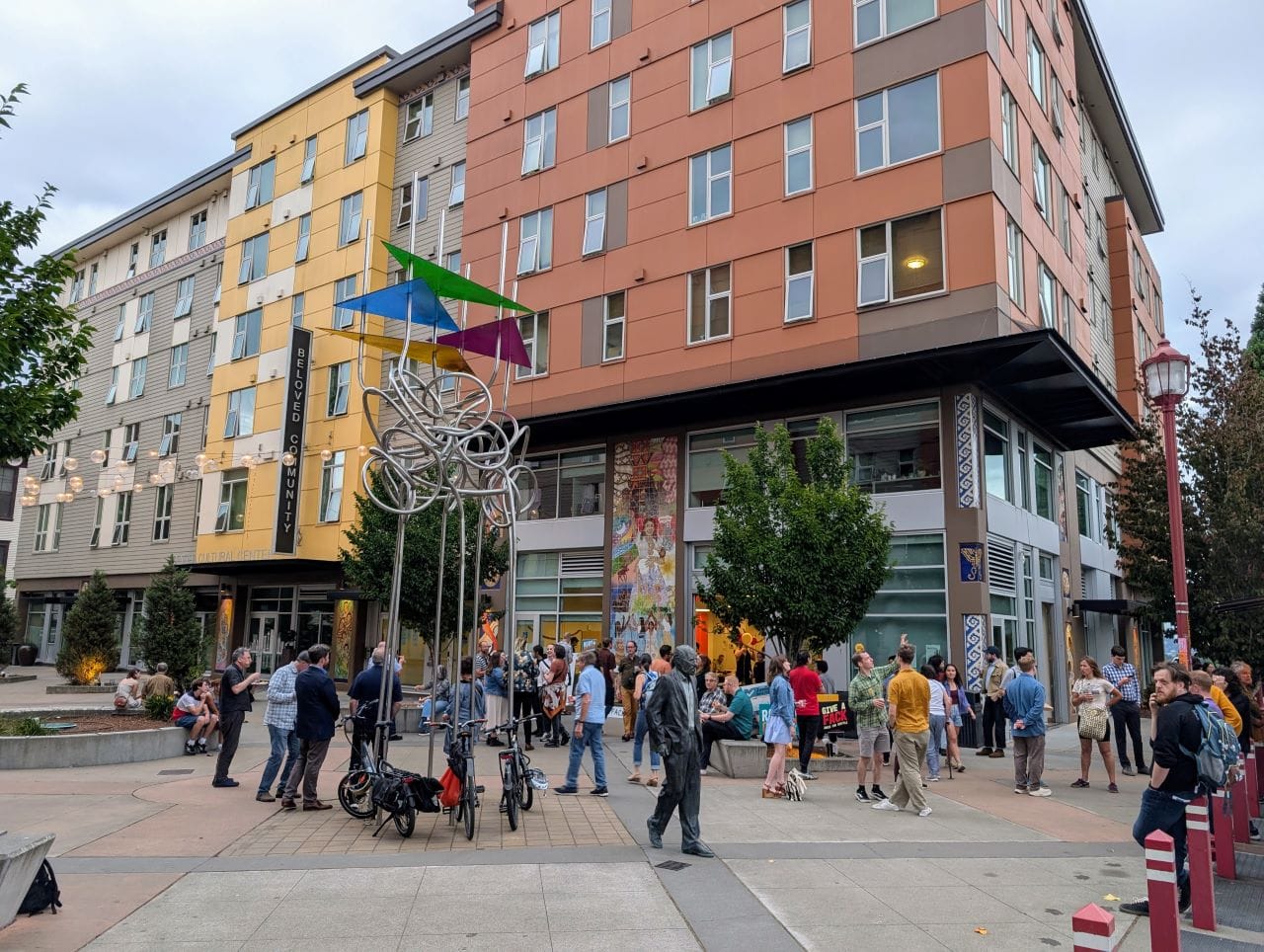
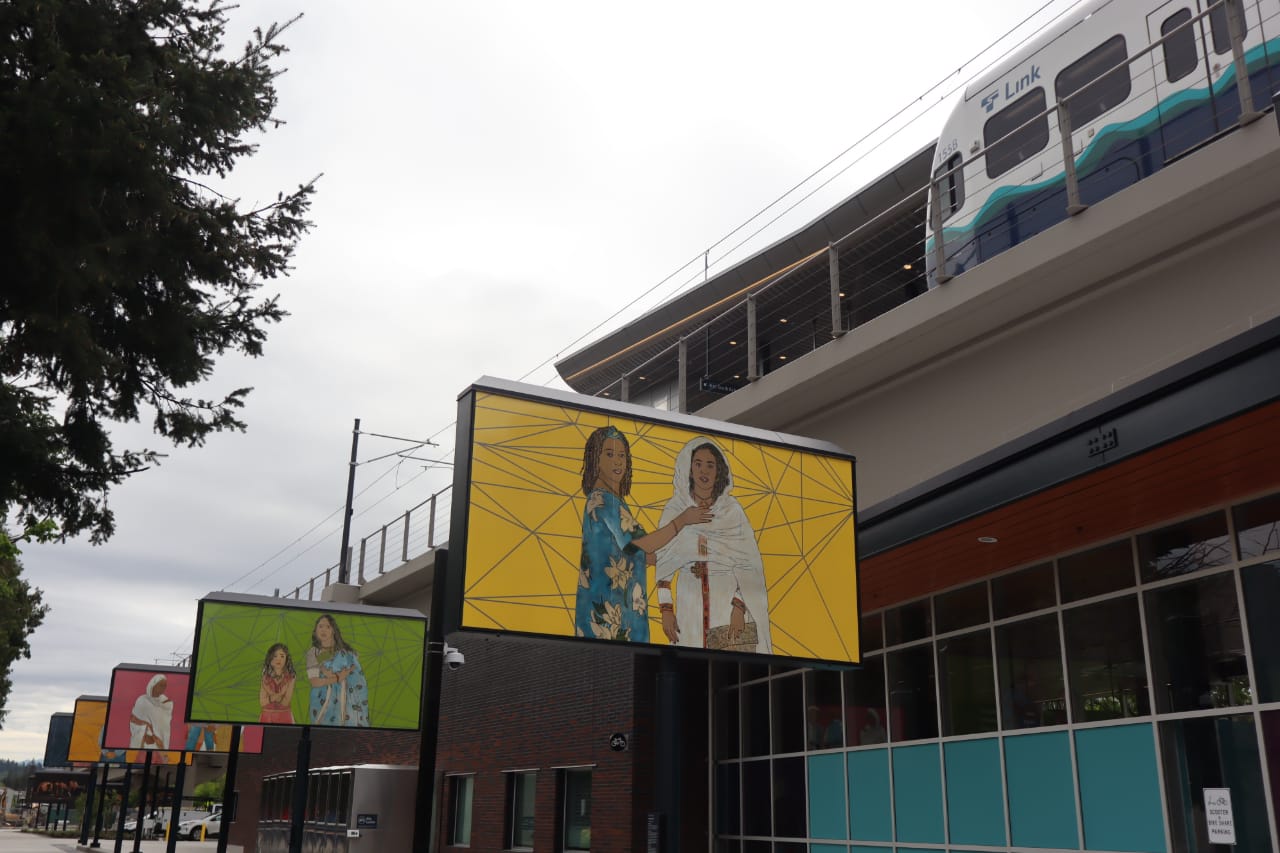
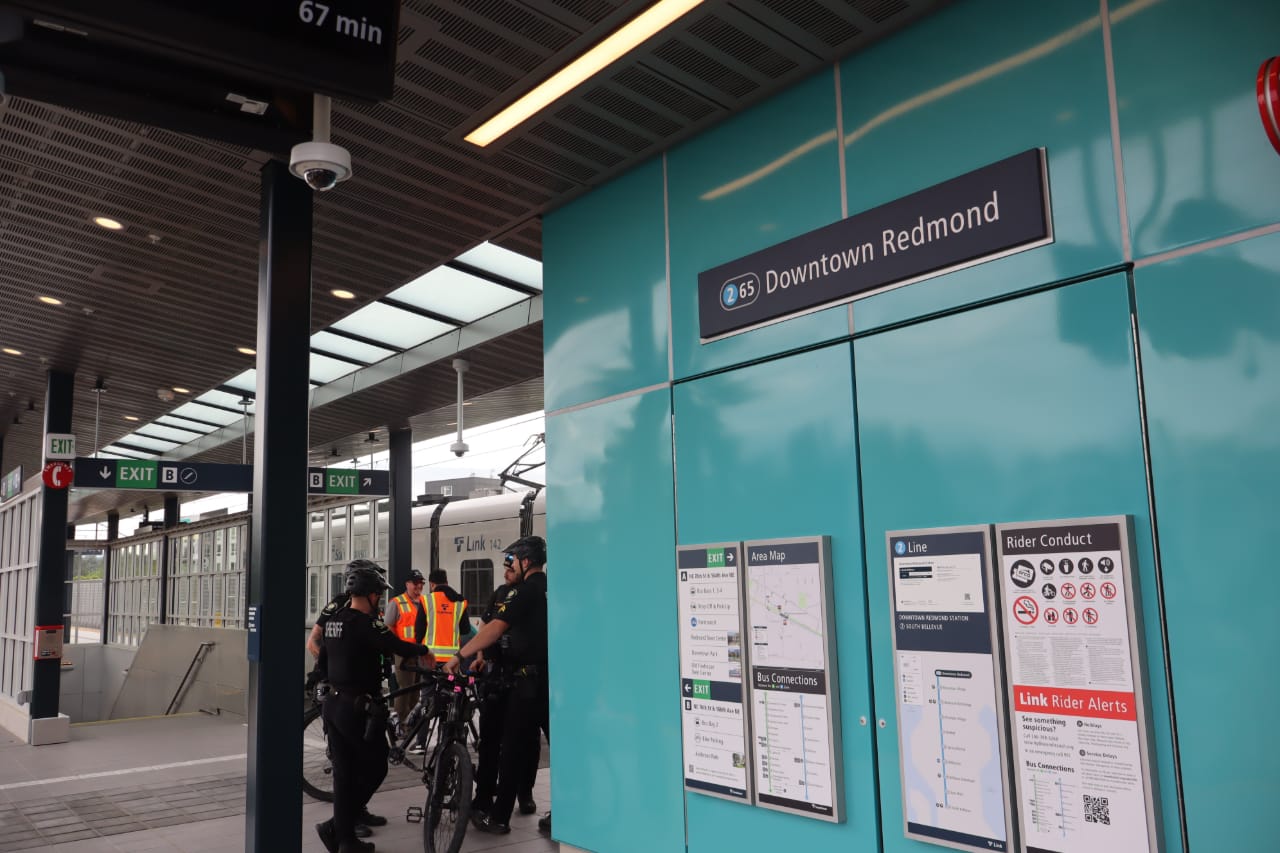
But the elevated station in Downtown Redmond is much more integrated into the urban neighborhood. Visitors exiting trains there will find shops and restaurants within steps, with regional transit connections close by and a connection to the region’s trail network literally at the station’s front door. The downtown station is clearly built for the pedestrian experience, with ample public art at all entrances.
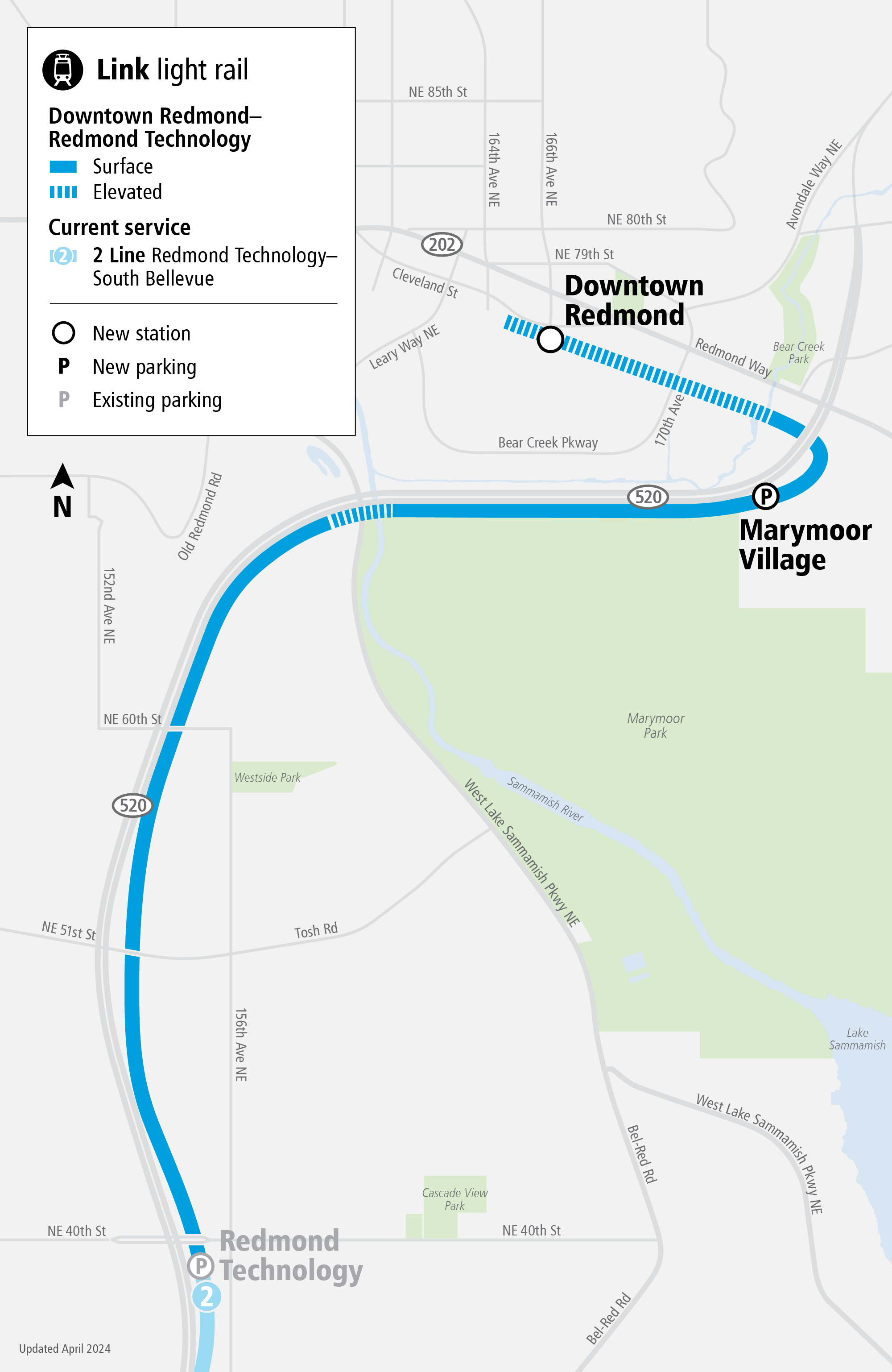
The span of service for the expanded 2 Line will match what was already operating, with two-car trains running every ten minutes from 5:30am to 9:30pm daily. When the full 2 Line stretches across Lake Washington up to Lynnwood, now expected by early 2026, Sound Transit will operate a longer span of service with more cars per train.
Beyond the expanded service area, Downtown Redmond Link represents a major milestone for Sound Transit: the first opening on an expansion funded by the 2016 Sound Transit 3 (ST3) ballot measure. Many ST3 projects have experienced major delays, but the extension to Downtown Redmond is relatively on time, with just a few months of delay beyond the timeline promised to voters.
“To have Downtown Redmond Link Extension opening at around the same time as the rest of East Link is a major accomplishment,” King County Councilmember Claudia Balducci, chair of the Sound Transit board’s system expansion committee, told The Urbanist. “It took a lot of smarts. I give John Marchione, former mayor of Redmond, former board member at Sound Transit, for very smartly making sure that ST3 stayed on track, and we caught up probably somewhere between six and eight years by doing it that way.”
Sound Transit projects that the Downtown Redmond Link extension (plus crossing the lake to Seattle) will help push the 2 Line to 43,000 to 52,000 daily riders by 2026.
How we got here
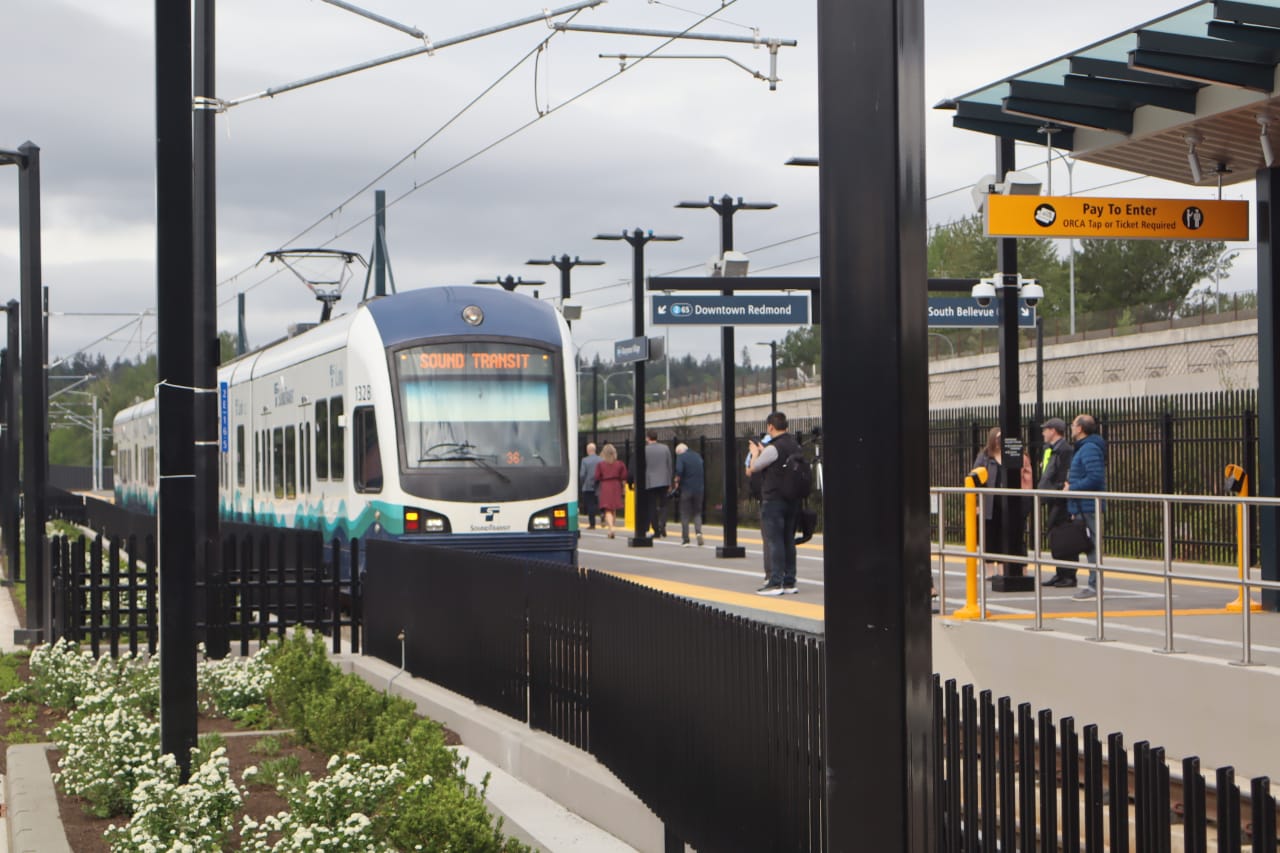
When voters approved the Sound Transit 2 ballot measure in 2008, many residents and elected officials on the Eastside hoped that it would allow the agency to get all the way to Downtown Redmond — but it wasn’t a done deal. The finance plan only included enough funds to get to Redmond Technology Station, and getting any additional segments of the line completed depended on project savings elsewhere — a dream that evaporated when Bellevue pushed for a pricey tunnel under its Downtown.
It wasn’t until 2016 that voters were able to fully fund getting to Downtown Redmond, and all of the ground work that had been laid dating back to 2008 — and before — was able to come to fruition.
“I think the two words I would use is being visionary about where you want to go, and also being extremely collaborative with all of our partners,” Redmond Mayor Angela Birney told The Urbanist. “So the city zoned for these trains to be able to be here, so there was no extra process other cities had. And then the staff on all ends, as well as the elected officials on all sides of it, were all really focused on making it happen.”
The I-90 segment of the 2 Line hasn’t been so lucky. Sound Transit has experienced significant delays stemming from track defects along the floating bridge, preventing the long-awaited connection between Bellevue and Seattle that had originally been pegged for completion in 2021 in the ST2 plan.
The entire line might be sitting dormant now, waiting for that final bridge connection to be ready. However, transit advocates rallied support for Balducci’s idea to segment the line to allow for a partial opening sooner. The abbreviated Eastside-only 2 Line opened on April 27, 2024.
“We wouldn’t be here today without the starter line,” Balducci said. “I am very gratified and appreciative of the Sound Transit staff for hearing the call to open the starter line. It wasn’t mission critical to do so, for them, but it was a win for the public who get to ride it. It’s a win for us, starting to get people on the Eastside regularly understanding that this is part of our commuting patterns, and making a shift, and it provides benefit to the public that otherwise we would be spending on securing closed down dark sites.”
Compared to full projections for the completed line, starter line ridership has been relatively modest (though largely in line with predictions). However, proponents point it that is has helped riders get comfortable and ready to use the network.
“It’s a big win. I’m really glad the agency heard the call to do it, and now we have two more stations that can run until we are finally ready to open the rest of the system,” Balducci said.
The Seattle and Mercer Island extension of the 2 Line is around the corner, but newly installed Sound Transit CEO Dow Constantine recently revealed that the hoped-for opening date of late 2025 is fading away, with the agency “trending toward” opening the extension in early 2026. Once that delayed segment opens, the 2 Line will run not just to Downtown Seattle, but also hook north and continue all the way to Lynnwood.
Crossing the lake will also give the agency full access to its new trainyard in Bellevue, which will offer some relief to the operational constraints that have been limiting service frequency. However, the agency projects that opening the Federal Way Link Extension will once again be pushing its operational capacity to the limit to deliver promised headways. Federal Way Link has faced construction delays that have pushed its opening from 2024 to 2026.