The Covid-19 pandemic has thrust the world into uncertain times. In the United States, the coronavirus has now claimed the lives of over 100,000 people. This devastating public health crisis has affected our region in particular. The first death linked to Covid infection happened in King County. Washington was the worst infection hotspot in the country until New York overtook us. Even as the death toll continues to climb, millions have lost their jobs as unemployment reaches unprecedented rates.
Stemming the tide of evictions
Legislators at all levels of government have scrambled to come up with a patchwork of temporary measures that are intended to offset the tremendous strain coronavirus has placed on our communities, neighborhoods, and families. Earlier this month, for example, the Seattle City Council unanimously passed an emergency ordinance that extends the eviction moratorium enacted by Governor Jay Inslee through the end of the year.
Unfortunately, we still have not yet seen substantial movement from the Governor’s office on the prospect of a rent and mortgage moratorium, meaning tenants still face the daunting prospect of paying an accumulated rent balance at the end of the year. Despite this frustrating inaction, the City Council’s extension on the eviction moratorium will genuinely help many Seattleites who are struggling to make ends meet from losing housing, especially those who have lost jobs and are now facing increasingly expensive childcare costs.
It remains to be seen whether the federal government will pass a housing and rent relief package, though it seems unlikely that the Washington Legislature, with its tendency to rush to budget cuts rather than pursue progressive revenue streams, will pass a corresponding state-level relief package either. Moreover, we still do not know when a special legislative session to address the state budget and the impacts of Covid will be convened.
A housing crisis long in the making
Undoubtedly, the coronavirus pandemic has impacted all aspects of our daily lives and our long-term goals. The housing crisis in Seattle has not been any different. If anything, Covid-19 has exposed just how much further we have to go in order to address the housing crisis and how urgently any and all solutions must be pursued.
While many have benefited from Seattle and King County’s tremendous and rapid growth in the past several years, many more have been priced out and subsequently displaced from their homes and communities. For those already living in the margins, the city has become increasingly expensive to live and work in, let alone lay roots down.
In 2018, the PSRC calculated since 2010, job growth has increased by 21% and our population has grown by about 12%. Meanwhile, the availability of housing has not grown at a proportional or adequate rate, with the housing stock only having grown by about 8%. These discrepancies are only amplified due to the effects of Covid. Even before the coronavirus arrived in the United States, we needed to “up” housing production significantly to meet the needs of our community. Reports commissioned by King County indicate that our region has to build 44,000 new affordable homes every five years to adequately address the growing need for affordable housing.
The state of housing in King County was already dismal before this public health crisis, with nearly one in three households being “cost-burdened.” That means that many–renters and homeowners alike–are spending over 30% of their income on housing costs. When families are spending almost half of their earnings just to keep a roof over their heads, other essential expenses like food, childcare, and healthcare costs can quickly become overwhelming. It has been reported that over half of all adult renters in the United States have delayed medical care because of the cost associated with healthcare. While it may not be surprising, an overwhelming majority of renters say that rent is consistently their most important bill.
While the state of the housing crisis has been bleak since well before the coronavirus came to King County, COVID-19 does represent an extraordinary opportunity to address the fundamental needs of our region. To do so, however, we need to survive this public health crisis as a united community. There are immediate steps that our city can take to mitigate the impacts or coronavirus on housing while simultaneously setting us up for long-term solutions that are desperately needed.
A policy moment for rental assistance?
One such temporary measure is rental assistance, which we briefly touched on earlier. A new federal survey finds that one-fifth of Americans fear that they will not be able to make their June rent or mortgage payments. Immediate rental assistance will go a long way in keeping our neighbors in King County housed.
For perspective, someone working at minimum wage in King County would have to work over 90 hours a week to afford the average, market-rate two-bedroom apartment. Low-wage earners like those in the gig economy or who work on hourly schedules are keeping what’s left of our grocery stores and other essential businesses. Given that the majority of these workers are typically renters, they, along with out of work employees and small business owners, can all directly and materially benefit from rental assistance.
At the federal level, the HEROES Act intends to provide $100 billion in emergency assistance to help low-income renters at risk of homelessness avoid eviction. The HEROES Act has been approved by the House of Representatives, and awaits consideration by the Senate. This critical funding could be used for short- and medium-term rental assistance as well as housing-related costs, like utility bills and deposits. While it was approved in the U.S. House, it is unlikely to pass muster in the Senate without a tremendous amount of public support and pressure. Organizations like the National Low Income Housing Coalition are asking individuals and organizations to urge Washington’s Senators to support the bill as it makes its way to the Senate floor.
While the federal government remains in gridlock over a second stimulus package, our state legislature cannot decide on when (or if) to call a special session to order for the purposes of adjusting the state’s budget to account for the strain of Covid. The fact is that many communities and families cannot wait for legislators at state and federal levels of government to pass relief packages. Rental assistance is especially necessary for the organizations that provide supportive housing for low-income households. With minimal margins, unpaid rents threatens solvency of nonprofit subsidized housing. To meet urgent demands, many non-profit housers and organizations, like Capitol Hill Housing, have developed their own resilience funds for vulnerable residents. Coupling these emergency funds with rental assistance programs from local governments can and will help many whose housing situations are at risk or have been destabilized because of the coronavirus pandemic.
Homeless sweeps continue despite CDC guidance
Some of our most vulnerable people in our community, however, are those who are not housed or sheltered. Just last week, the Seattle Police Department (SPD) and Navigation Team swept two encampments in the Chinatown-International District (CID) where dozens of houseless people were living. Thursday’s sweep, which targeted the encampment on Weller Street between 12th and Rainier, was attended by a handful of community organizers, local activists, and neighborhood leaders.
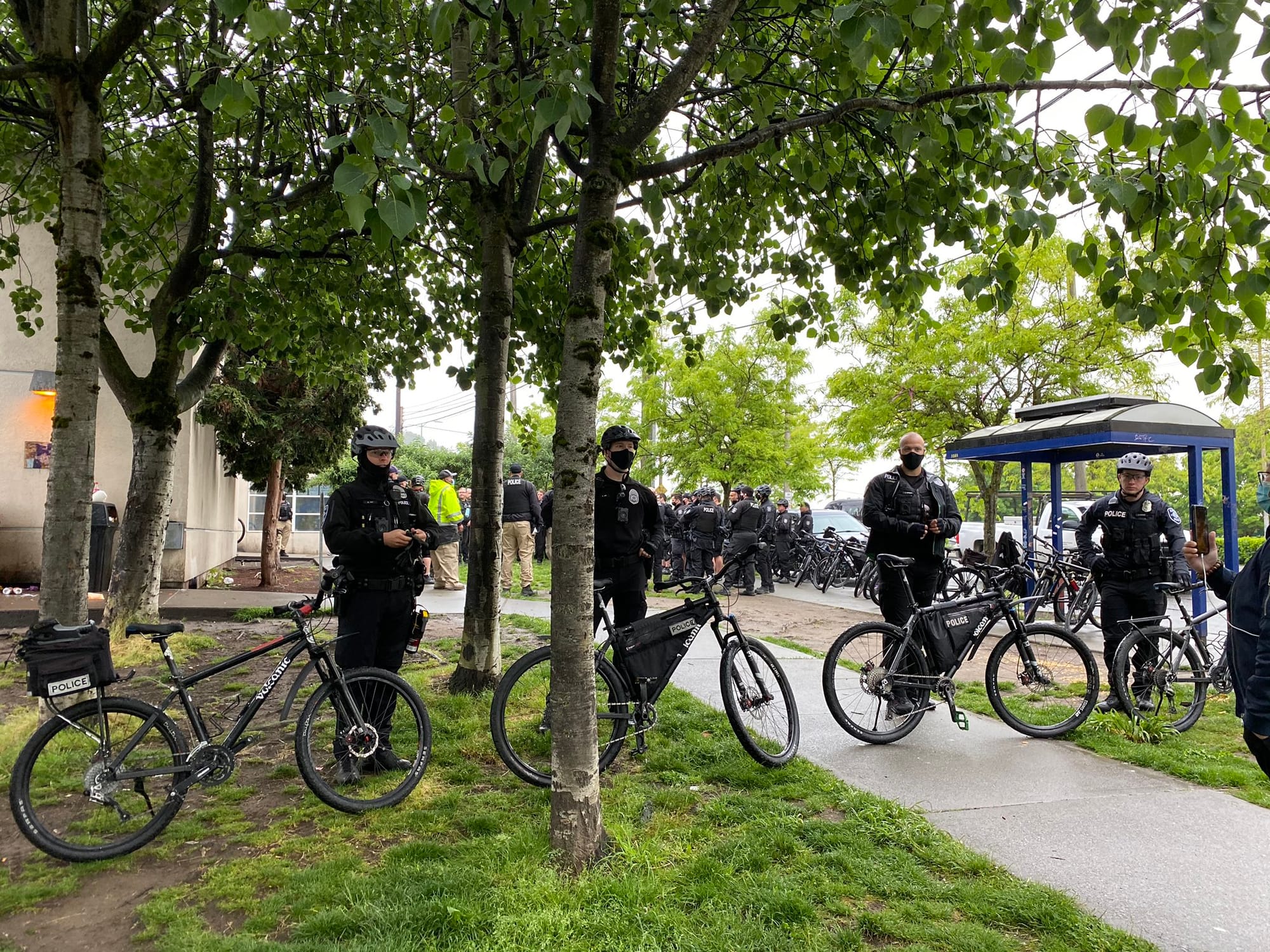
These community members were prevented by SPD officers from distributing masks, gloves, hand sanitizer, and plastic bags to help unhoused people collect and move their belongings. Social workers from REACH, a division of Evergreen Treatment Services, were prevented from entering the cordon zone and assisting unhoused folks get connected to shelter space, food, and sanitation supplies. Later, a dump truck from Seattle Parks and Recreation arrived on scene, and the majority of the encampment’s tents and peoples’ personal belongings were dumped into the truck.