Political pundits always say that Midterm Elections are bad for the party that controls the presidency. Washington State didn’t get the memo, though. Democrats will end up picking up seats if results from this weekend’s ballot drops hold.
With the predicted Red Tide fizzling, Democrats have a solid chance to gain two Washington State House seats: one in Legislative District 10 (LD10) and one in LD26, plus a senate seat in LD42. That would make the Democratic advantages 29-20 in the state senate and 59-39 in the house, giving them a bit more breathing room to pass legislation. John Zingale also flirted making an unexpected pickup in LD18, but Republican Stephanie McClintock recovered by Thursday’s drop to take a two-point lead, and appears to be pulling away.
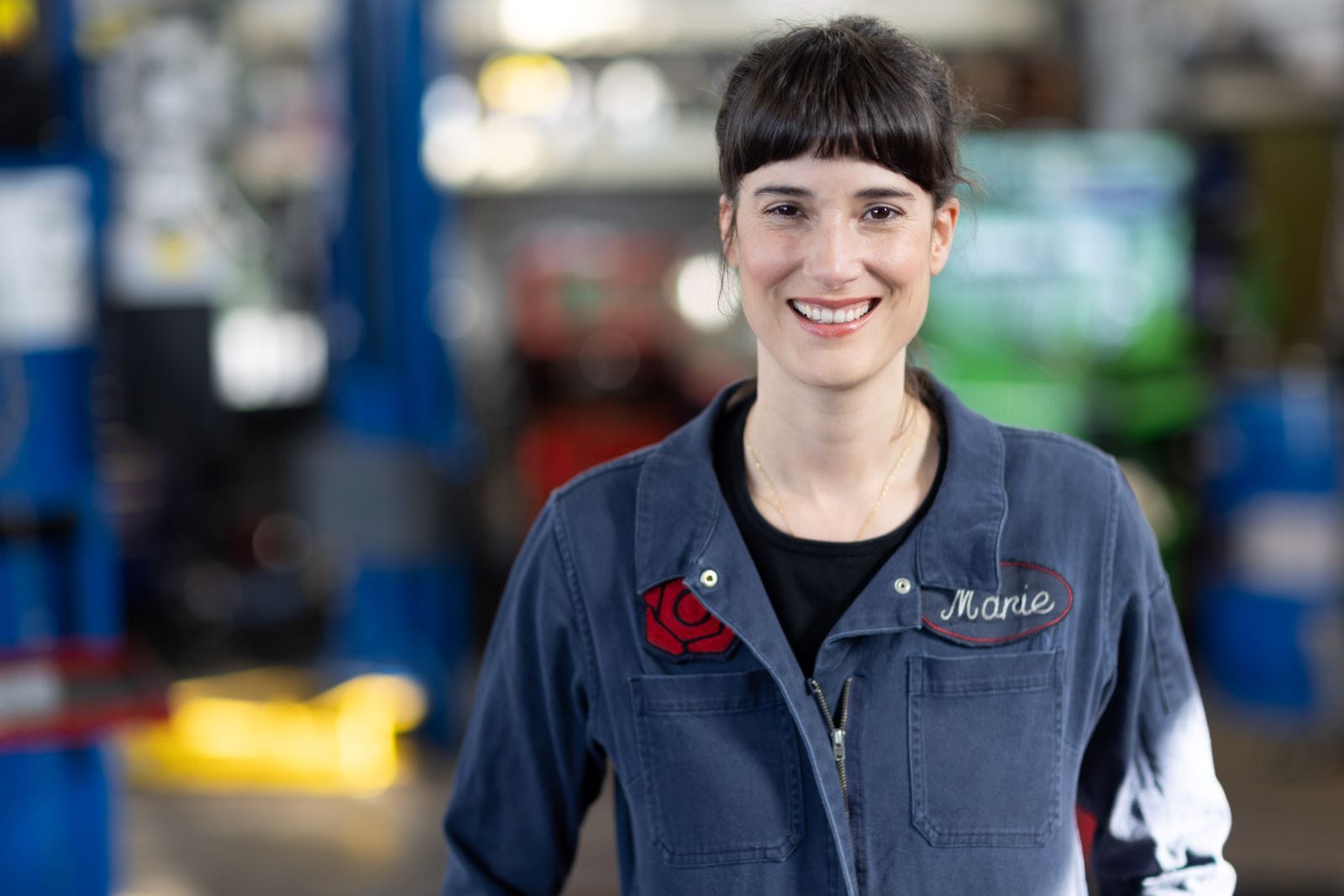
Marie Gluesenkamp Perez pulled off the biggest upset in the country in Washington’s 3rd Congressional District, flipping the red-leaning district for the first time in decades. That means Washington is sending eight Democratic Representatives to Congress and just two Republicans. Democrats will hold the U.S. Senate, and they have a shot to hold the House (even in an uphill Midterm were they were predicted to get crushed) thanks in part to the upset in Washington’s 3rd.
Perez is bringing “a populist, working class, rural voice back into the Democratic Party and [doing] it in a way that’s also economically progressive and socially progressive,” Sierra Club Seattle chair Robert Cruickshank said on a Hack and Wonks podcast appearance on Friday. He thought that presented a model for Democrats to emulate nationwide.
“Seeing the campaign she ran, the ads she ran, I think potentially point to a direction forward for Democrats as they really try to figure out what do they do about rural America,” Cruickshank added. “She’s winning right now because she has a huge lead in Clark County by double digits, but she’s holding her own in the rural parts of the county. She’s at 45-46% in Kelso-Longview area out on the rural Washington coast. She’s not going to win this race without running up decent numbers in the rural parts of the district. And so I think there’s a lot Democrats can learn from here.”
Perez received scant national support for her campaign, but a local political action committee associated with Fuse WA did spend $800,000 on her race, which proved to be enough when paired with the $3 million and change she raised herself. She was the right messenger with the right message, which can really amplify reach. It’s fairly damning that national Democratic party leaders sat this one out thinking it was a lost cause, but it is a big win for grassroots campaigning and for Fuse WA.
Nationally, many of the expected blue-to-red flips are not manifesting. Republicans may still eke out enough of the close races to narrowly take the House of Representatives, far short of the 30-seat majority projected by some models. Their hopes of retaking the U.S. Senate are dashed, however. Sen. Raphael Warnock’s runoff in Georgia will allow Democrats an opportunity to pick up a seat and provide some much needed breathing room in a 50/50 split Senate with some very wobbly “Democrat” votes in West Virginia Sen. Joe Manchin and Arizona Sen. Kyrsten Sinema. John Fetterman’s win in Pennsylvania provided a red-to-blue flip that will increase the Senate margin, at least if Warnock can hold his seat. The campaign strategy to woo blue collar workers paid off for Perez and Fetterman, who showed greater strength than normal in rural areas and improved margins with working class Whites, a demographic that has long been sliding toward Republicans.
What does the strong showing for progressives mean for future elections? Here’s some takeaways.
The Seattle metro’s blue wall continues to hold
The blue wall in the Seattle metro area held, despite considerable investment and hype from Republicans. Republicans continue to hold LD25 south of Puyallup, but that’s it as far as Puget Sound suburbia goes. Unlike swingier major metropolitan areas farther east, the suburbs in the Seattle metro aren’t that purple these days. They’re increasing looking solidly blue — even in years when Republicans think they’ve landed upon the perfect wedge issue like car tabs or crime.
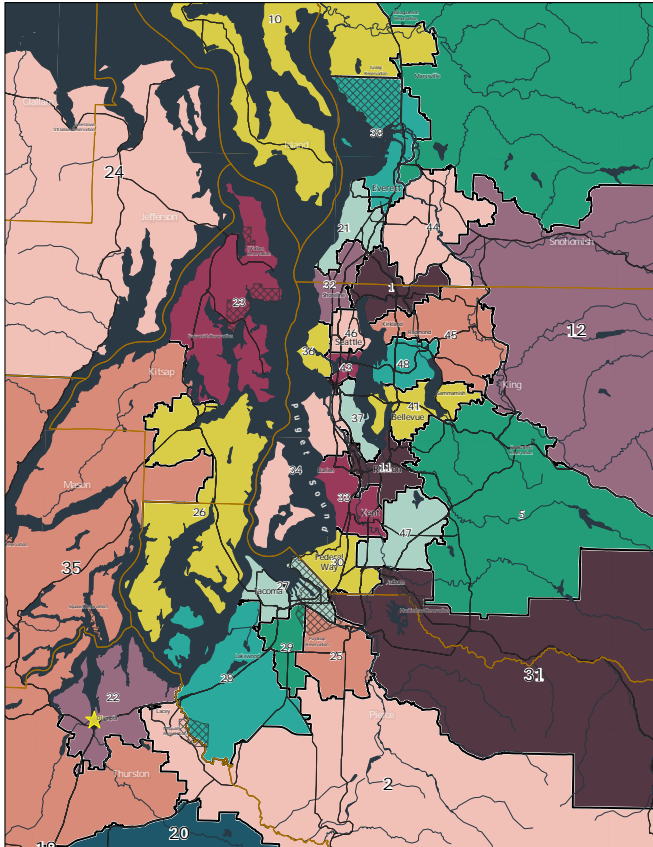
Even more moderate “mainstream” Republicans struggled to break through, as former legislators like Chad Magendanz and Mark Harmsworth got no traction in their suburban races challenging supposedly weak Democratic incumbents and didn’t even make it close. LD5 and LD44 just don’t seem that swingy anymore, despite their former status as Republican bastions in the ‘burbs.
Pro-housing candidates resonated
In Democrat on Democrat races, the candidate with the stronger housing message tended to win. Look no farther than former Seattle Office of Housing director Emily Alvarado’s decisive win (with almost 70% of the vote) in LD34 for proof of this. This dynamic meant state legislature candidates endorsed by The Urbanist had a pretty strong showing, too. Darya Farivar (LD46), and Julia Reed (LD36), and Chipalo Street (LD37) are joining the state house after advancing through highly competitive open seat primaries in part because they spoke to the need for more housing at all income levels. These candidates supported statewide legislation to address the overly restrictive zoning that is hampering housing production. Just as recent polling has indicated, Washingtonians want action on housing, and they’re rewarding candidates who are credible and outspoken on this issue.