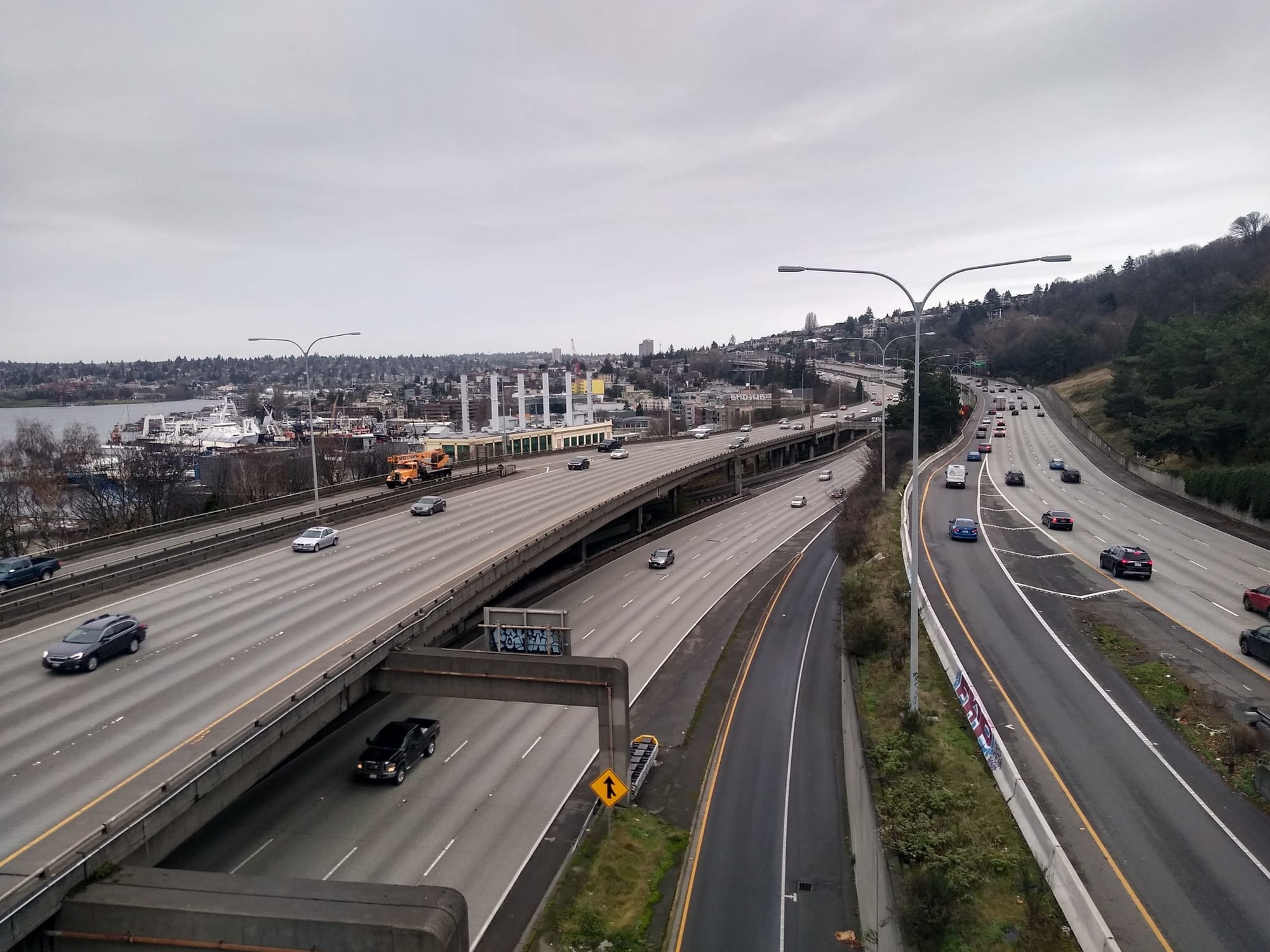
As the end of the legislative session draws near on April 25th, the question of whether Washington will pass a new transportation package looms large in the remaining days. Both the House and the Senate have released their respective packages, and they are fairly far apart. The package proposed by House Democrats still invests heavily in expanding Washington’s highways, and is slightly scaled-backed from the ambitious proposal they released in January, but it at least signals a shift away from the “highways, highways, and more highways” packages that have been the norm in Olympia. The Senate proposal spearheaded by transportation chair Steve Hobbs (D-Lake Stevens) is much further out-of-step with what investments Washington needs to shift away from car-dependence and reduce carbon emissions.
This morning the package, finally numbered as SB 5483 last week, gets its first full hearing as an official bill in the Senate’s transportation committee. Here are a few of the most worrisome aspects of the proposal.
It continues to issue debt to pay for unsustainable highway expansion
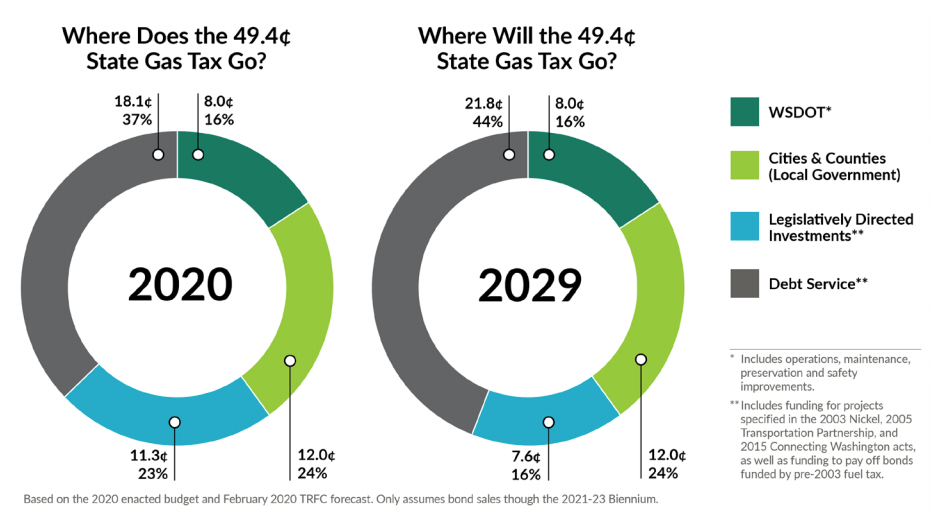
The legislature has long relied on selling bonds to pay for expanding the state’s highway network, including bonds that the state is still paying off from transportation packages in 2003, 2005, and 2015. In 2020, 37% of the revenue generated from Washington’s 49.4-cent gas tax was going to debt service on past transportation projects. By 2029, that is projected to grow to 44%. The House proposal doesn’t issue any new bonds, but the Senate proposal would issue $5.5 billion in bonds to continue this cycle and kick the can down the road. The sale of bonds is ultimately expected to cost the state an extra $1.7 billion.
Arguments that the gas tax is regressive have merit, but using the revenue from a gas tax to pay off debt from decades-old highway projects is particularly regressive, no matter how you spin it.
It taxes new housing construction
The Senate package would raise an estimated $800 million, or around $50 million per year for 16 years, by taxing the increased assessed value of new construction. Residential, commercial, and manufacturing development would all be impacted at different rates, but the bottom line is additional costs for new housing construction at a time when many cities in the state are facing an affordable housing crisis and struggling to generate enough new housing.