The agency is squeezing riders who take short trips to subsidize long rides and a suburb-focused service profile.
Sound Transit is poised to implement flat fares for its light rail network, and while the agency paints the changes as user-friendly, most riders will experience the change as a 30% fare hike. Beyond the sting of higher fares, a flat fare structure also reveals that a suburban vision is guiding the agency, which could queue up yet more blunders in the future.
Initially, a flat $3.25 fare might not seem like a big deal, but as the system expands it will become increasingly absurd. Sound Transit’s main goal has been to “complete the spine” to operate a 62-mile long light rail system spanning from Tacoma to Everett. Flat fares mean a rider deciding to ride 62 miles from end to end would pay the same as a rider only going a couple miles from UW to Capitol Hill or Rainier Beach to Columbia City.
A rider going dozens of miles strains the system much more than a rider going only a couple of miles. The beauty of getting off after a couple stops is that it makes space for somebody else to get on. However, riding the whole length of a line is the most taxing kind of trip that eats up system capacity and drives up operational costs.
The logic of distance-based fares (like Sound Transit has now) is that long-distance riders should pay more because the operational cost of serving this kind of trip is higher. It’s a simple way to reflect the cost of a service in its price and it has the benefit of reinforcing the decision to live close to work or school, which lessens strain on the transportation network across the board. Instead, we are left with the opposite signals, where riders are disincentivized from taking short trips — the bus would be cheaper — and encouraged to take long trips.
That incentive to take long trips comes with a hidden cost. It means trains are more likely to be full by the time they reach the busiest nodes of the system. Due to failure to plan sufficient system capacity to deliver promised train frequencies, Sound Transit has warned that crowding will be an issue, particularly in the highest demand areas between Northgate and SoDo. In effect, riders in the core will be left paying significantly more for worse service.
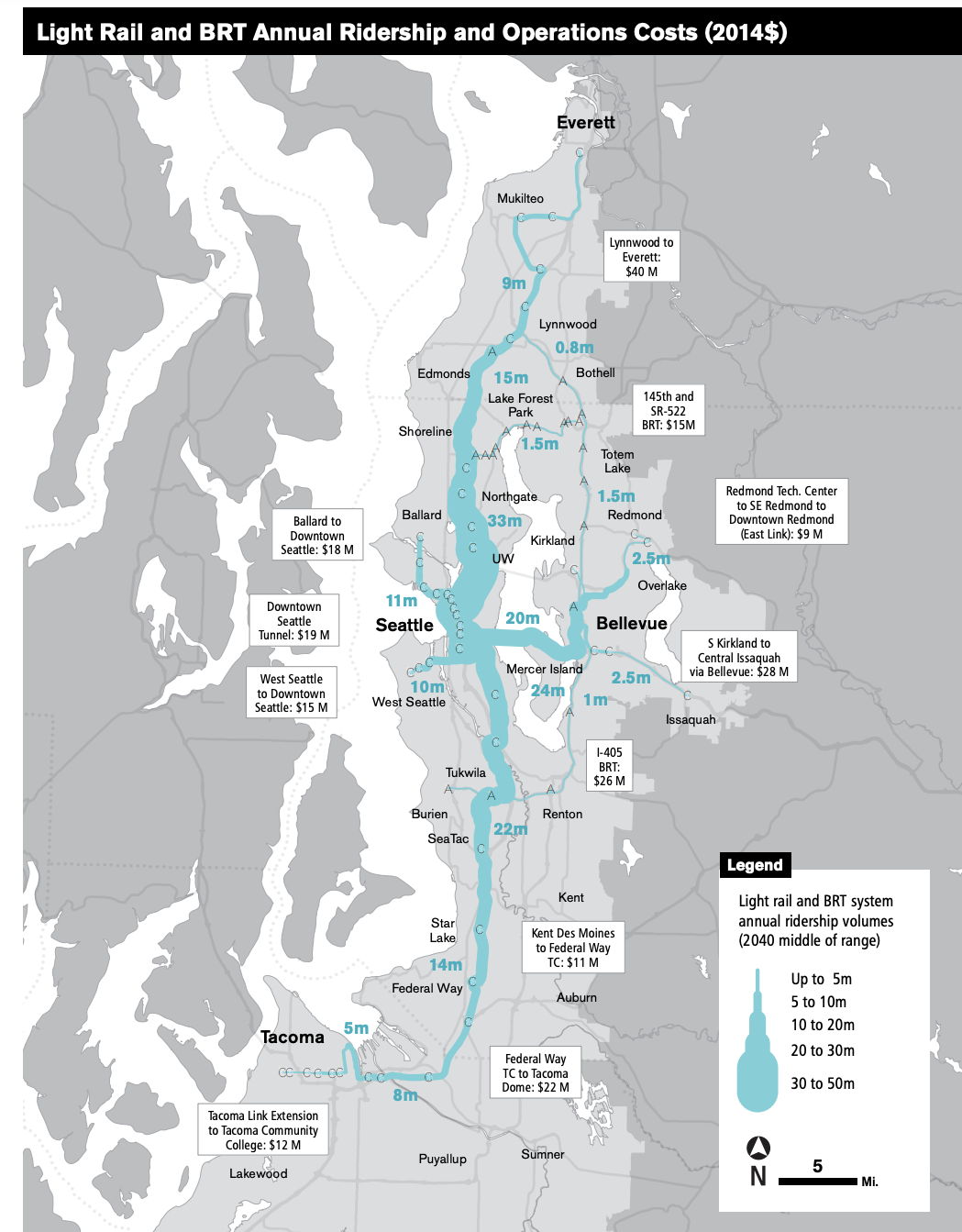
The overwhelming majority of ridership will be in the core of the system, with a healthy dose of short urban-hop trips fueling that ridership. This leads to another issue with flat fares: It puts the rider incentive where demand is weakest and maximizes the disincentive where demand is strongest. Even slashing fares, there’s only so much potential to entice trips on the edges of the network. As a result, the flat fare structure is a recipe for weaker ridership.
This is backed up in the agency’s own analysis and public outreach, with a greater portion of respondents saying flat fares would discourage them from riding versus entice them. Sound Transit projects a $3.25 fare would lead to a 6% reduction in Link ridership, which the agency has deemed a “minimal impact.” Meanwhile, raising fares by $0.25 in the existing distance-based system would reduce ridership 3%, according to agency projections. Fare simplification is coming at the expense of ridership.
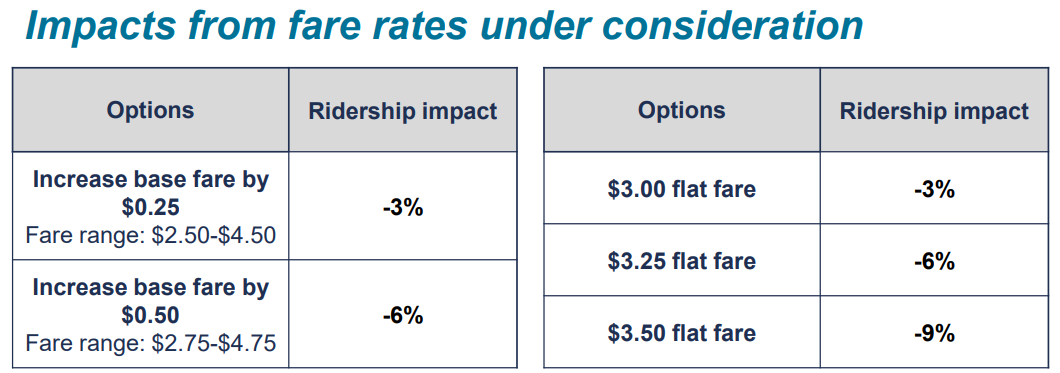
It’s not just Seattle riders who are likely to take short Link trips. The jobs and amenities clustered in downtown Bellevue are going to encourage Eastside residents to ride East Link a few stops and Bellevue’s growth strategy is also centered in the light rail corridor, amplifying the effect. Those trips would be at or near today’s $2.25 base fare (or $2.50 with a proposed fare hike), but flat fares would take it to $3.25. Even if a Bellevue resident rides into Seattle to the stadiums or downtown, since the trip is relatively short, they would pay less under a distance-based fare.
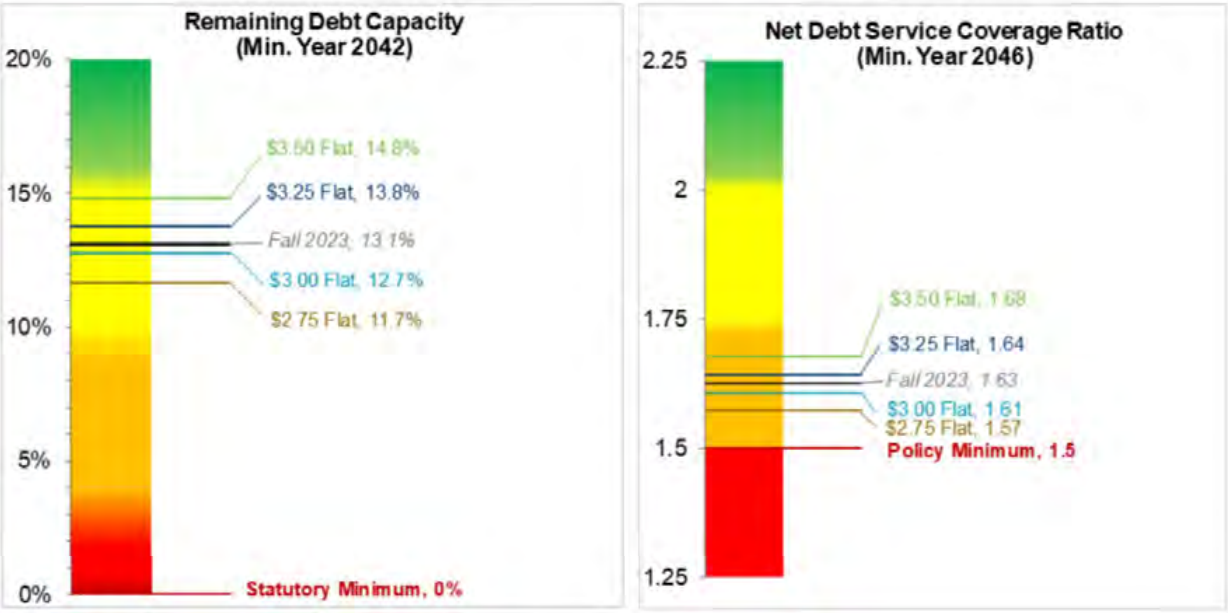
As the system expands, operational costs will increase and fares will need to be raised again — unless Sound Transit reworks its financial plan (by adding other revenue sources or delaying or downsizing projects) and slashes farebox recovery ratio targets. A higher flat fare will be even harder on short trips that only span a few stations. Those short trips are key to meeting ridership projections and supporting transit-oriented development. Leaders have entirely oriented regional growth plans around encouraging people to live near rapid transit stations so they can use light rail as a primary way of getting around for trips short and long.
High flat fares, however, send a signal that light rail isn’t designed for short trips. It’s designed for long-distance suburban commuters.
It’s a conundrum that gave many transit advocates pause when policymakers hatched Sound Transit 3 (ST3) plans in the first place. Link light rail was trying to do it all, spanning 62 miles like a commuter rail line while also offering frequent service in the highly populated urban core like a metro. Because those different identities were contained within the same lines, tension between long-distance commuters and short urban metro hoppers is inherent and having it both ways is nearly impossible.
Many transit agencies have grappled with the challenges of creating a fair fare policy. There is no one-size-fits-all solution since every transit network is different and every structure has tradeoffs. However, several leading systems that are similarly expansive to Sound Transit have landed on zone-based fares, which achieve some of the simplicity of flat fares with the fairness of distance-based fares, maintaining the incentive to choose light rail for short trips.