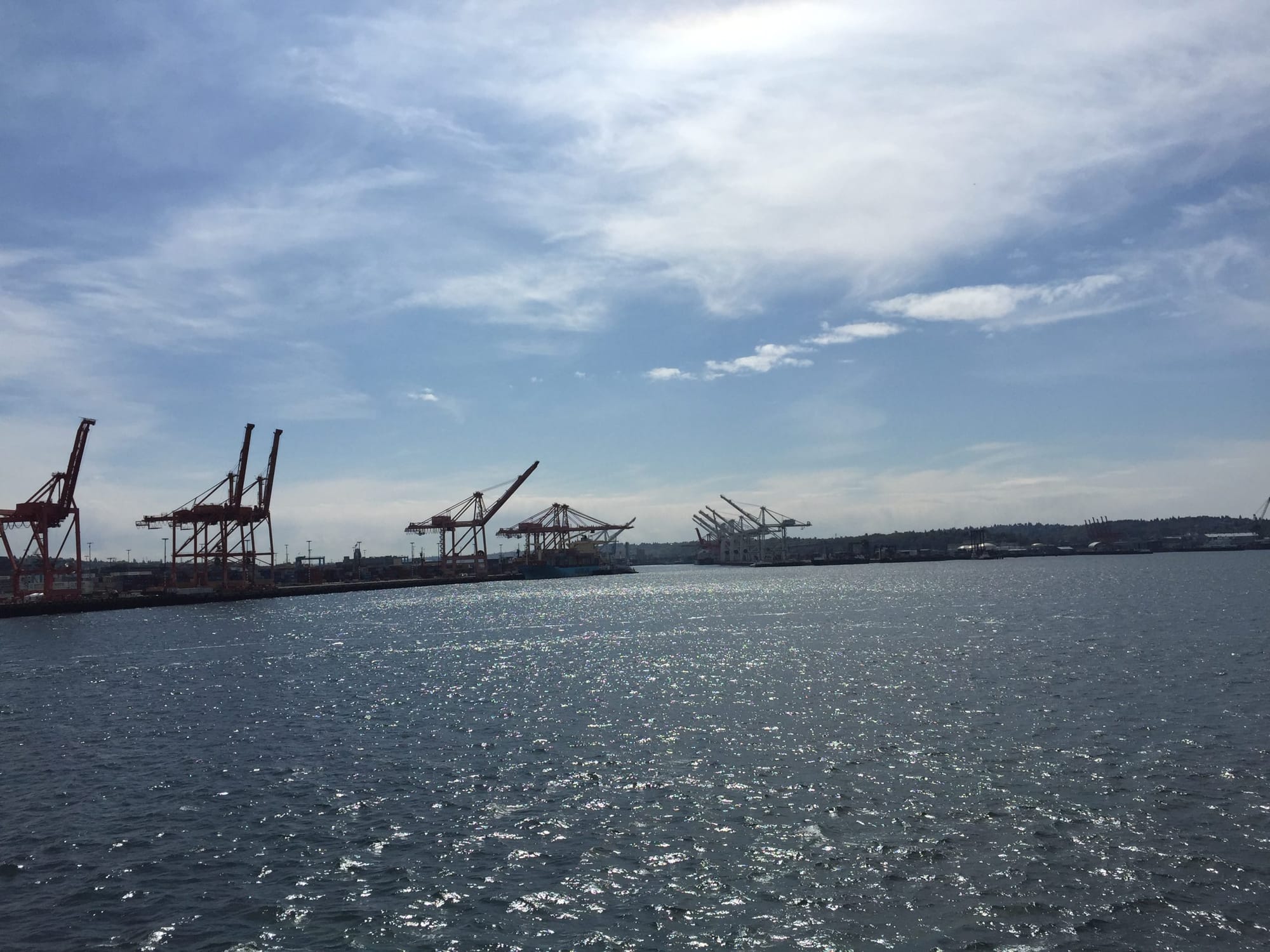
The Port of Seattle, and its sister port in Tacoma, as part of the Northwest Seaport Alliance is a large-scale operation supporting about a third of Washington gross domestic product, employing tens of thousands of Washingtonians, and moving 3.7 million containers per year. The current 10-year strategic plan calls for growing the port to 6.0 million containers by 2025. The Port of Seattle is investing up to a billion dollars over the next decade ($) to improve the access of new huge cargo ships by deepening Terminal 5 in addition to docks, cranes, and transportation. These new huge cargo ships are 400 meters (about a quarter-mile) long, require a deep port for their 16-meter (52.5 feet) draft, and carry 18,000 containers.
Is there a way to harness these changes to our ports to allow for more growth while also building resilience to climate change, improving the cities that grew up around them, and allowing for environmental restoration?
Today, the ports are built on waterways and islands dredged from the Duwamish tidal flats in 1909. Continuing to invest in this old configuration and infrastructure has limited upside, and instead the Port of Seattle, the City of Seattle, and Washington State should consider investing growth into a new floating port. The technology to allow for a floating port is under investigation around the world in places like Japan, Korea, Scotland, and the Netherlands. Generally created from hollow cement pontoons, similar to the new SR-520 bridge, floating ports allow for new space in deeper water. In Seattle, a floating port would allow operations to be removed from the delicate environments of the Duwamish tidal flats into the deeper water of Elliott Bay.