Neighborhood advocates, however, want the Belltown site to be more than a vacant lot during the interim period.
Mayor Jenny Durkan and Seattle Public School (SPS) Interim Superintendent Brent Jones have signed a letter of intent (LOI) opening up the opportunity for SPS to build an elementary school and park on the 1.6 acre former Battery Street Tunnel Site located between 1st and Western Avenue in Belltown. The letter acknowledges the “historic” growth of Seattle’s population, including Downtown, and cites that “planning for downtown schools is important to the educational future of Seattle.” It also calls for replacing Memorial Stadium, a 74-year-old SPS facility located at Seattle Center. The $66.5 million cost of the stadium replacement must first be approved by voters in a capital levy next February.
For the new elementary school to move ahead, the capital levy will also need to be approved by voters. If that happens, SPS would enter into long-term lease on the Battery Tunnel Site, and SPS and the City of Seattle will create a memorandum of understanding (MOU) that will last until 2031, providing SPS time to finalize its decision making. In the interim, the City will be responsible for making sure the Washington State Department of Transportation (WSDOT) contractor completes site improvements “consistent with plans and specifications that SPS has reviewed.” The City must also “maintain the site during the period of option at its own expense.”
However, by granting SPS ten years — with an option of an extension — to make its final decision on the Battery Tunnel Site, neighborhood advocates like Belltown United, a volunteer-run organization including representatives from the Belltown Business District and Community Council, are faced with watching land they would like to be used by the community enter into an extended limbo.
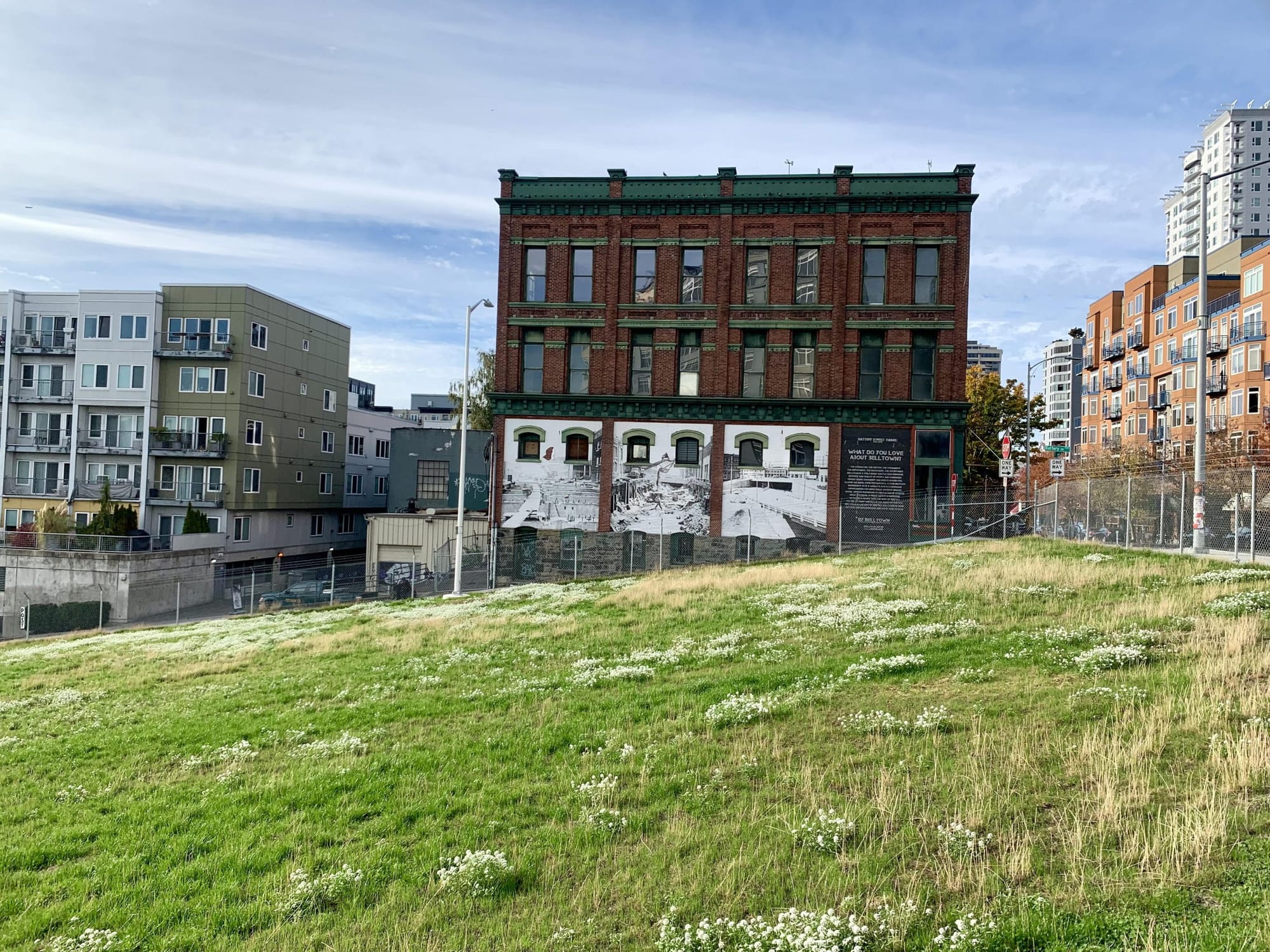
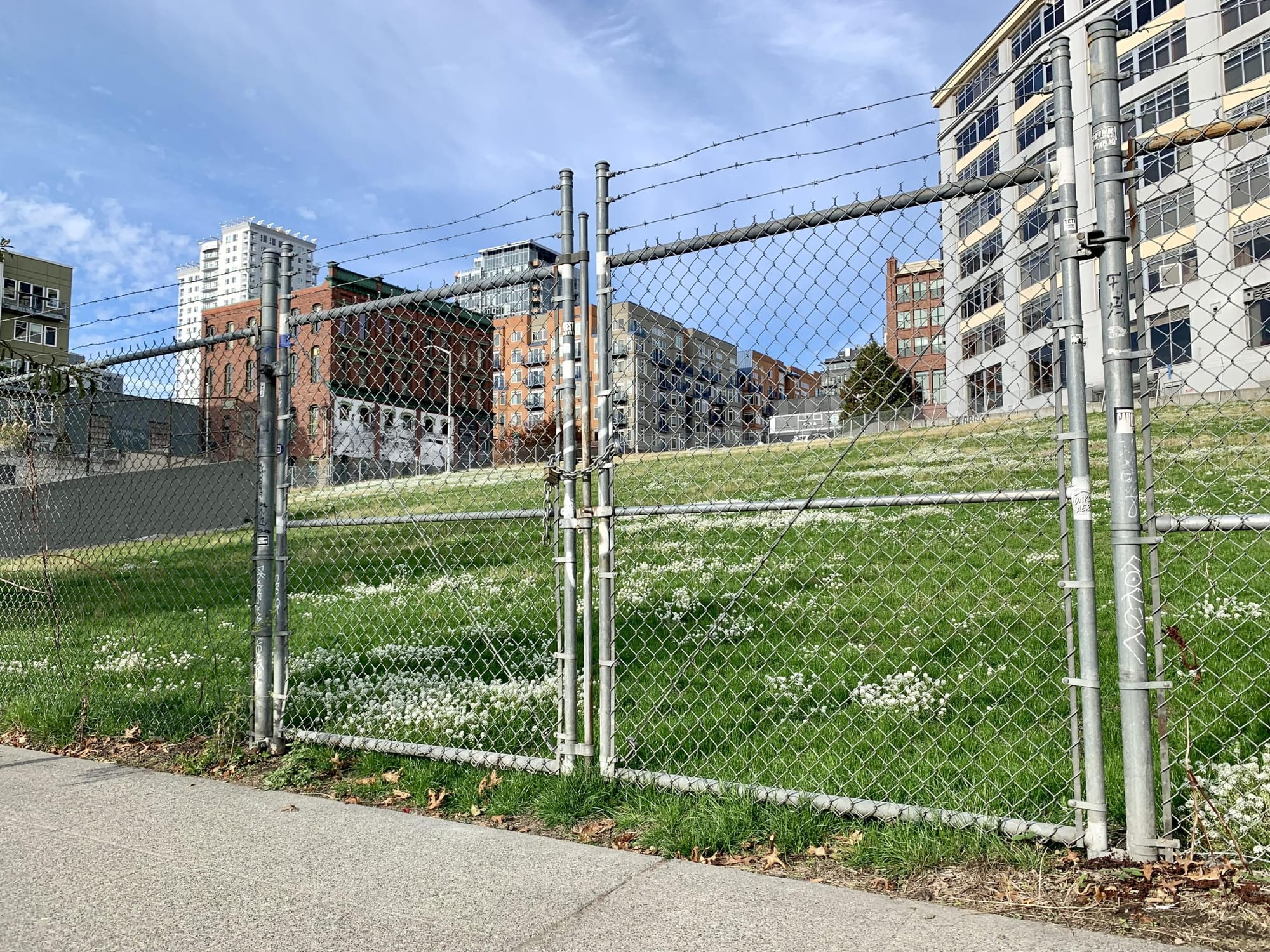
Currently, the vacant lot is covered with fragrant grass and clover, providing a compelling preview of what a future park might look like, but it is also separated from the neighborhood by a chainlink fence. Belltown United has called on the City to make a plan for how it will activate and maintain the site while SPS completes its decision making.
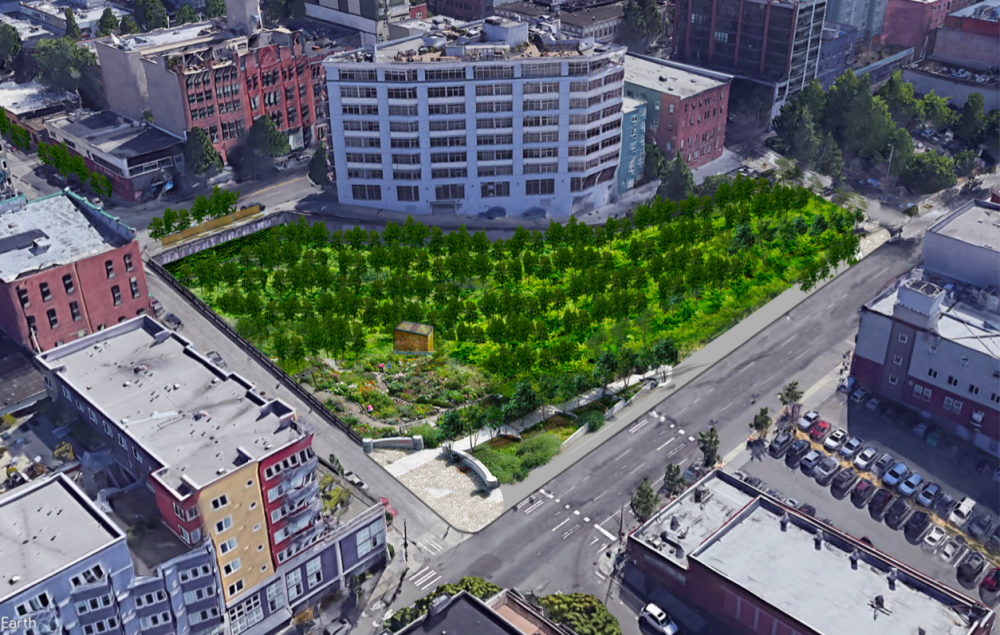
Belltown neighborhood groups have been rallying around the cause of creating a park at the Battery Tunnel Site for years. Recharge the Battery even went as far as to create renderings of concepts for the future park and engage in community outreach. During the same period, Mayor Durkan agreed to allocate funding for planning and development of the site in 2019, but according to Belltown United those funds were frozen in January 2020.
Rumors of a Downtown school being built on the Battery Tunnel Site also persisted for years as the site dangled on the periphery of the Waterfront Seattle mega project, but until now there has been no clarity as to SPS’s intentions. The LOI solidifies SPS’s interest in the site, but also pushes certainty around its future further down the road.
Planning for a Downtown elementary school
The question as to whether or not SPS will create a future Downtown elementary school can be reduced to a single word: capacity. SPS can only commit to building new schools once it demonstrates it needs the additional capacity. Currently, SPS operates 62 elementary schools and ten K-8 schools across the city. Elementary aged students living in all areas of Downtown Seattle are zoned to attend Lowell Elementary School in Capitol Hill.
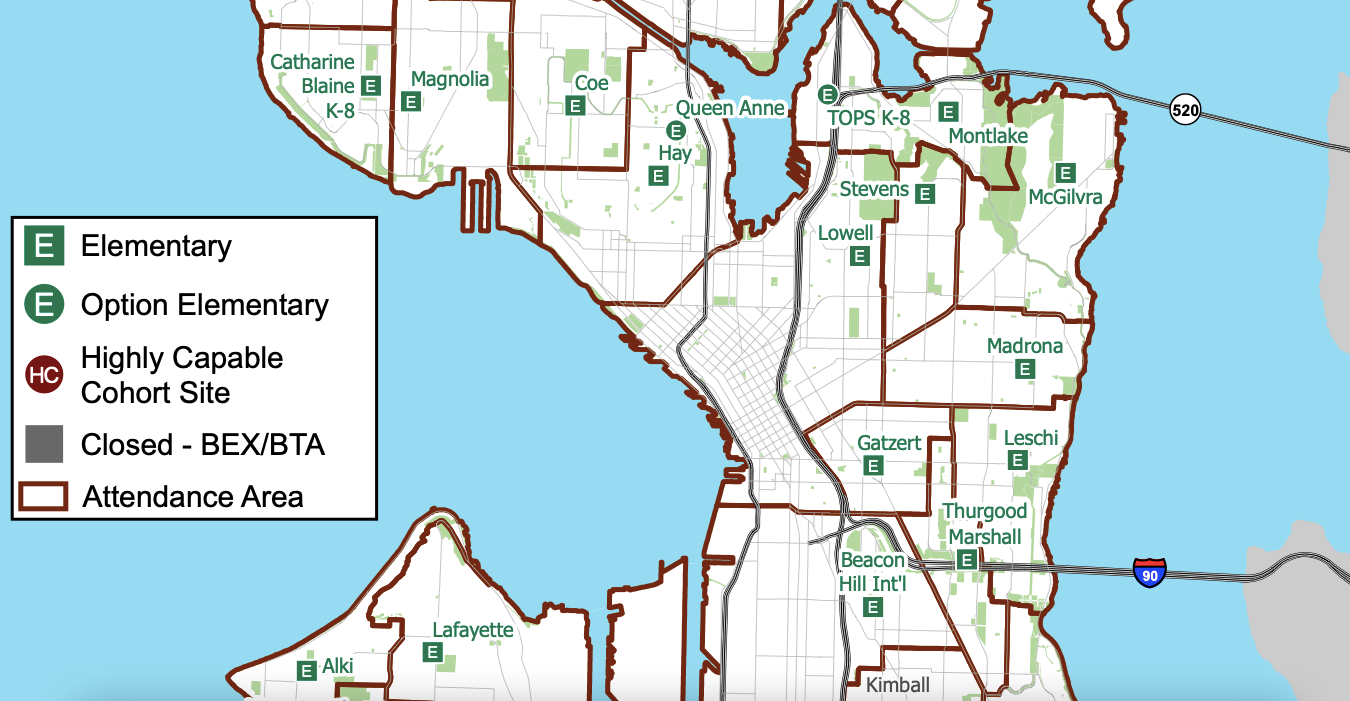
According to the most recent data available on SPS’s school report card, Lowell Elementary currently has an enrollment of about 279 students. About 70% of Lowell students are identified as low-income, and 20% are identified as homeless, the highest percentage of any SPS school. KUOW reported on the struggles of Lowell’s students and staff in a 2017 article which attributed the large number of homeless students to the fact that many of the children lived in shelters located Downtown.
Over the three quarters of Lowell’s students are also identified as children of color. The LOI makes reference to the “systemic racial inequities still present in Seattle and in the educational system” and agrees that both the project to build a Downtown school and replace Memorial Stadium “must advance equity.” Whether or not it building a Downtown elementary school will be assessed as equitable remains to be seen, but evidence indicates long school commutes negatively impact children’s health and wellness.
In terms of enrollment capacity, while the number of children living in Seattle has been rising steadily in recent years, the percentage of children 18 and under living the Downtown area remains modest, with the figure hovering between three and four percent, according to data from the 2020 census. However, it is notable that the census tracts making up the South Lake Union neighborhood had some of the highest percentages of children in the Downtown area, with census tract 72.02, located right in the center of SLU, at 4.6%. Given the consistent pace of residential construction in SLU, it is not unforeseeable that a new elementary school may be needed Downtown.
How can the City and Belltown community activate the Battery Tunnel Site?
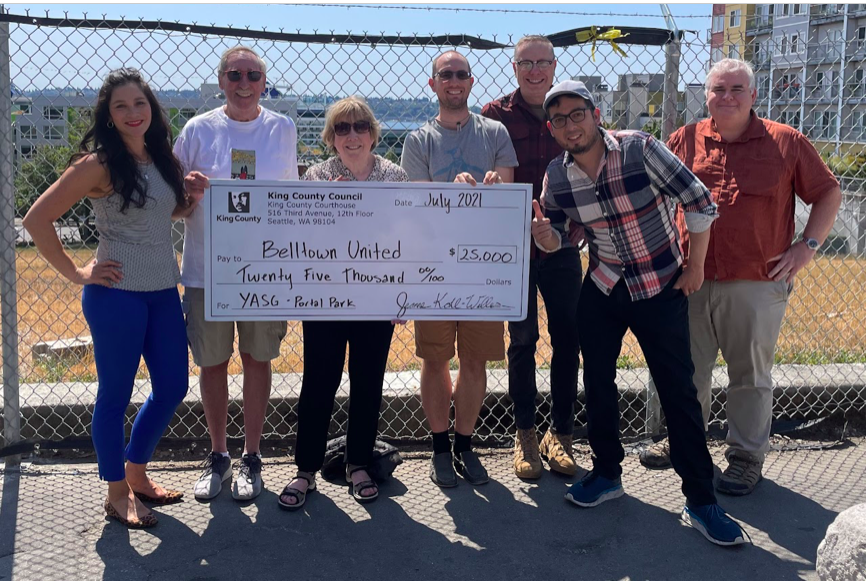
In the midst of the uncertainty surrounding the Battery Tunnel Site, Belltown United has sprung into action. The organization was awarded $25,000 for youth and amateur sports and recreation this summer, and at the same time it also launched an ambitious mural project called By Belltown, which was designed and installed by Aaron Asis, one of the co-founders of Recharge the Battery.
By Belltown, which was financed in part by neighborhood activation funding from Metropolitan Improvement District, illustrates both Belltown’s history and what present day residents love about the neighborhood. Asis said the “cornerstone mural” installed at 1st Avenue and Battery Street overlooking the Battery Tunnel Site, was intended to create some of the community stewardship and activation Belltown residents desire for space.