“The trust of a city street is formed over time from many, many little public sidewalk contacts”
―Jane Jacobs, The Death and Life of Great American Cities, 1961―
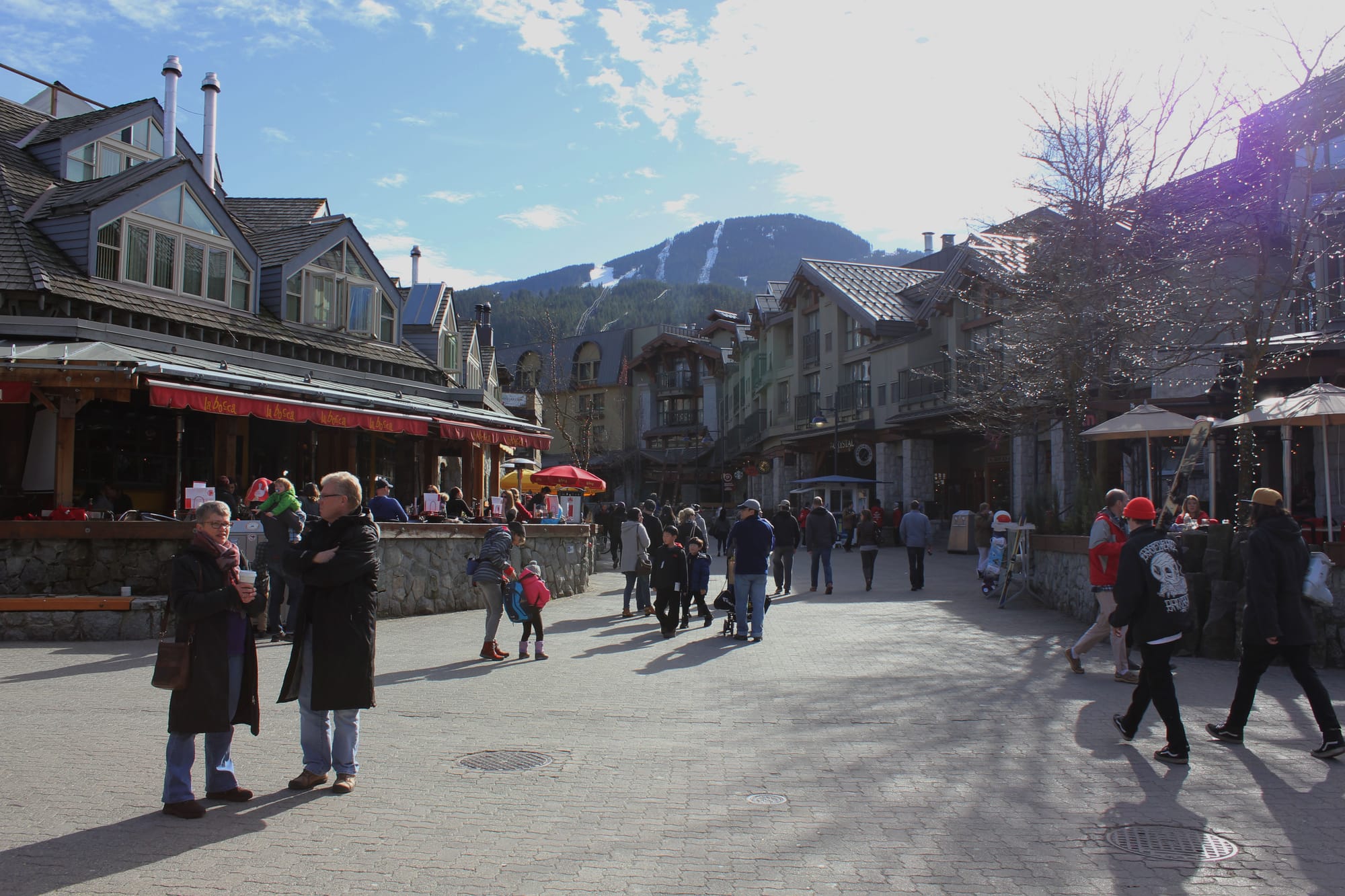
Whistler is home to almost 10,000 residents, however, with a capacity to provide overnight accommodation to an additional 35,000 people, the British Columbia ski resort, regularly morphs into a village of strangers, hosting over 2 million visitors each year. The qualities which Jane Jacobs asserted in her seminal, The Death and Life of Great American Cities in 1961, needed in a “city street equipped to handle strangers, and to make a safety asset, in itself, out of the presence of strangers” are successfully orchestrated in Whistler. To Jacobs, such streets exhibit a “clear demarcation between what is public space and what is private space”; have “eyes upon the street” as a result of buildings being oriented to the street without blank walls; and support continuous sidewalk activity, “both to add to the number of effective eyes on the street and to induce people in buildings along the street to watch the sidewalks in sufficient numbers”.
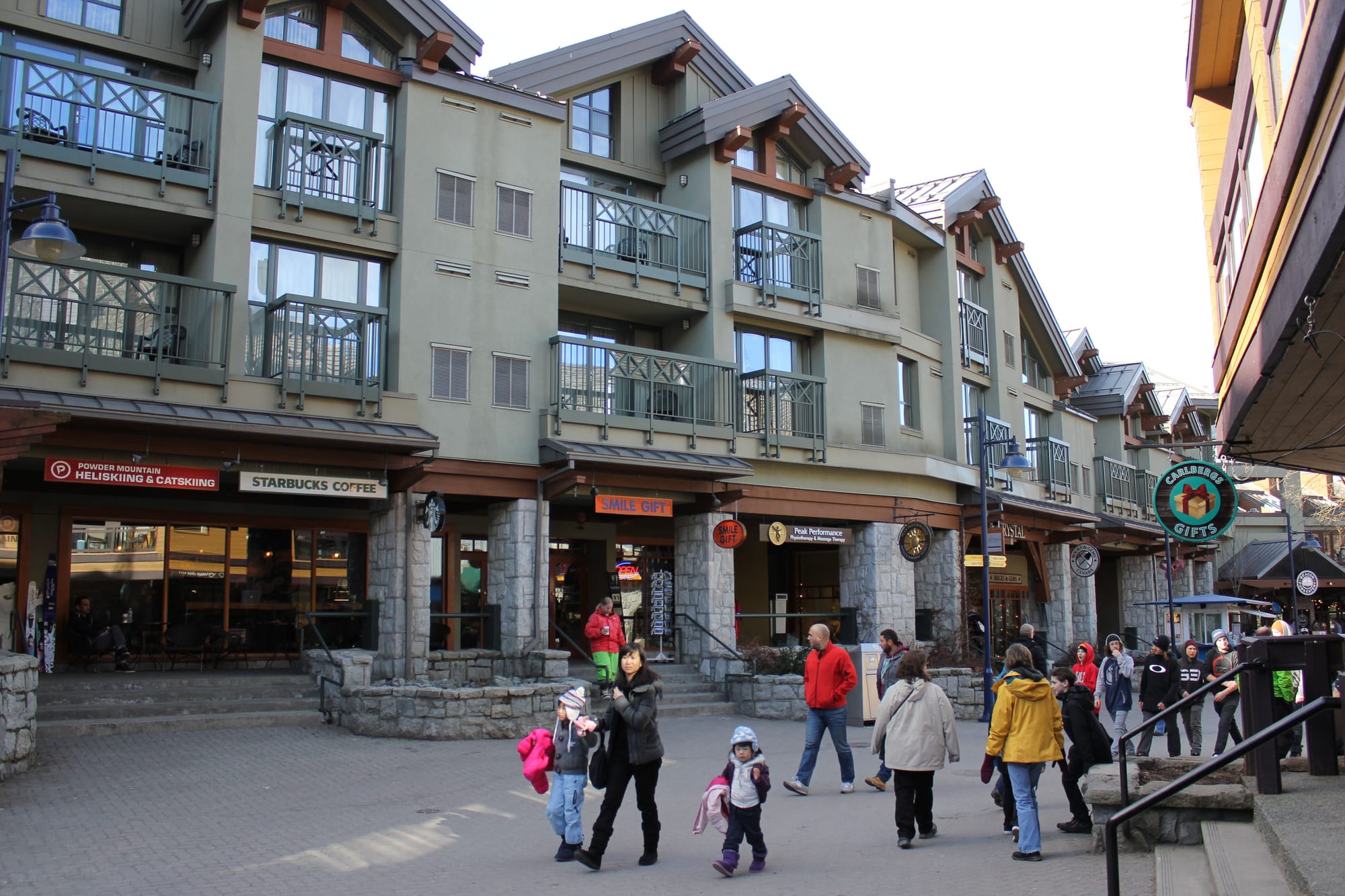
Whistler’s public spaces — its streets and squares — are defined by the private spaces of surrounding buildings, which are of a moderate height of 3 to 4 levels along the main pedestrian thoroughfares. This relatively human scale architecture allows sunlight to filter into the streets and squares and enables views of the surrounding mountain peaks and tree tops. The main pedestrian through link, Village Stroll, is wide, with narrower streets leading off at the intersection of the squares, helping to direct people through the village.
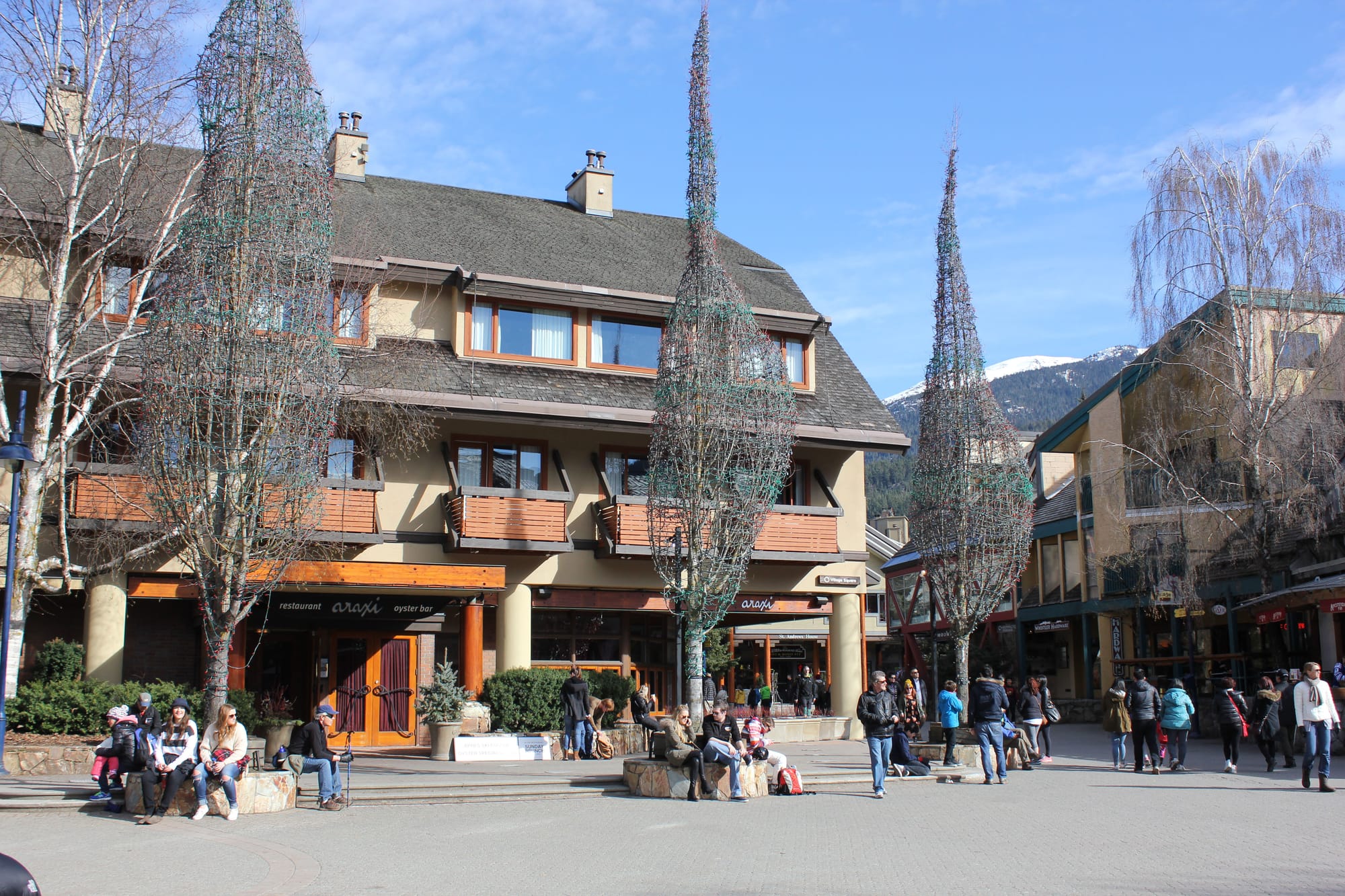
The streets and squares are often demarcated from private space, by a subtle division with a ledge which also provides a small space for landscaping and doubles for informal public seating. Shop fronts are set back slightly from the pedestrian thoroughfare and are generally elevated above the street level by a few steps. This unfortunately impacts accessibility via wheelchairs or prams, however signifies a separation between the public realm of the street and the private realm. Nature is illuminated with large trees decorated with lighting at each of the public squares at night. While this creates an inviting atmosphere, it also provides a subtle form of lighting of public space to support safety at night.
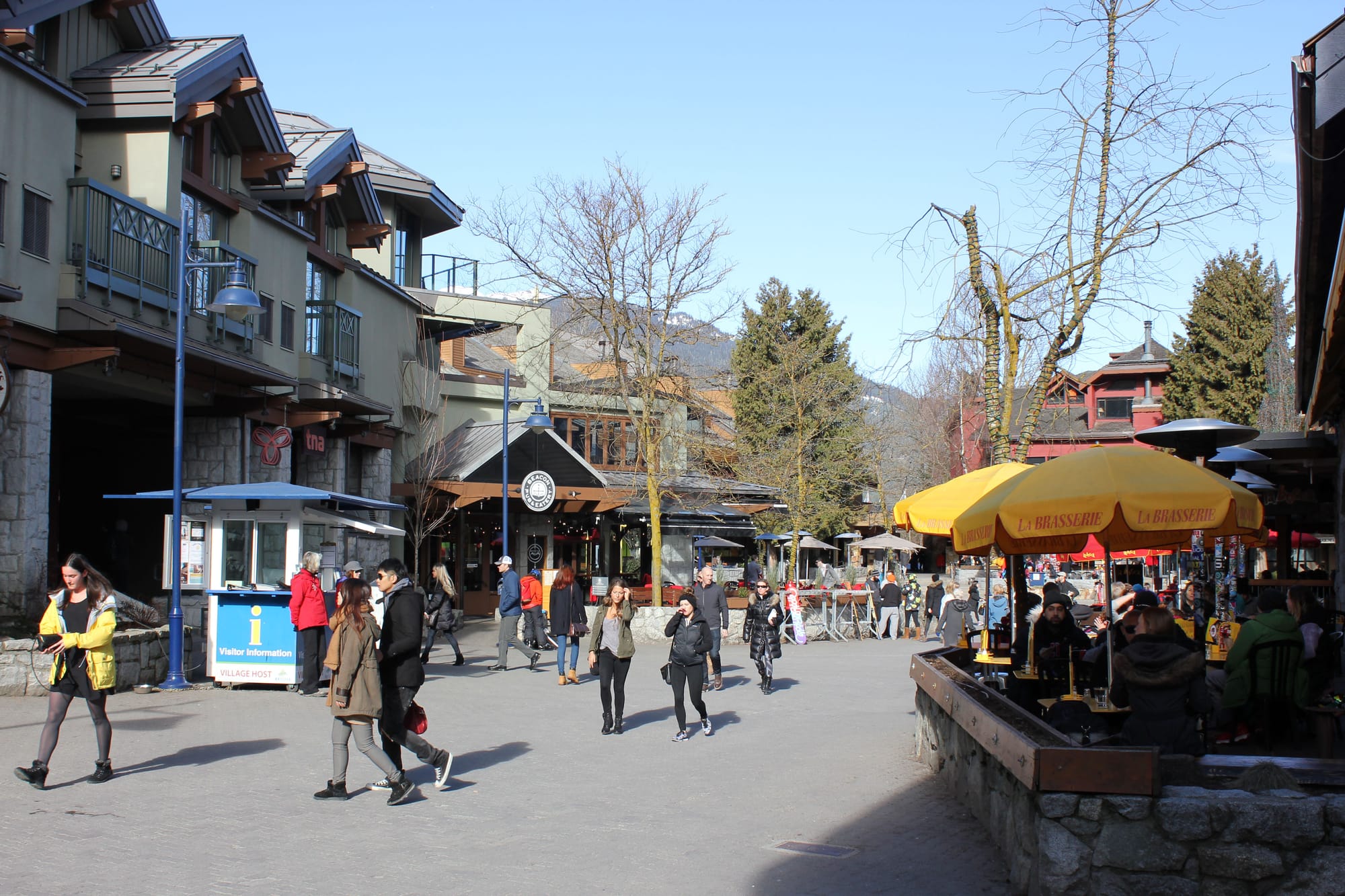
Whistler’s streets and plazas are lined with active street frontages which encourage interaction between people enjoying public and private spaces. Shops at the base of buildings have extensive windows which address the street and provide visual transparency. Many bars, restaurants and cafes are at street level and have patios, with outdoor seating and bright umbrellas, which extend into the street. Windows and balconies located on upper floors enable passive surveillance of these public spaces. These design elements contribute to a large number of eyes on the street.
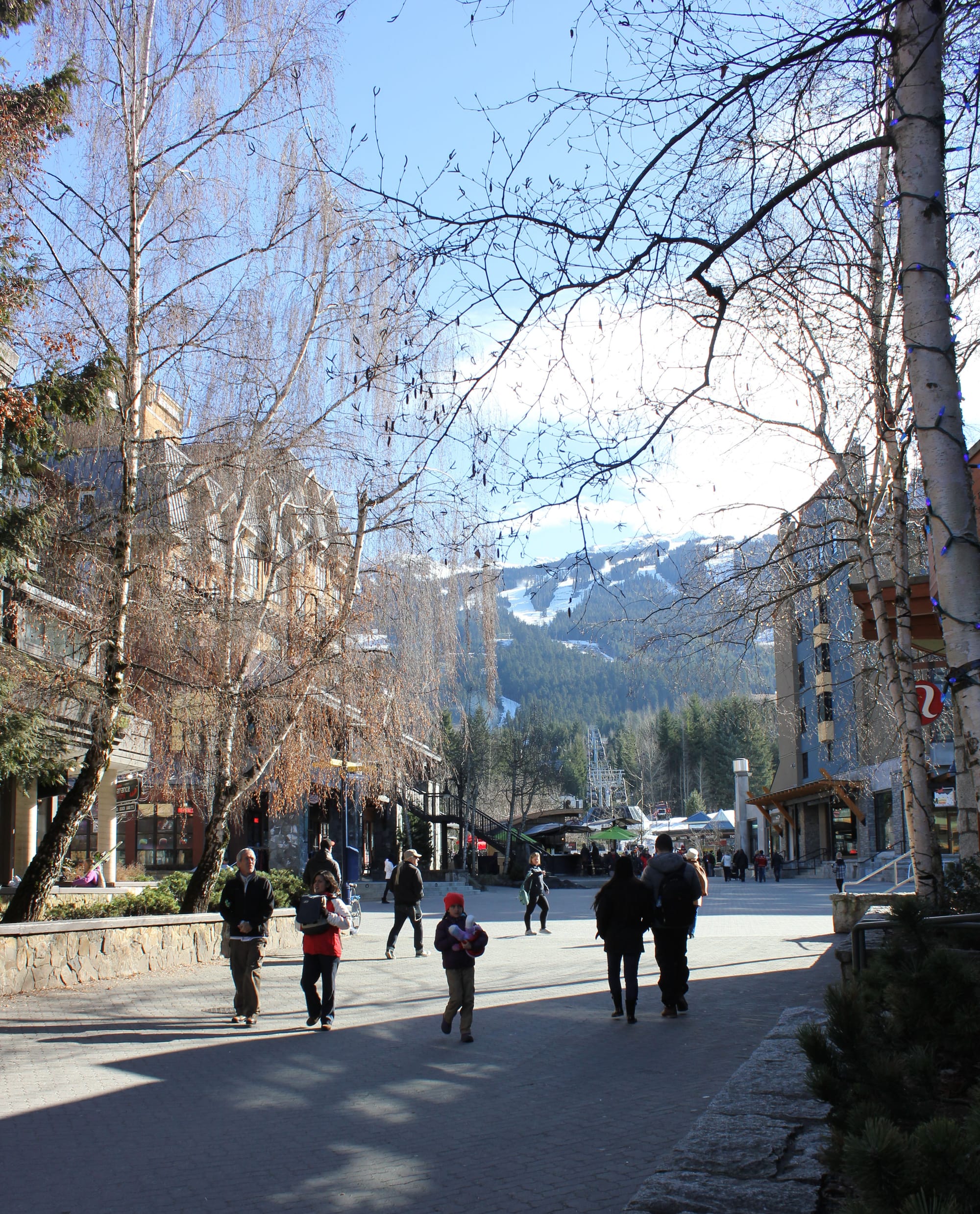
Private motorized vehicles have a limited place within Whistler Village — cars are excluded from pedestrian only streets and car parking is restricted to designated areas which are located on the periphery of the village. By limiting the ability to drive within the village, more people are encouraged to walk. When people move by foot, the likelihood of eye-contact or interaction is increased. The ephemeral face-to-face acknowledgements, awareness of surrounding people and lowered speed of movement changes the mood of a place. There is a higher level of passive surveillance, sense of personal safety, friendliness, and calmness. Whistler’s public squares are centered at points of multiple street crossings, creating a greater likelihood of public usage and chance encounters. People are attracted to spaces where there are other people — and the removal of cars actively encourages people to get out and walk, fully enjoy the entirety of the street space for their leisure, whilst supporting a quieter and safer environment to relax. This is especially valuable for families with young children, giving them greater comfort in allowing children to explore independently without fear of cars.
A continuity of shop fronts, bars and restaurants provides a point of visual and social interest for pedestrians. On rainy or snowy days, pedestrians are protected beneath the awnings of the shopfronts. Wide pedestrian only streets ensure people feel comfortable and uninterrupted in their movements. People have a sense of being amongst others — people watching gives a sense of being surrounded by a community — interactions occur between the windows and balconies of the private apartments above the street, the chairs and tables of the cafes, restaurants and bars, the ledges upon which people sit along the street edge, and the street itself.
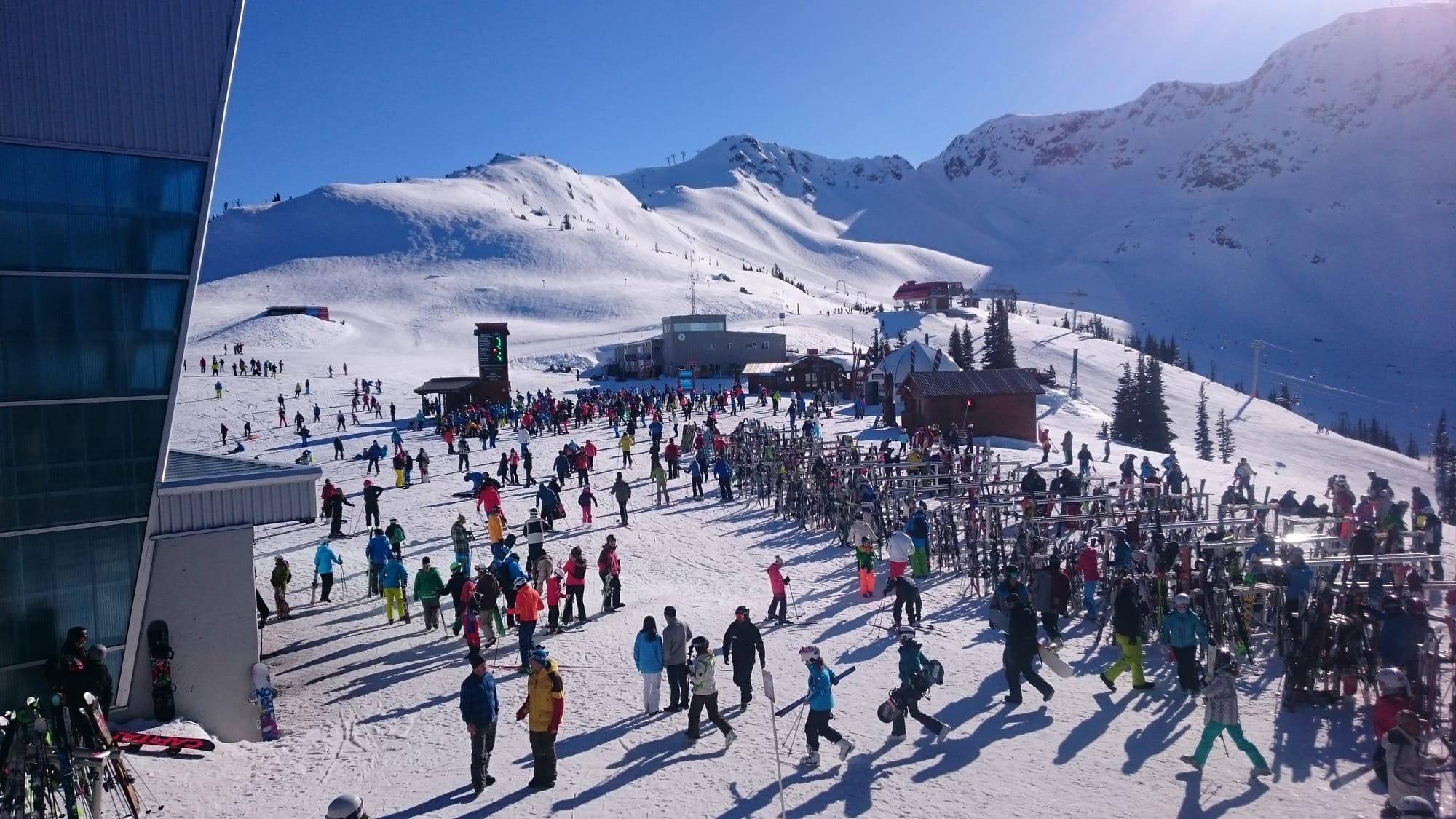
The urban design of Whistler encourages interaction between people enjoying the public and private realm through simple elements which sets a good example for other towns and cities.