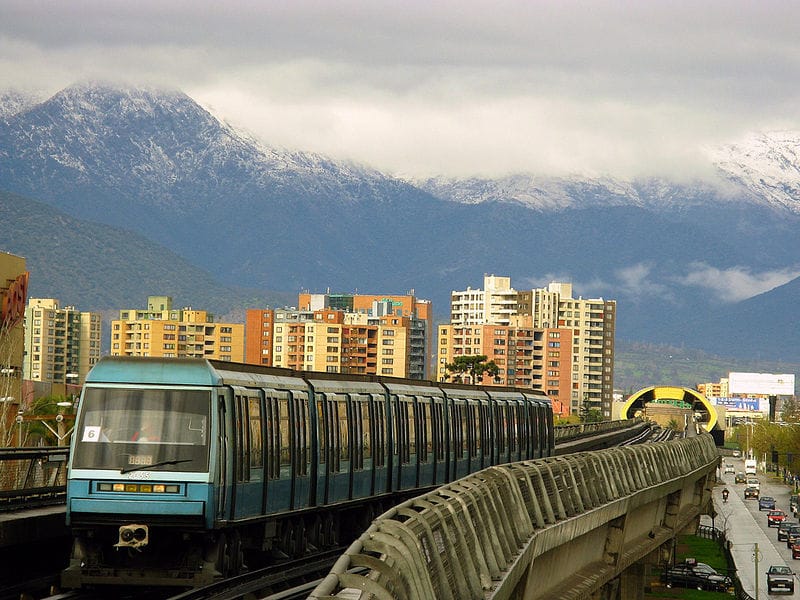
Awhile back I wrote about adding a RapidRide E rail line that continues to First Hill to Seattle Subway’s Vision Map, and the idea caught fire a bit. Seattle Subway proposed that by using rubber-tired metro technology, the project–which they dubbed the Magenta Line–could qualify to use the City Transportation Authority (CTA) since it uses a fixed guideway like a monorail does. Back in 2002, the State Legislature granted Seattle (or any city with a population exceeding 300,000) the ability to invoke the CTA with a majority vote in a ballot amendment.
It turns out to be surprisingly easy to get a CTA on the ballot. It’s as straightforward as the Seattle City Council voting to do so or a petition gathering enough signatures, Seattle Subway Executive Director Keith Kyle said. “The ballot measure can happen via council vote or by mind-bogglingly small amount of signatures–less than 4,000,” Kyle said.
CTA: Vestige of Monorail History
CTA’s intent was to provide a funding mechanism to expand the Monorail that could be activated by passing a ballot amendment. Seattle passed amendments in support of the Monorail four times, but, to make a long story short, the Seattle Monorail Project’s poor management and a lack of establishment support ultimately called the endeavor into question, and a fifth ballot measure failed by a wide margin. Assets were liquidated and the monorail dream was dashed, but, as fate would have it, the funding mechanism remains.
The City Transportation Authority statute stipulates that the taxing authority can be used for “a transportation system that utilizes train cars running on a guideway, together with the necessary passenger stations, terminals, parking facilities, related facilities or other properties, and facilities necessary and appropriate for passenger and vehicular access to and from people-moving systems, not including fixed guideway light rail systems.” The fact that a rubber-tired metro is not light rail presents an opening, although this interpretation would need to stand up in court.
What Is A Rubber-Tired Metro?
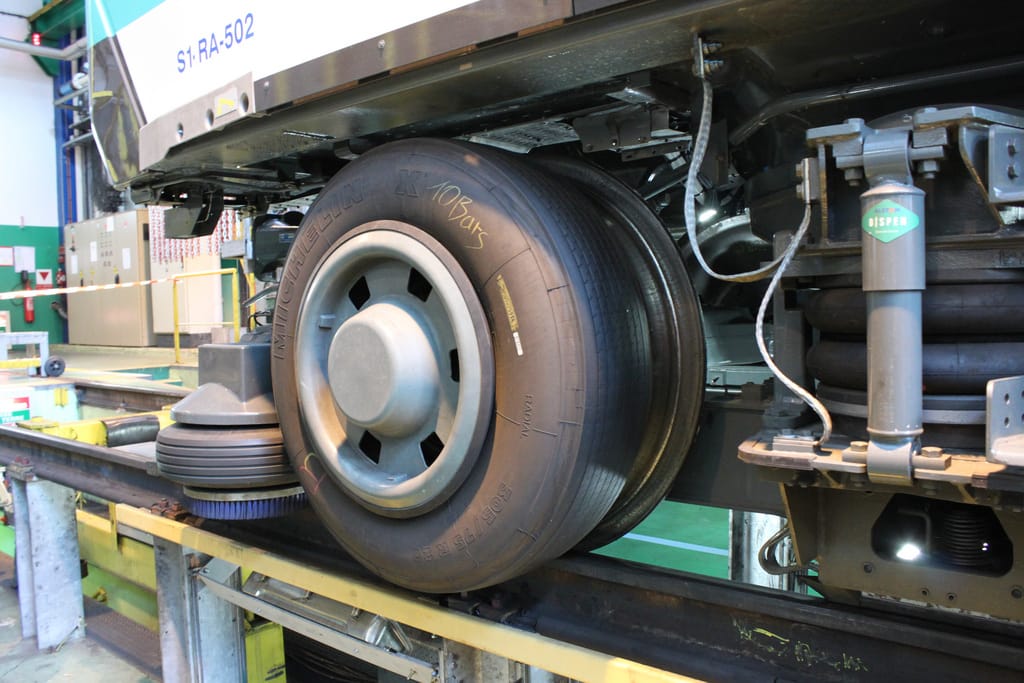
Rubber-tired metro systems are popular and widely used in Japan and in cities such as Paris, Montreal, Santiago, and Mexico City. Under this system, rubber tires on rolling pads propel the trains while traditional steel wheels on steel tracks provide guidance and a fail safe. Rubber-tired metros provide the advantage of readily handling steeper grades thanks to their greater traction–this advantage could prove pivotal for serving First Hill. Rubber-tired metro boast a smoother ride than conventional rail with less jostling. Faster acceleration and shorter braking times can also tighten up headways.
Some disadvantages of rubber-tired metros include higher energy consumption and higher maintenance costs, in part because rubber tires do not last as long as steel wheels. The more complicated trains also tend to be more expensive and run hotter. Running hot can be a major concern for a deep subway that is difficult to vent such as the London Underground. However, an elevated system would avoid the issue.