Jonathan Glick and his son live in the Central District and often walk across 23rd Avenue. The street is a major thoroughfare and recently has been rebuilt. One wet evening, they went out to pick up dinner and walked along Union Street on the way back home. But, with dinner in one hand, and his toddler’s hand in the other, Jonathan couldn’t activate the pedestrian signal at 23rd Avenue in time. The awkward reach for the button with a heavy bag of burritos caused the two to miss their chance–leaving them standing in a winter storm until the next light cycle.
Over the course of the past year, Seattle has chipped away at dangers to pedestrian safety and obstacles to comfort. The Seattle Department of Transportation (SDOT) adopted a Director’s Rule for Pedestrian Mobility In and Around Work Zones, requiring safe access for pedestrians around construction sites and allowing fewer sidewalk closures. And the city council voted to lower default speed limits around the city to a safer 25 miles per hour on arterials and 20 in residential areas.
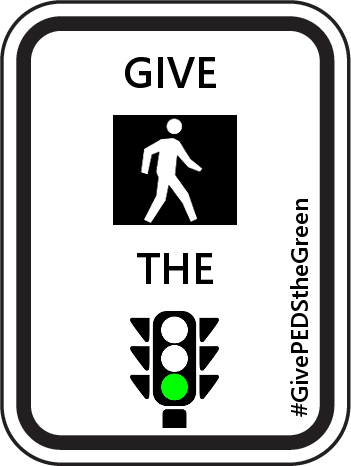
But there’s still another clear opportunity to enhance safety further and substantially improve comfort for people walking: do something about those “push to cross” buttons, better known as “beg buttons”, all over the city.
Whether you don’t hit the beg button in time or don’t even notice it, you have two options for what to do when you miss your chance for the walk signal like the Glicks did:
If you want to be an obedient Seattleite, push the button and wait your turn. This means you get to see all those cars go in the same direction that you want to with their green light, while you’re stuck standing there and staring at that red hand. Then, you wait for everyone else to go in all other directions, before finally, minutes later, you get your chance to cross. In Jonathan’s case, he stood with his son getting colder and wetter, realizing that the city hadn’t thought enough about pedestrians. For those recent transplants who aren’t familiar with waiting for the signal, here’s an example of what it’s like to wait it out: