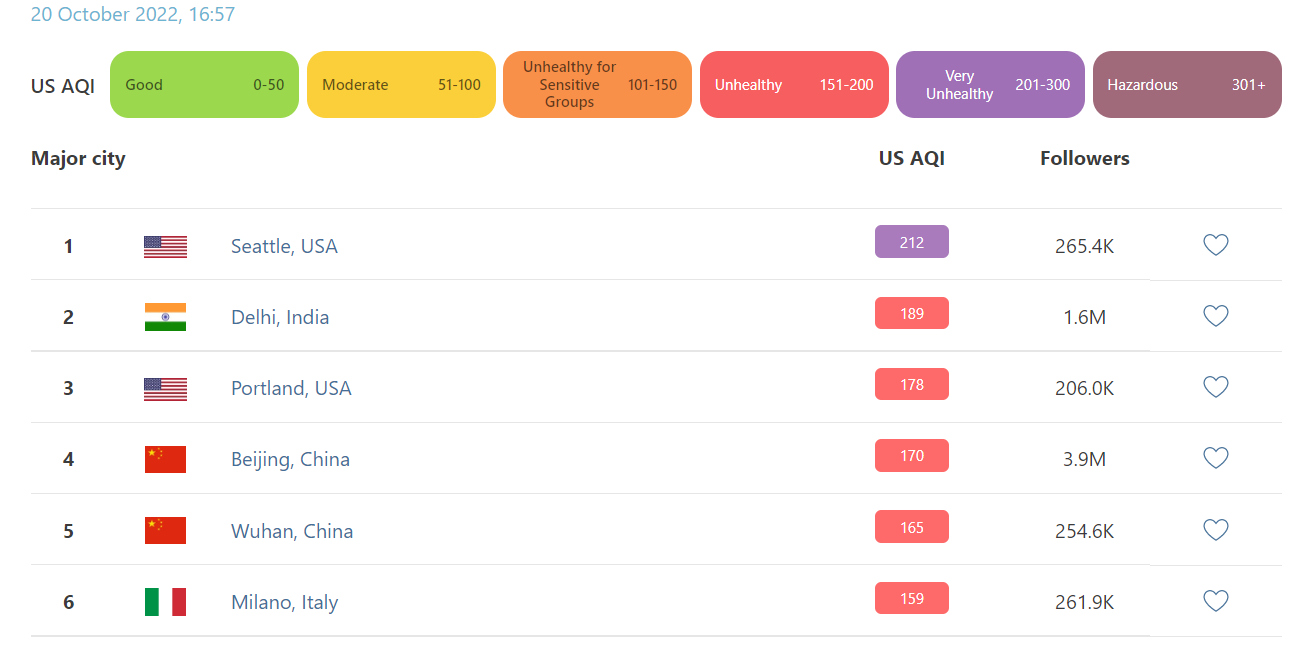
Mayor Bruce Harrell was in Buenos Aires yesterday attending the C40 Climate Summit. Back at home, Seattle’s air quality was rated “very unhealthy” and its index climbed into the 200’s due to smoke rolling in from nearby Bolt Creek wildfires. Ratings on the Eastside (closer to Bolt Creek) were often even worse over the past month of fires. The Seattle metropolitan area had the worst air quality in the world Wednesday and Tuesday, beating out megacities like Lahore, Pakistan and Delhi, India that routinely deal with smog from heavy industry and automobiles.
Fires in the Cascades like the troublesome, long-burning Bolt Creek fire were fueled by an abnormally dry fall stacked onto a dry summer. The Seattle region has not seen significant rainfall since early July. Normally October brings wet weather and ends the wildfire season, but that didn’t happen this year. Climate change is making this pattern more commonplace, raising the specter of even more extended smoke seasons in the future.
Once the inversion system is set due to wildfire smoke layer, tailpipe pollution is trapped in the thick hazy air, creating a double whammy. The resulting particulate heavy air is particularly dangerous for people deemed sensitive groups, such as the young, the elderly, and those with respiratory conditions. The high pollution levels can bring on asthma attacks, fatigue, and headaches. Prolonged exposure takes years off life expectancy.
The stage was set in Argentina for Mayor Harrell to address this crisis and chart a way out. Unfortunately, the Mayor stepped up to the plate and took the pitch rather than swinging for the fences. No new programs were announced, and as Harrell fielded questions on the panel, he frequently pivoted to side issues like mentorship or streetlights rather than digging into the heart of the issue.
Jenny Durkan, Harrell’s predecessor, was also a regular at C40 conferences and dealt with similar issues of legitimacy standing next to bolder mayors like Anne Hidalgo of Paris or Sadiq Khan of London, who have led their cities to significant carbon reductions and climate adaptions. Hidalgo has prioritized people walking, rolling, and biking on Paris streets, rapidly rolling out bike lanes and pedestrianized corridors and aggressively adding social housing, with an ambitious goal of expanding the city’s housing stock to 30% social housing by 2030 — Seattle’s social housing share is sitting at about 8%, meanwhile. Khan expanded an ultra-low emission zone across more of London, with congestion charges raising money for transit and other multimodal investments.