On Tuesday, Washington House Democrats revealed an ambitious transportation package exceeding dueling senate proposals by more than $10 billion. The 16-year package would raise $26 billion, with $8 billion set aside for carbon reduction projects–$17 billion, meanwhile, is in a highway-related category.
The bill relies primarily on increases to the gas tax (which would be indexed to inflation) and a carbon fee to fund its investments. The carbon fee would kick in on January 1st, 2023 starting at $15 per ton, rise to $20 after two years, and to $25 by 2027. It is projected to raise $7.5 billion. The gas tax would raise $17 billion, including the diesel tax differential.
The headline of The Seattle Times story yesterday read “Gas taxes and fees could reach $1 per gallon under new Washington state transportation proposal,” adding together existing state and federal taxes, the 18-cent hike, subsequent increases from indexing to inflation, and the expected carbon fee impact: 15 cents. Several Republican lawmakers have already spoken out against any gas tax increases, pointing to the recession as poor timing.
Legislators on both sides of the aisle say the gas tax revenue is strictly restricted by Washington state’s 18th amendment to highway purposes–though they could likely sidestep that requirement if they set their minds to it. The carbon fee would be spent on carbon reduction, at least. The bill would also levy about $2 billion in assorted registration and licensure fees–setting portions aside in the highway safety fund, highway patrol fund, and a flexible multimodal fund.
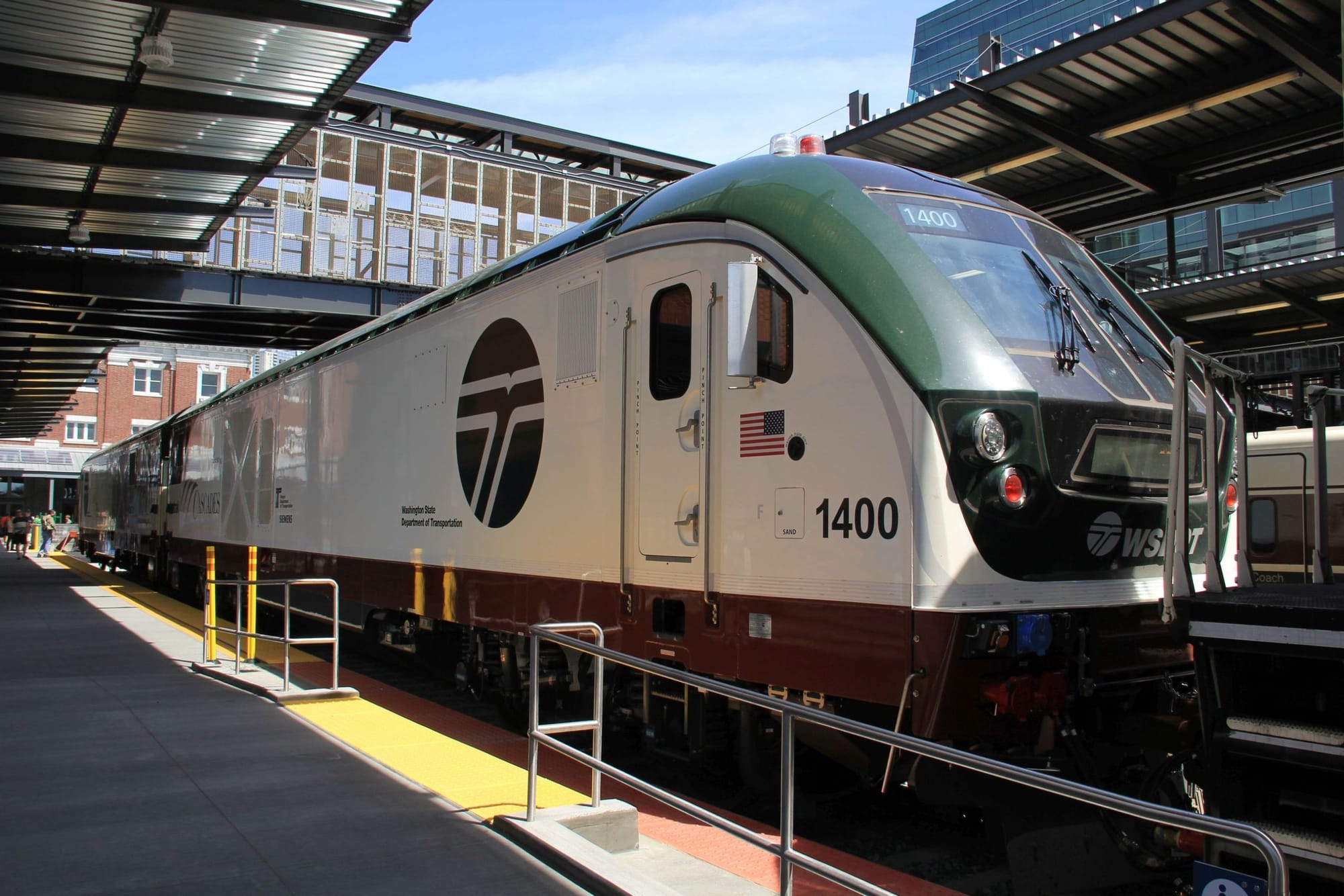
In the carbon reduction plan, the package allocates $5 billion dollars for bike, pedestrian, and transit projects, which would be unprecedented investment from the state, as Ryan Packer detailed in Seattle Bike Blog. Much of that is various transit grant programs; plus, Amtrak Cascades gets $721 million operations funding and $143 million in capital investment. Additionally, $569 million is specifically for ferry system electrification and $2.5 billion goes into a general carbon reduction fund.
The highway-related spending plan invests $3.5 billion in fish-friendly culverts (which is a court-mandated intervention to meet Stevens Treaties made with Northwest tribes), maintenance and preservation composes $4.6 billion, the ferry system get an additional $1 billion for capital improvements and operations, and $6.7 billion in a general highway slush fund dubbed “freight projects.” Among the few projects definitively funded is $1 billion for the Columbia River Crossing which supercharges freeway infrastructure in Vancouver, Washington and provides a new earthquake-resilient bridge to Portland–now rechristened “Interstate Bridge Replacement.”
“We’re proposing $6.7 billion in new road-related investments, $1 billion for the Interstate Replacement Bridge connecting Washington and Oregon, and fully funding fish passages,” said Rep. Sharon Wylie (D-Vancouver) in a statement. “There are also significant investments to reduce carbon. We do so using a wide range of strategies, including alternative fuels, the electrification of vehicle fleets, and increased spending for multi-modal services such as transit and special needs transportation along with bike and pedestrian projects.”