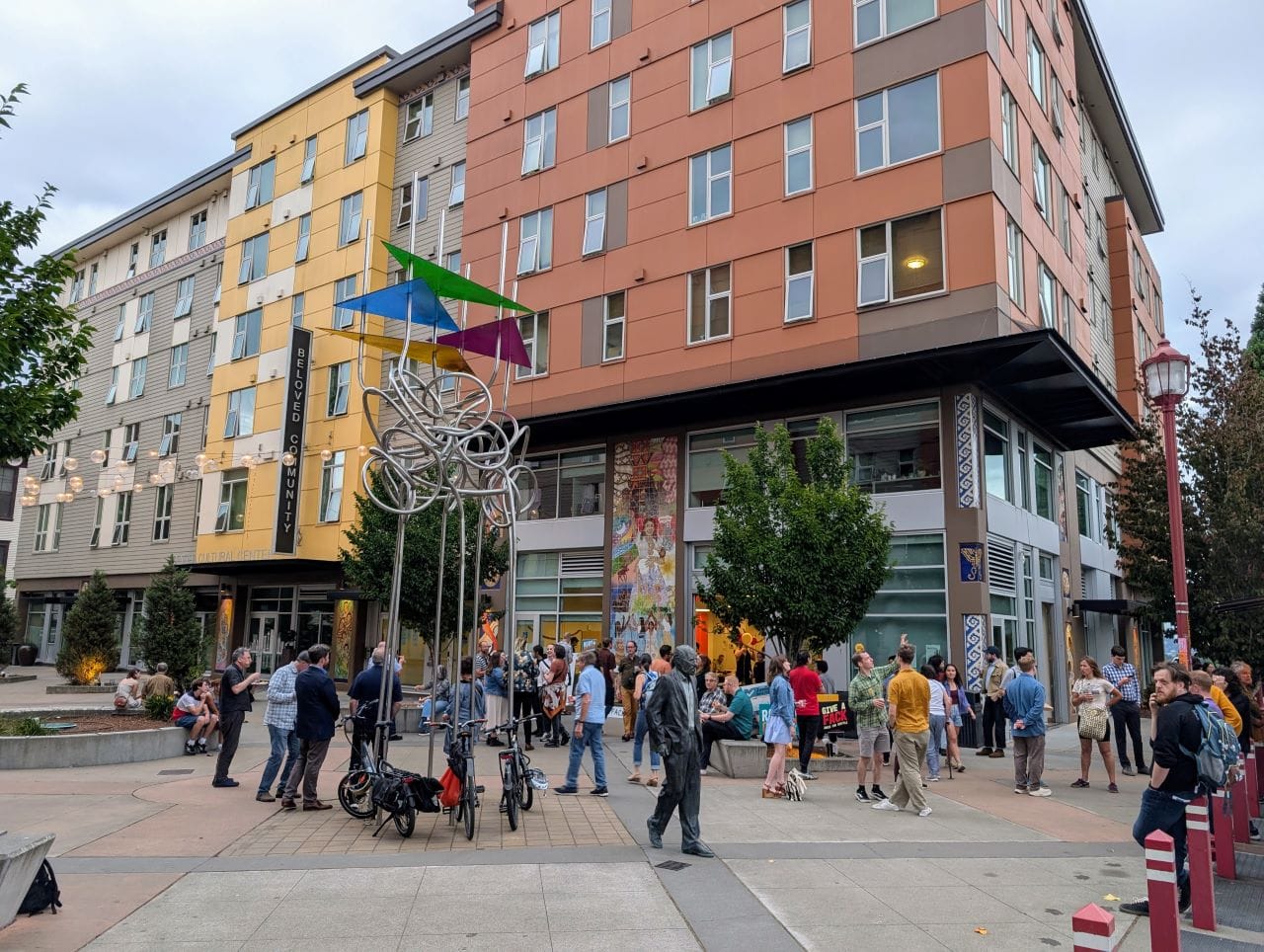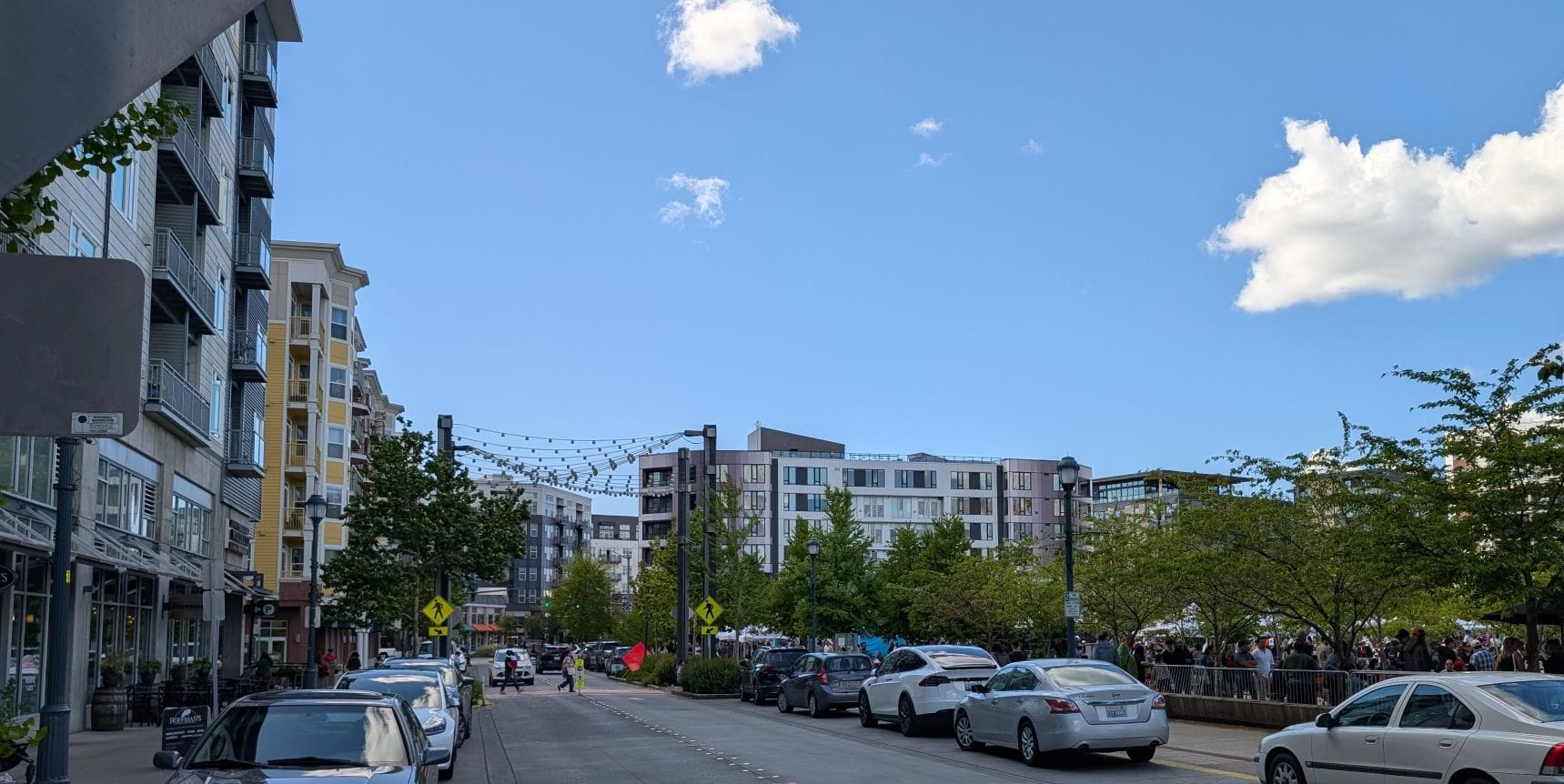
When light rail finally arrives in Downtown Redmond this Saturday, riders will find themselves in perhaps the most vibrant station area on the Eastside. A well-woven fabric of established and new retail and residences is ready to greet visitors and provide homes for new arrivals, and it’s only getting more realized by the day.
This downtown is the product of decades-long planning to craft a dense and mixed-use core for the suburb-turning-city. Redmond’s 1993 Downtown Plan helped kick off a streak of dense urban development in a historic downtown that had become a mix of low-rise multifamily and commercial development.
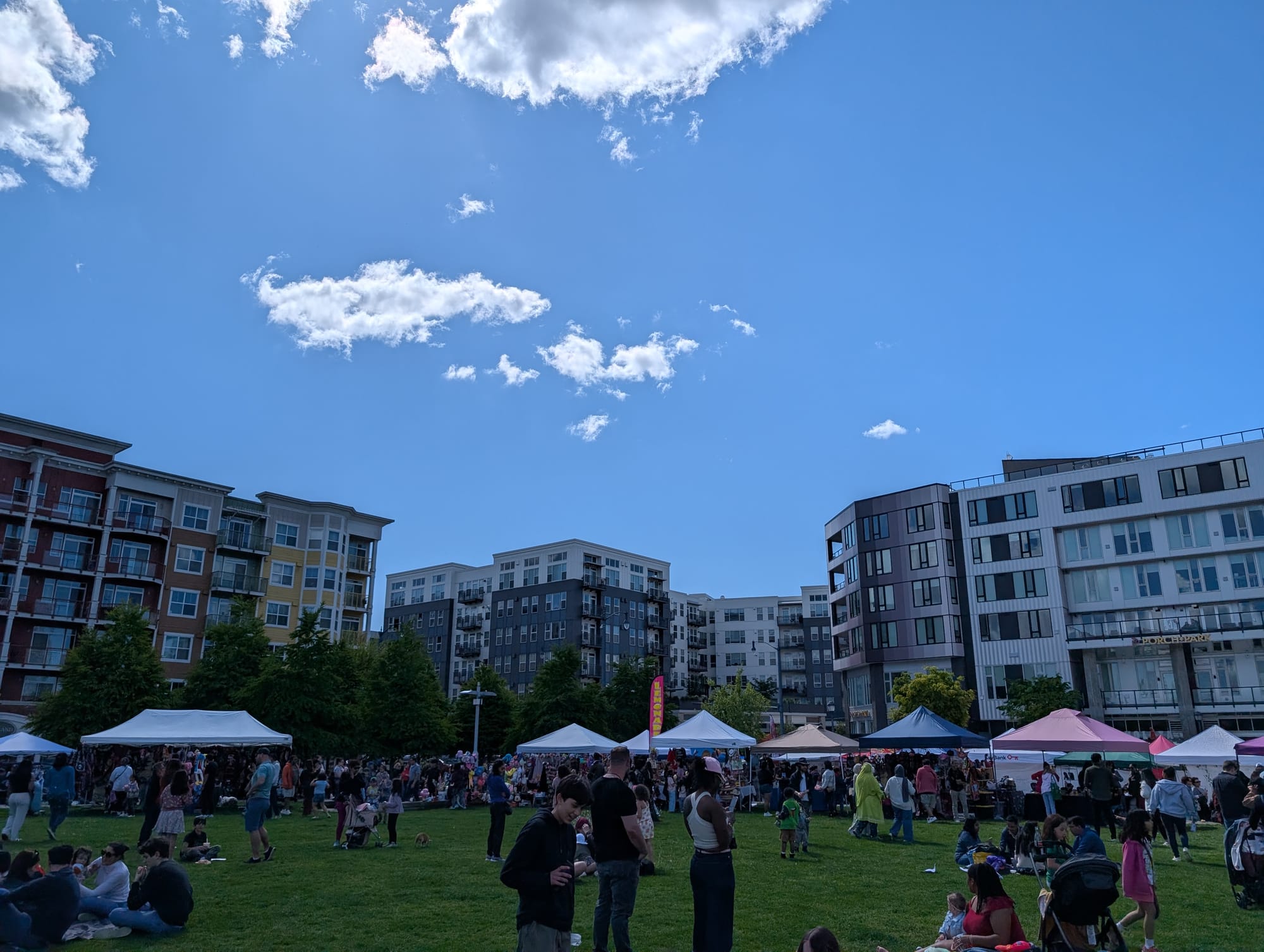
That first plan legalized the density of residential development that now characterizes the neighborhood. Subsequent comprehensive plan updates further liberalized land use regulations that have incrementally increased the scale of newer development downtown. The 1993 plan’s legacy can also be seen in the near ubiquitous presence of small and medium-sized ground-floor retail spaces. This was done by prohibiting residential use on the first floor.
The Urbanist has located every mixed-use and commercial project completed in Downtown Redmond since the turn of the century.
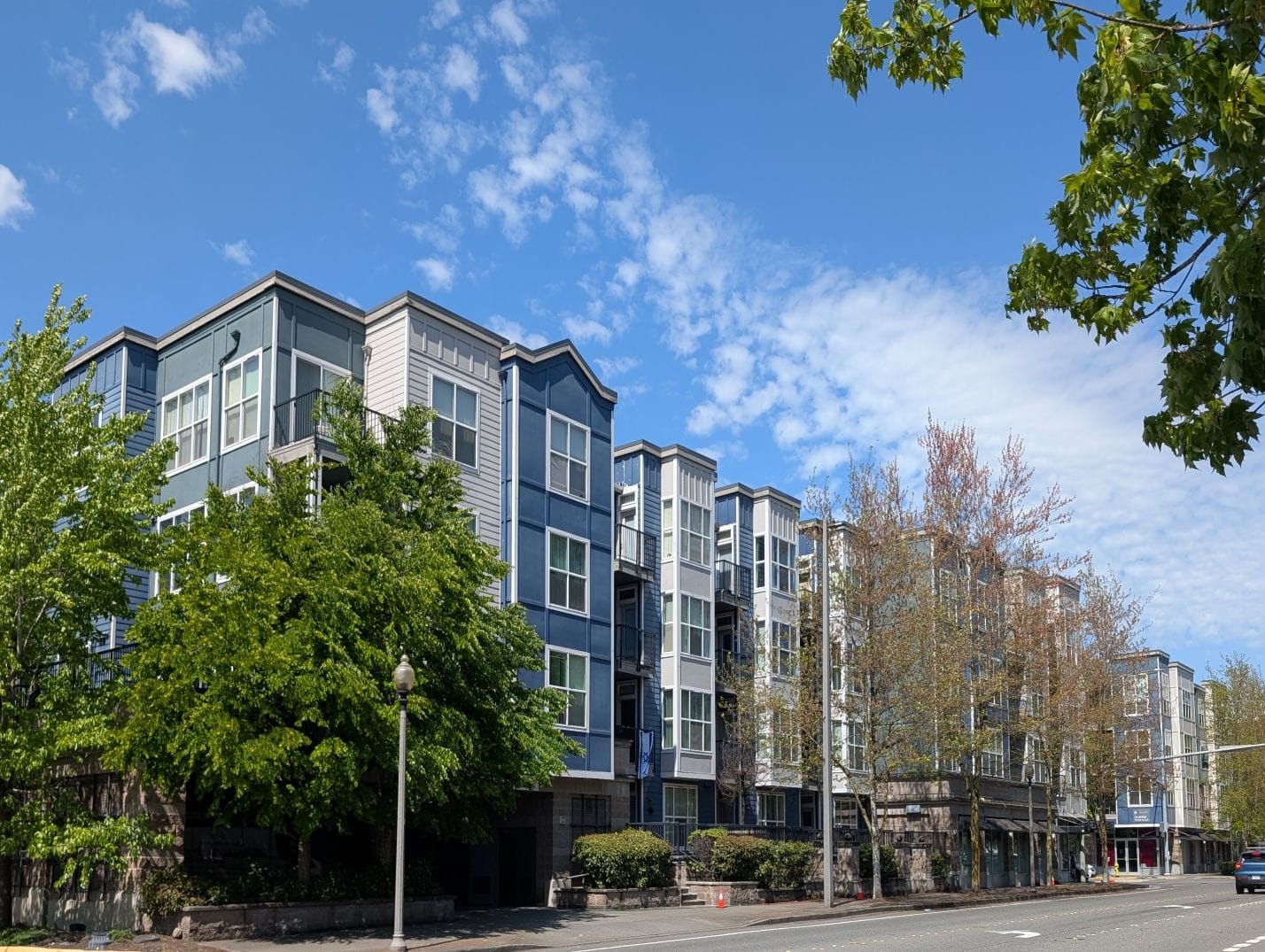
The first cluster of Downtown Redmond’s modern form was completed between 1999 and 2001, with the completion of the Avalon ParcSquare Apartments, Redmond Town Square, and Frazer Court. At 16075/16080 NE 85th Street, the Avalon ParcSquare Apartments is a collection of four four-story multifamily buildings with 124 homes, 6,372 square feet of retail space, and 149 parking stalls. At 8201 164th Ave NE, Redmond Town Square is a three-story, 65,584 square feet office building. At 16275 NE 85th Street, Frazer Court is a 59-unit, four-story two building condominium complex with 60 parking stalls.
A long streak broken by a pandemic
From 2004 to 2021, Downtown Redmond saw a continuous streak of mixed-use completions. In that timespan, over 40 new mid-rise buildings were erected. Major projects that completed in this period include the Redmond Park and Ride transit-oriented development (TOD) project and River Park Development, both completed in 2009.
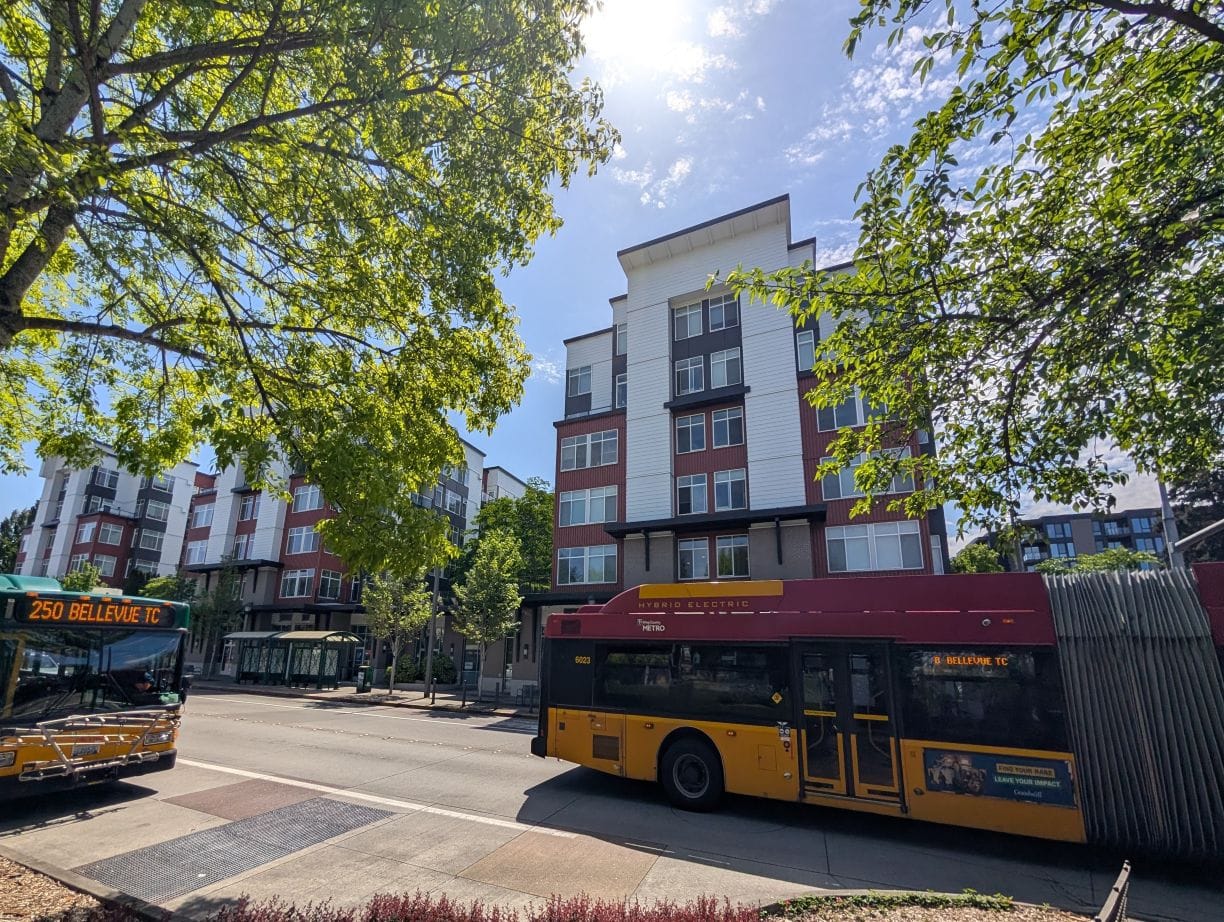
The TOD complex replaced Redmond’s old surface park and ride with a 385 parking stall, elevated parking garage and the Veloce Apartments. The three-building, six-story, apartment complex has 322 units, 11,751 square feet of commercial space, and 130 parking stalls.
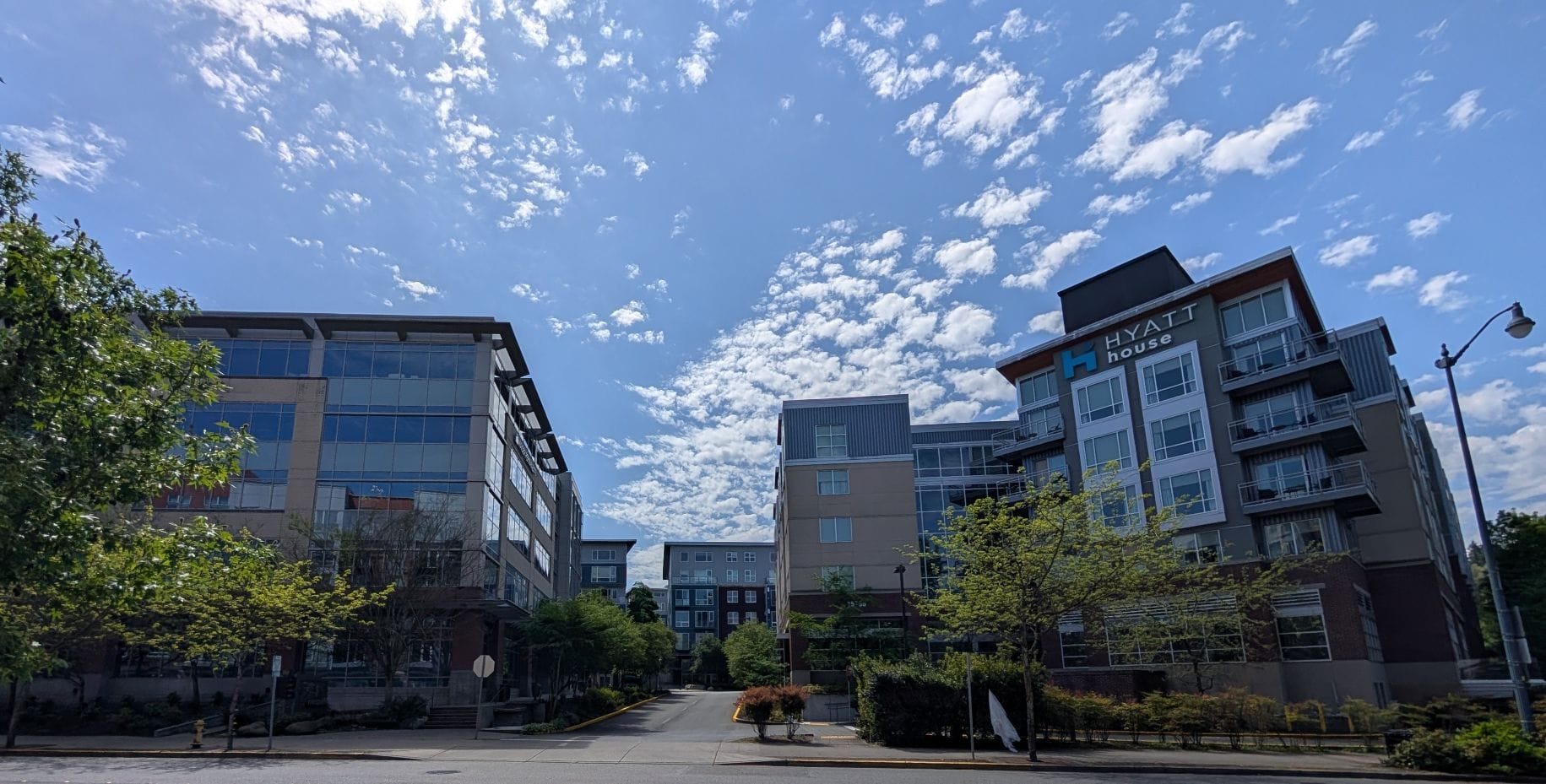
The River Park Development built out five buildings with a total of 750 parking stalls. It’s made up of a 106,910 square foot office/medical building, three apartment buildings, and a 149-room Hyatt House hotel with 4,100 sq feet of restaurant/retail space. The River Park Apartments have 319 homes and 3,580 square feet of retail space.
A crescendo of more than 30 other projects have been completed around these two pioneering projects. In total, these 38 commercial, mixed-use, or residential projects have added over 5,300 new residences, over 343,000 square feet of commercial space, over 6,400 parking stalls, and 486 hotel rooms to Downtown Redmond between 1999 and 2021.
A Great Urban Foundation
Mapping all this development really shows how tightly packed this development has been in Downtown Redmond. A keen observer might notice that the light rail station isn’t exactly in the center of all this older development, the station is southeast of most of this new urban fabric. This is a side effect of older plans preferring office development in the center of downtown and the lack of office development thereof. Visitors will need to make a little jaunt northwest to find the more established mixed-use core of Downtown Redmond.