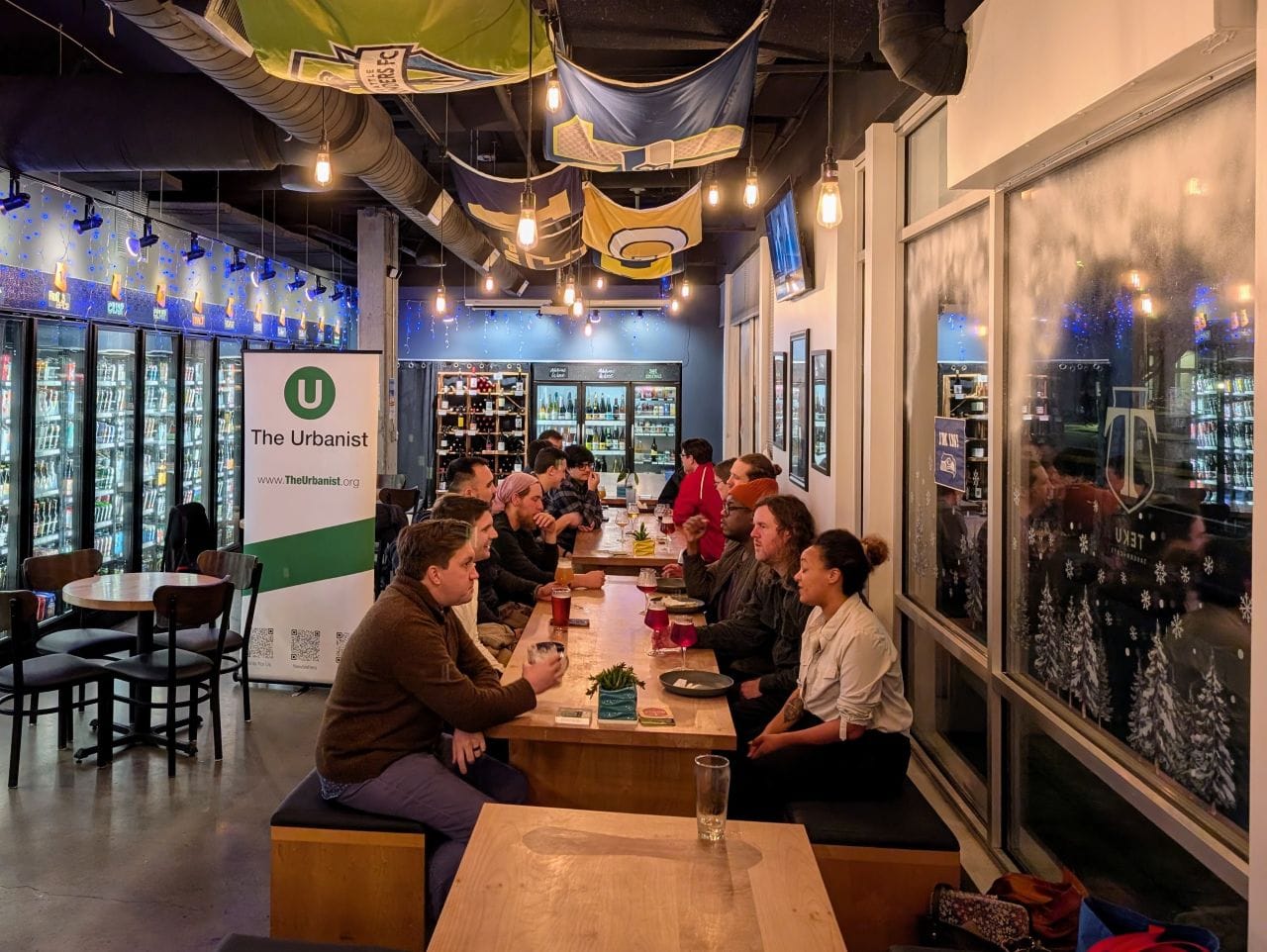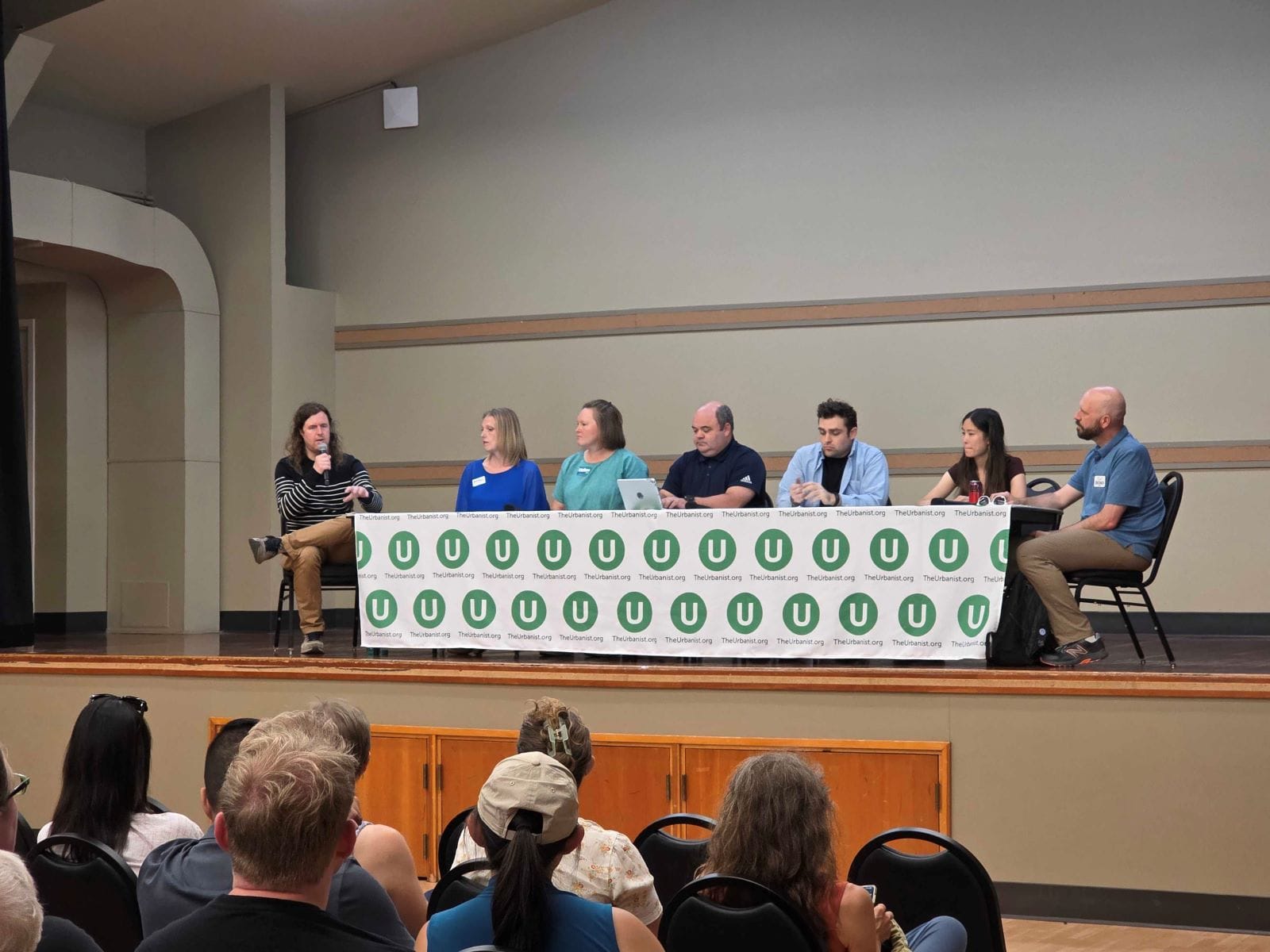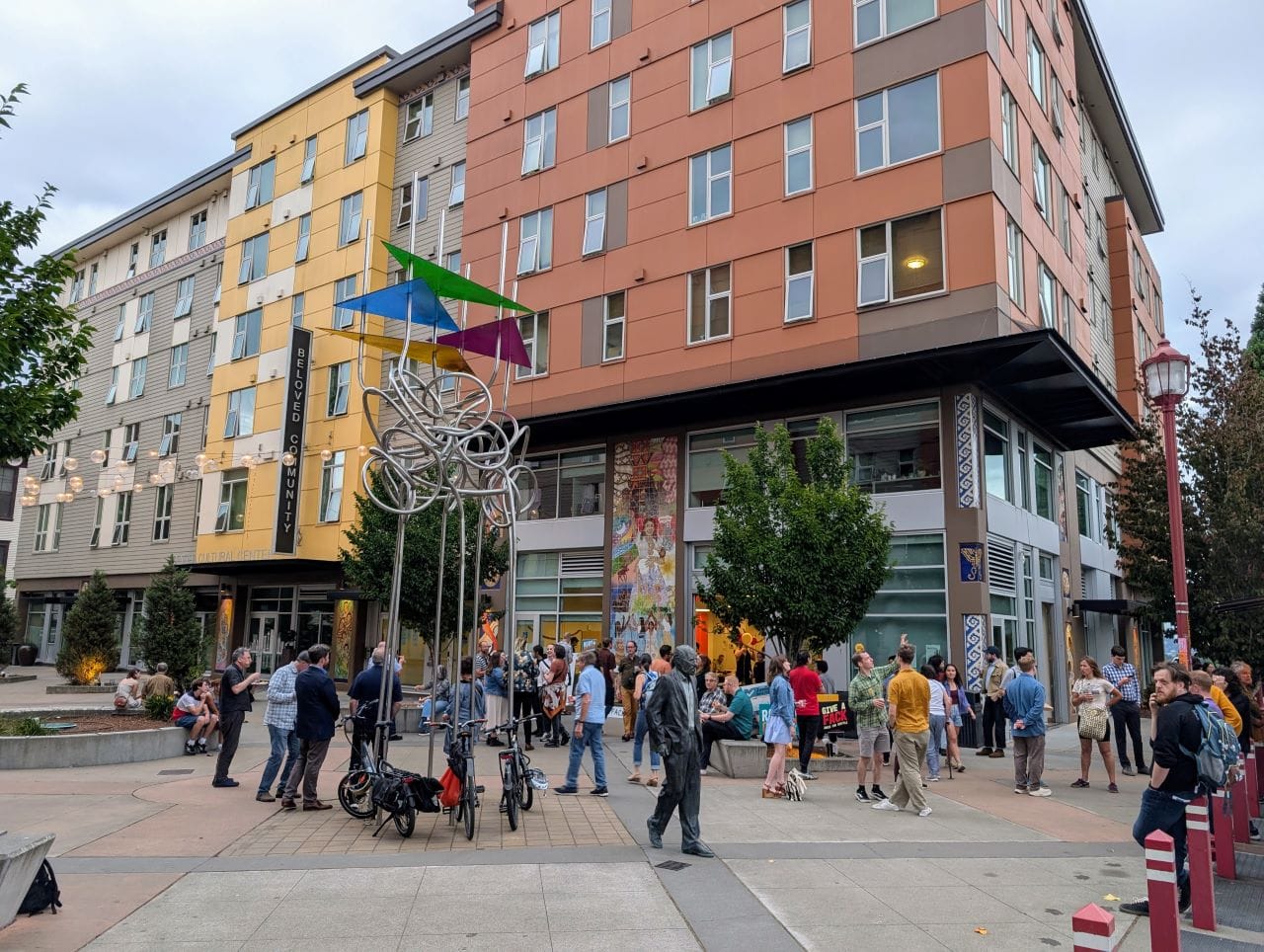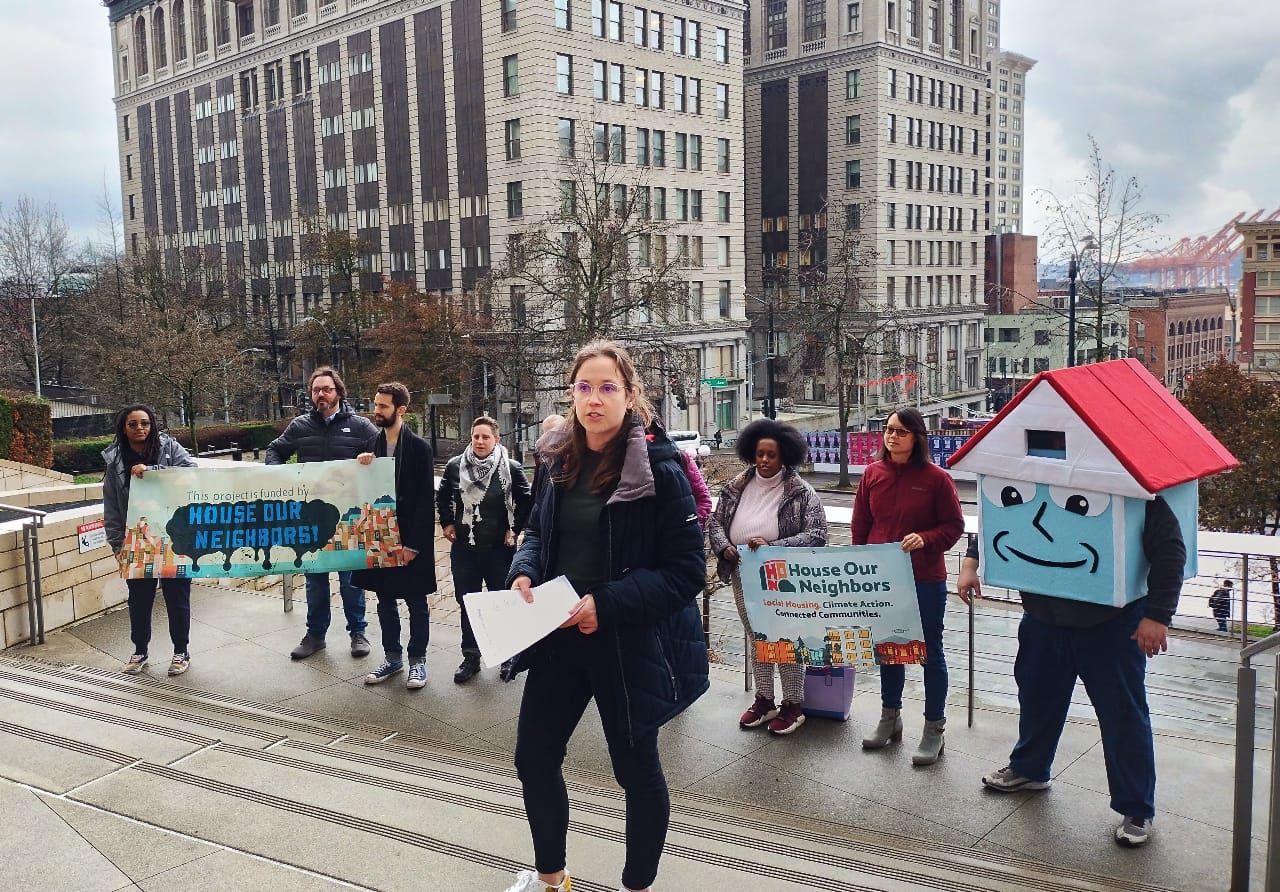
Social housing advocates are riding high in the wake of their 26-point victory to secure a dedicated funding source in a February special election. House Our Neighbors ran the campaign that put Seattle Proposition 1A over the top and gathered supporters in Columbia City this week to celebrate their win and begin organizing for what comes next.
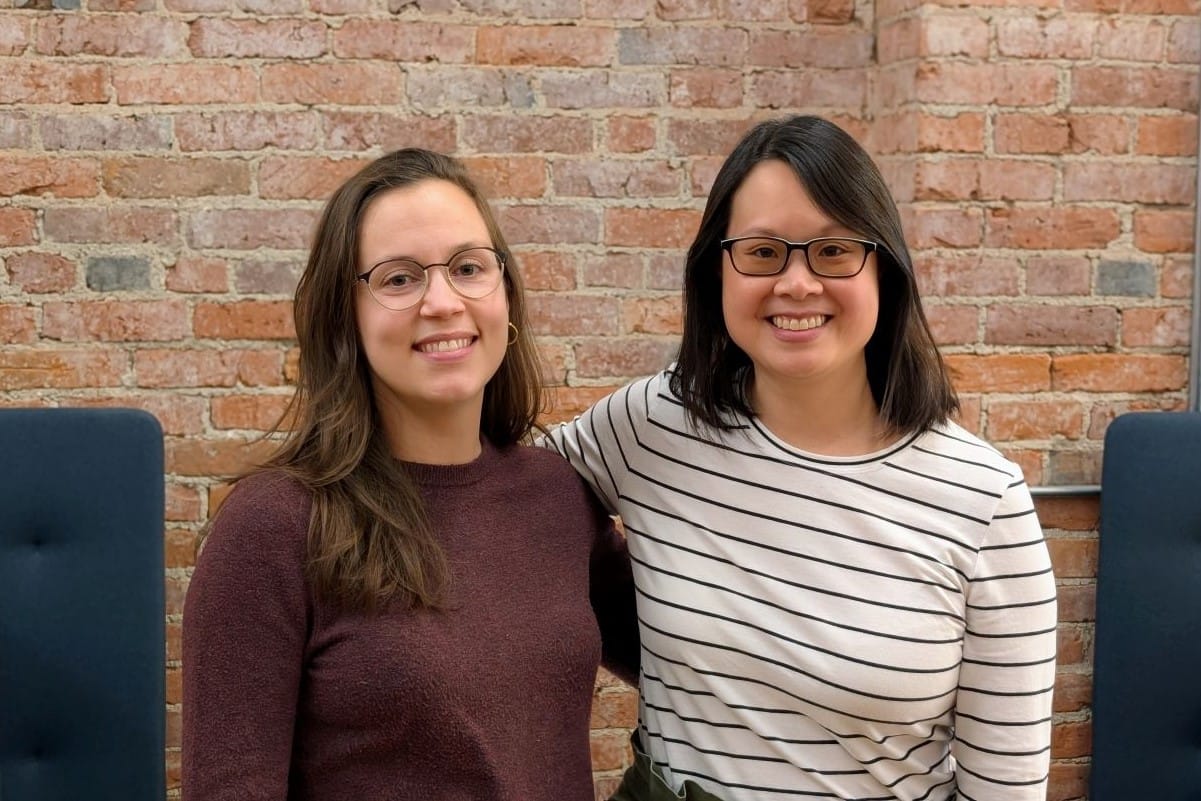
House Our Neighbors’ co-executive director Tiffani McCoy fired up attendees in a speech that also held up the moments of catharsis that the campaign encapsulated.
“There’s tremendous energy. There is a desire for an outlet to put that energy,” McCoy told the gathered supporters Tuesday. “We know that the federal situation is a nightmare, and we want to be able to plug in at the local level, to feel like we still have some control over our lives and over our future, because we do, and we just showed that here in Seattle.”
The win means that the Seattle Social Housing Developer will have approximately $53 million in annual funding via an excess compensation tax hitting companies that pay individual employees more than $1 million in annual compensation. The funding measure builds on the authorizing measure (Initiative 135) that set up the public development authority (PDA), after winning a February special election in 2023. At the time, House Our Neighbors said they planned a future push to add a dedicated funding source to support the PDA, but couldn’t add one with I-135 due to the state requirement that ballot measures contain a single subject, and February’s vote fulfilled that promise.
The scale of Prop 1A’s election victory was so shocking to staunch supporters that McCoy said she didn’t initially believe the election night results, which showed the measure was up 15 points. That lead grew as results came in over the following week.
The opposition stacked up against the measure was significant, and driving turnout to winter elections is challenging, which is why most prognosticators expected a tight race.
While House Our Neighbors turned in the ballot signatures last summer to qualify for the November election, the Seattle City Council opted to delay and put the measure on the February special election ballot. Plus, they chose to add a further hurdle by placing their own competing alternative measure alongside Proposition 1A on the ballot. Proposition 1B would have not created a long-term dedicated funding source or even funded mixed-income social housing with the temporary (JumpStart pilfered) funds offered, but it did have the backing of the Seattle Metropolitan Chamber of Commerce, which drafted the measure and lobbied hard for its inclusion.
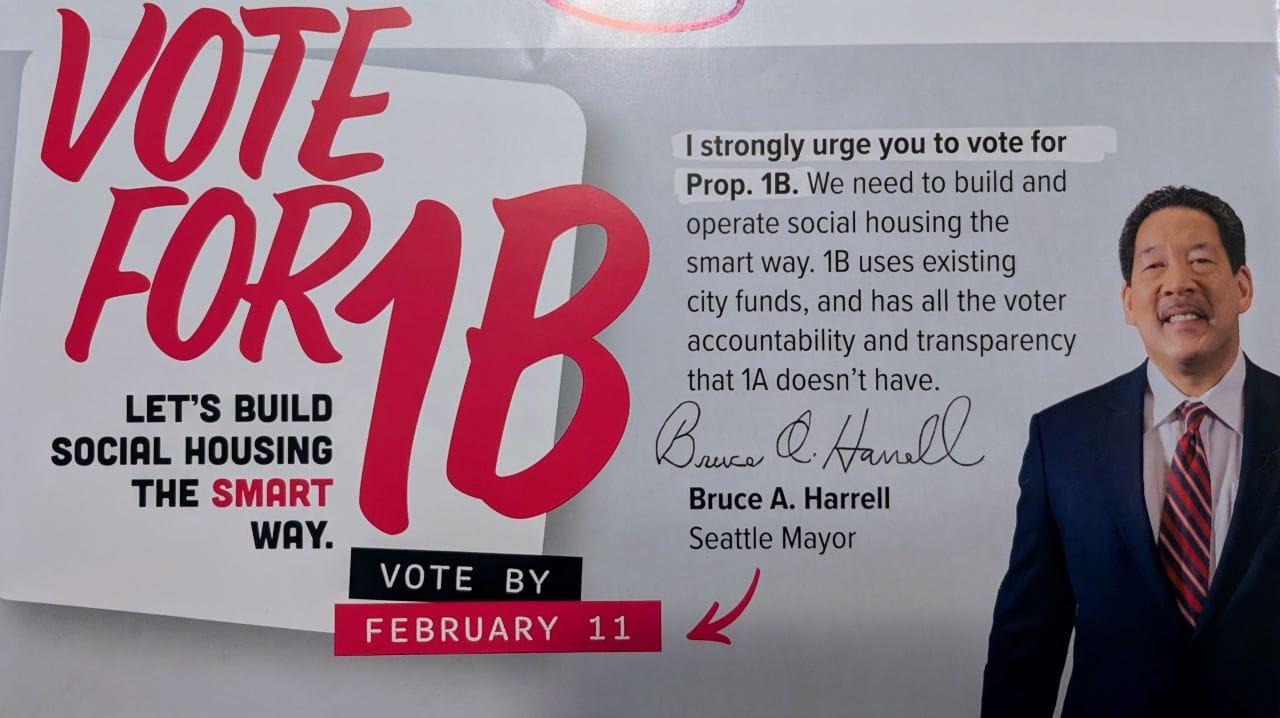
The chamber and the region’s wealthiest companies led by Amazon and Microsoft also spent heavily to campaign against social housing, and convinced Mayor Bruce Harrell to endorse their alternative and appear on their campaign mailers. Likewise, the Seattle Times Editorial Board endorsed the chamber-backed alternative and aggressively attacked Prop 1A as posing “grave concerns” and the Seattle Social Housing Developer as having “failed basic competency, transparency and accountability standards.”
“The opposition spent six or $700,000 in 21 days, and that just seemed like a huge challenge,” McCoy said.
Social housing mobilizes grassroots energy
Social housing advocates were worried the flood of cash would swamp the low-turnout February election. However, they went all in on grassroots organizing to counteract the monetary might of big business.
“All this immense groundwork that we needed to do, and we needed to do it starting in November, in the winter, when the sun goes down at five o’clock,” field organizer Ben Ferlo said. “It is cold, it is raining. There are atmospheric rivers during this time. There are several major holidays just within, like a four week period of time, and we got to convince people to come out to a February special election that routinely, time and time again, when we were knocking doors, people would say, ‘February election? I didn’t know there was a February election going on.’ All of this stacked up against us, with the Chamber of Commerce opposition that we knew was coming in.”
As it turned out, the swell of support for Prop 1A meant that Seattle set a turnout record for a February election: 38% — though that record level was still well below a normal fall general election, especially in an even-year.
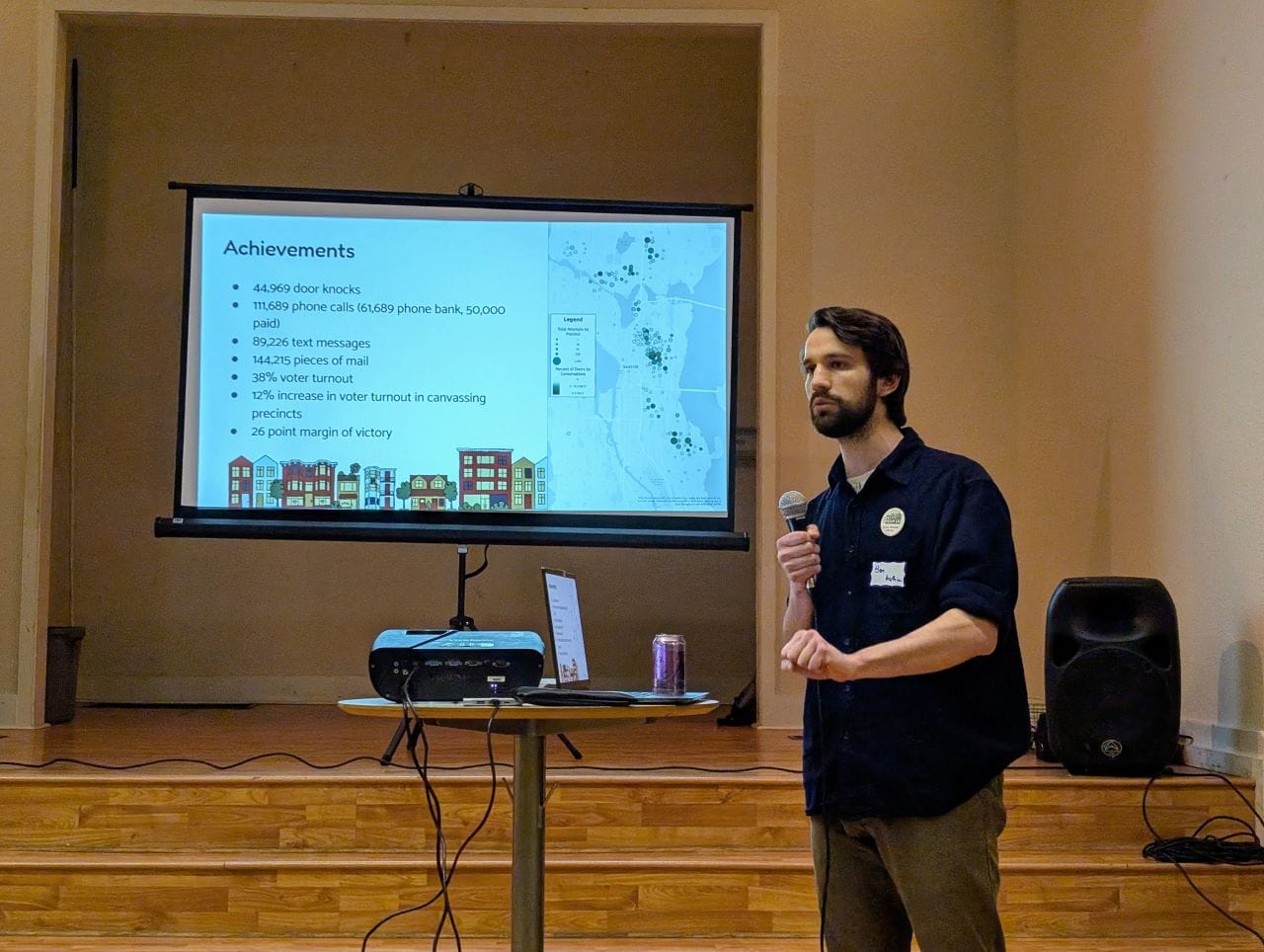
“We knocked 45,000 doors, made 120,000 phone calls, sent 90,000 text messages to voters, 144,000 pieces of mail, and folks we got out the word,” Ferlo told supporters. “February special elections over the last several decades have only seen anywhere between 29 to about maybe 35% of the turnout, and we smashed that record, literally setting a precedent with a 38% voter turnout in a special election.”
Washington Community Alliance researcher Andrew Hong analyzed campaign data and concluded that ground game had a big impact in the race.
“House Our Neighbor’s grassroots organizing undoubtedly contributed to Prop 1A’s success,” Hong told The Urbanist. “Rejecting conventional campaign wisdom, the campaign reached out to many people who had not voted in previous low-turnout special elections (a whopping 40% of voters the campaign canvassed and phonebanked had not voted in the last odd-year special election). But it paid off: the campaign doubled turnout among those disengaged voters who were contacted by the campaign. Overall, turnout was 12-13% higher among voters the campaign talked to, highlighting the efficacy of their ground game.”
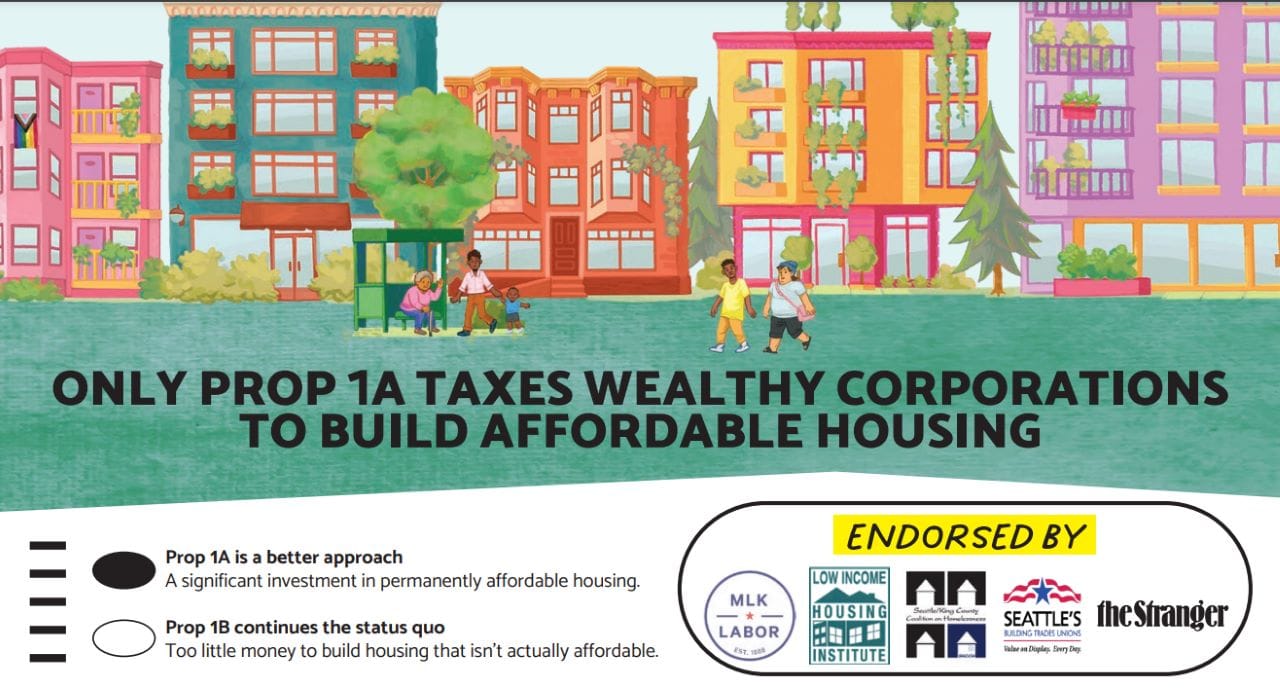
While House Our Neighbors could not afford to send out as many campaign mailers as Prop 1B, the one they did send out was clean and effective in conveying their message. Francesca Oaksford garnered a shoutout at the rally Tuesday for doing the campaign’s illustration work. The campaign sent out 140,000 mailers to voters throughout Seattle.
Although social housing advocates didn’t have backing from Mayor Harrell or most Seattle councilmembers, they did have a few high profile endorsements (including from The Urbanist). Among the endorsers was former state House Speaker Frank Chopp, a longtime champion for affordable housing who was in attendance Tuesday. Chopp expressed excitement to see buildings start getting constructed or rehabilitated.
“This victory is tremendous,” Chopp told The Urbanist. “The grassroots coalition that people have built has been absolutely inspiring.”
House Our Neighbors credited partnerships with Seattle Neighborhood Greenways, 350 Seattle, Seattle Democratic Socialists of America (DSA), Washington CAN, the MLK County Labor Council, and the building trades with propelling their ground game and amplifying their reach. Speakers also stressed that the effort was not a one-off, but part of a building a broader movement and educating voters about housing solutions.
“Our strategy was always education, persuasion, but also turnout,” McCoy said. “We had massive turnout for I-135 so it was tapping back into those people, tapping back into the people who signed I-135 and I-137 and those who have been like educating themselves on social housing through our trainings and our educational series. So yeah, always, always door knocking, because we are about building a movement, not just winning.”