While the editorial staff at the Seattle Times wring their hands about yet another Seattle Police Department (SPD) Crime Report, I ask: will the Seattle City government fall prey to scare tactics, or will it critically examine what works?
So far, it seems the scare tactics are working. Mayor Harrell has proposed police-signing bonuses and hot spot policing as part of a “new” public safety strategy, and SPD announced that they will attempt to hire 125 new police officers this year — a decision with a $11 million price tag.
But for our neighbors with mental illness, those living in encampments, and for Black and Indigenous communities, ramping up police presence is harmful. Instead of helping, increasing police has led to tragic outcomes, especially for individuals experiencing mental health crises.
Nationally, individuals with mental illness are 16 times more likely to be killed by police. The Counted, a database from the Guardian, reports that police officers kill hundreds of people with mental illness every year. Even when police interactions don’t have deadly consequences, people with mental illness are more likely to be arrested and imprisoned. The US Department of Justice reports that 37% percent of people in state and federal prisons who have been diagnosed with a mental illness. According to the Prison Policy Initiative, “In 2015, the Washington Post reported that 124 cases of officer shootings (27% of all officer shootings that year) involved a mental health crisis; in 36% of those cases, the officers were explicitly called to help the person get medical treatment, and shot them instead.”
And it’s impossible to talk about police without talking about racialized violence and use of force against Black individuals. Black individuals with mental illness are more at risk than their White peers, and are disproportionately harassed, arrested, and killed. In 2017, Seattle resident Charleena Lyles, a Black woman, was shot seven times by police. She was pregnant, known by police officers to have mental-health challenges, and held a knife. She and her baby were killed.
This harrowing reality points to a need for alternatives. There is another path — programs that are cheaper, more effective, and less traumatizing — to help thousands of people in Seattle feel safer: mental health first responders.
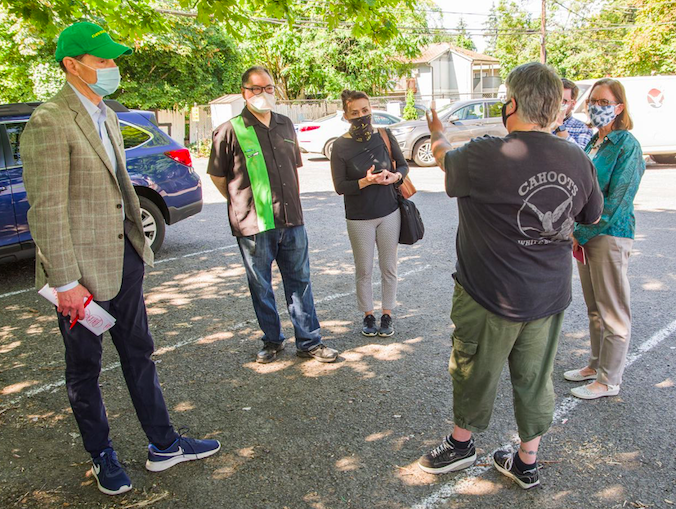
In Eugene, Oregon, a small but crucial team, provides unarmed response to individuals experiencing mental health crises. Funded through the police department and dispatched through the same central system, the CAHOOTS team responds to emergency calls via 911 and a direct phone line. In a city of 168,000 people, the team responds to about 24,000 calls a year — adding up to 20% of the total 911 calls. Fewer than 1% of these calls ended up requiring police.