While some are in a rush to rebuild aging bridges and expand car capacity, less is more when it comes to car lanes. Instead we must prioritize people walking, rolling, and biking on our bridges.
In a city as surrounded by water as Seattle, bridges are an obsession. Every campaign season they become a hot button issue as local candidates make the case their local bridge is a regional–if not national–priority.
The Magnolia Bridge is a great example of this phenomenon. Serving a peninsula with some 20,000 residents and two other bridges over the Interbay railyard, nonetheless we are to believe the third bridge serving this quiet enclave that fought inclusion in the city’s urban growth strategy is essential. In fact we are told it must be a “1:1” replacement (if not larger) to let the cars flow at high speeds and avoid a whopping 1.2-mile detour. That’s exactly the wrong strategy, especially when it comes to meeting our climate goals and designing a just and green rebound from the Covid recession. We can find a lot better ways to spend the money.
The City’s Magnolia Bridge study included a more modest replacement option that shortens the bridge span and provides better connections for buses and people walking, rolling, and biking while costing significantly less to build. Nonetheless, most of the local discourse remains laser-focused on a full 1:1 replacement which the City estimates will cost $420 million.
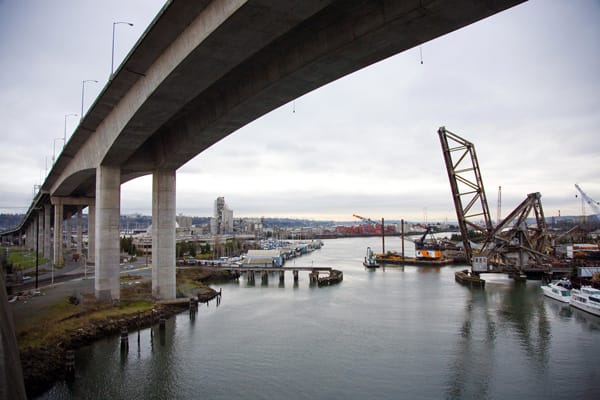
West Seattle can make a better case for the 36-years-old but crumbling West Seattle Bridge since it serves a larger area with fewer reasonable alternatives. And perhaps that will spell delay for the Magnolia Bridge as West Seattle leapfrogs it on the priority list.
Design bridges for the traffic you want
But again, keeping every single lane of car traffic (or adding even more) makes the case for replacing a bridge weaker, not stronger. For one it jacks up the price tag. It also locks in higher levels of carbon emissions. Highway boosters have us convinced that congestion relief is just around the corner if we build roads wide enough, but instead congestion returns and it’s always just another road widening project that’s around the corner. By chasing level of service for cars, we create a self-fulfilling prophecy of ever increasing vehicle miles traveled and greater car dependency.