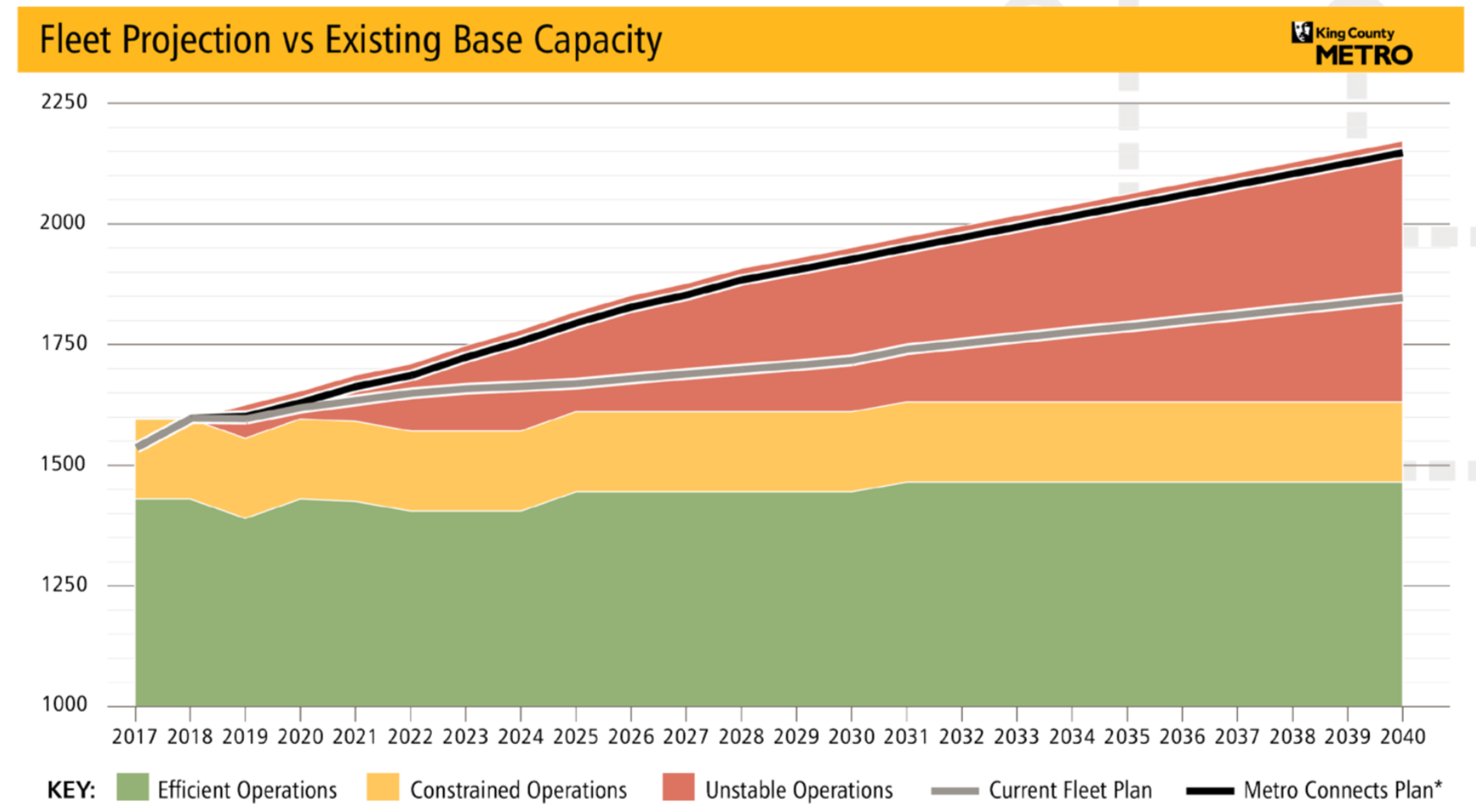
King County Metro has whittled down candidate sites for a new all-electric battery bus base. With significantly constrained bases, Metro is in need of more space under existing operations and that need will only grow as the number of buses required to meet demand and the county’s bold initiative, Metro Connects, rolls out through 2040. By that point, the fleet is projected to jump 70% with an additional 625 buses. Metro’s new base could open by 2030 and top $480 million in cost.
“With new base capacity, Metro will be positioned to meet the transit needs of our growing region,” King County Executive Dow Constantine said. “We are committed to greening our Metro fleet, and operating a zero-emission bus base in South King County will provide cleaner air to a part of the region where residents have historically experienced a greater share of pollution from cars and trucks.”
The three candidate sites are located in the Green River valley: one in Kent and two in Auburn. Whichever site is chosen, it would be the first base located in South King County. This is a strategic choice since the South Base in Tukwila is the most southern Metro base serving the countywide bus network, which has a substantial number of bus routes operating in Southwest and Southeast King County. Adding more capacity in the area will reduce the length of deadhead trips to bases, when buses are out of service but need to make the trip back to base. This is beneficial because Metro can leverage operational savings to provide more service hours and better respond to local network issues in the southend.
Illustrative of the problem Metro faces with bases at capacity is the transit agency’s inability to increase service, particularly at peak hours. In 2017, the City of Seattle sought to purchase an additional 100,000 annual service hours. Metro, however, was unable to meet that request, initially only promising 15,000 annual service hours but ultimately increasing them by 26,000 annual service hours.
Peak hour capacity, however, is only one facet of the challenge. Equipment operating, in the right places, and sufficient staffing are other interrelated issues. And of course, operational efficiencies, such as optimized routes, off-board fare payment, stop balancing, and transit priority equipment and facilities all play a role in system capacity, especially when bus base operations and storage are at their limits.
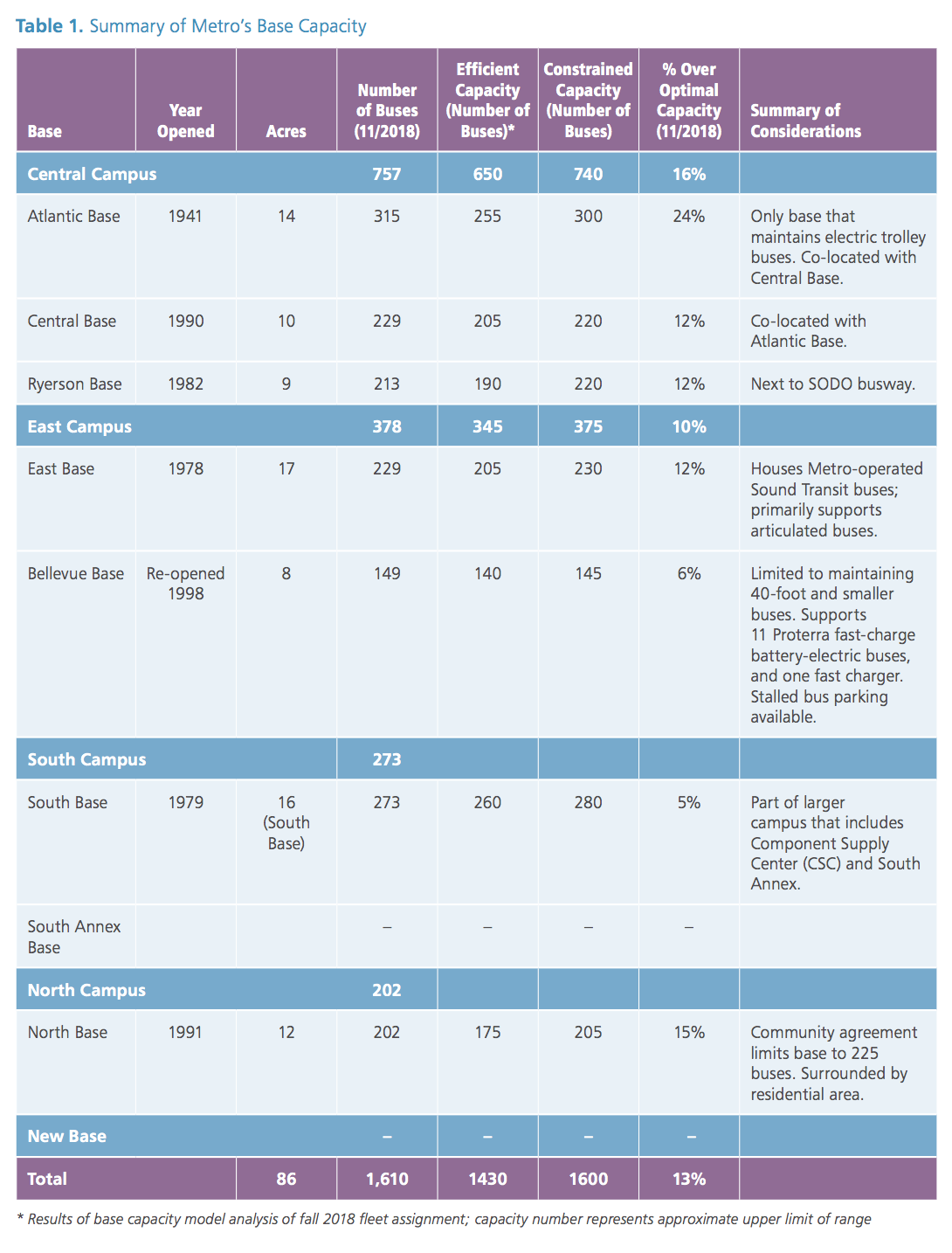
Current base locations, candidate sites, and going all-electric
Metro currently operates seven bus bases spread across Seattle (three locations), Bellevue (two locations), and Tukwila and Shoreline (each one location). The new south bus base could end up at one of the following locations: SE 196th St and 68th Ave S (Kent), S 277th St and D St NE (Auburn), or 37th St NW and B St NW (Auburn).