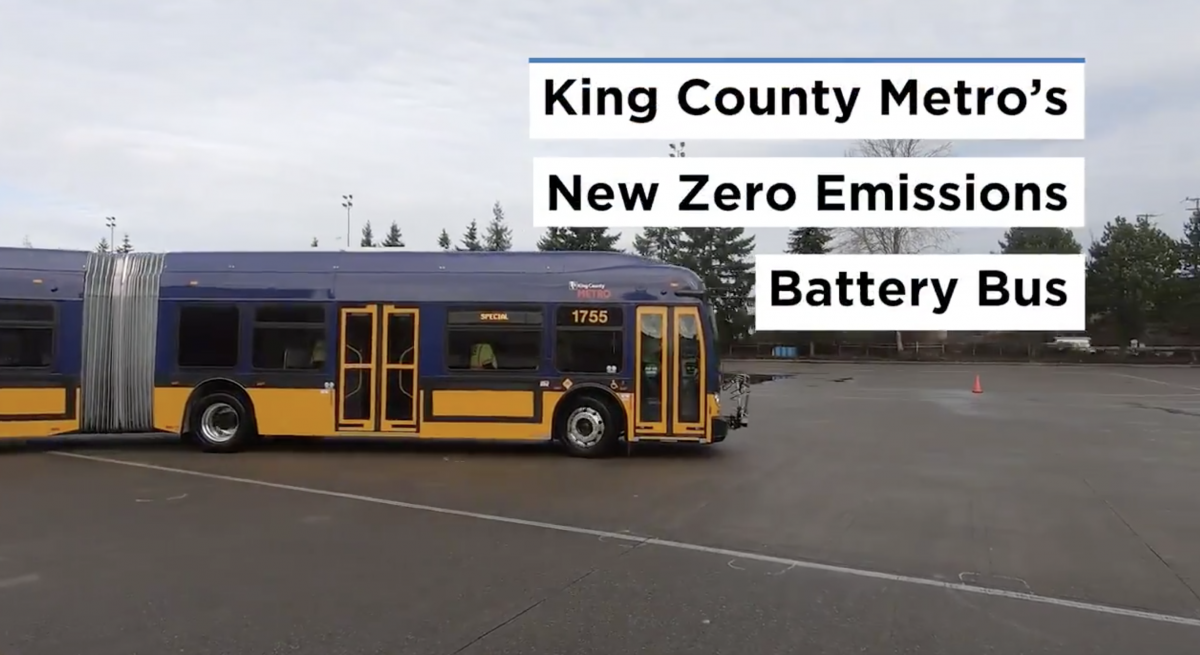
On Thursday, King County officials announced that new battery-electric buses would be hitting the streets late next year. The county is purchasing a total of 120 new battery-electric coaches from New Flyer, a Canadian-based manufacturer, to replace and expand the King County Metro fleet. The agreement will ensure that the first batch of 40 coaches are delivered in fall 2021. In the next year, Metro will also finalize the agreement for the second batch of 80 coaches that could be delivered beginning in the fall of 2022. The transit agency has a goal of attaining a 100% zero-emissions fleet by 2040.
“Today, we’re celebrating major progress toward our goal of transforming Metro to a zero-emission bus fleet, which is better not only for the environment but also for our customers,” said King County Executive Dow Constantine in a statement. “These new buses will be able to serve routes all over King County, and especially in the southern part of the county, an area disproportionately affected by pollution. Working with New Flyer, we’ve procured 40 new buses that can handle anything we throw at them–quietly, efficiently, and fueled by clean power.”
Executive Constantine’s statement hints at the fact that South King County is also due for a new bus base by 2030. The bus base will be the first of the transit agency’s bus bases built to house and maintain 100% battery-electric buses. Three locations have been whittled down in Kent and Auburn to locate the new bus base. In the interim though, Metro will have to dispatch new battery-electric buses on some local routes in the southern portion of the county once delivered and operational from other bus bases.
Metro has indicated that the new battery-electric buses will be housed at an interim expansion area next to the South Base in Tukwila until more permanent space is secured. The interim expansion area will include necessary electric charging infrastructure to power the battery-electric fleet of up to 125 buses. Metro estimates that the cost for such charging infrastructure will range from $50 million to $60 million.