Update: Despite earlier denials, Lime announced December 24th that it was closing down its bikeshare in Seattle and pulling all its bikes by December 31st. Lime said it will return in the spring with scooters.
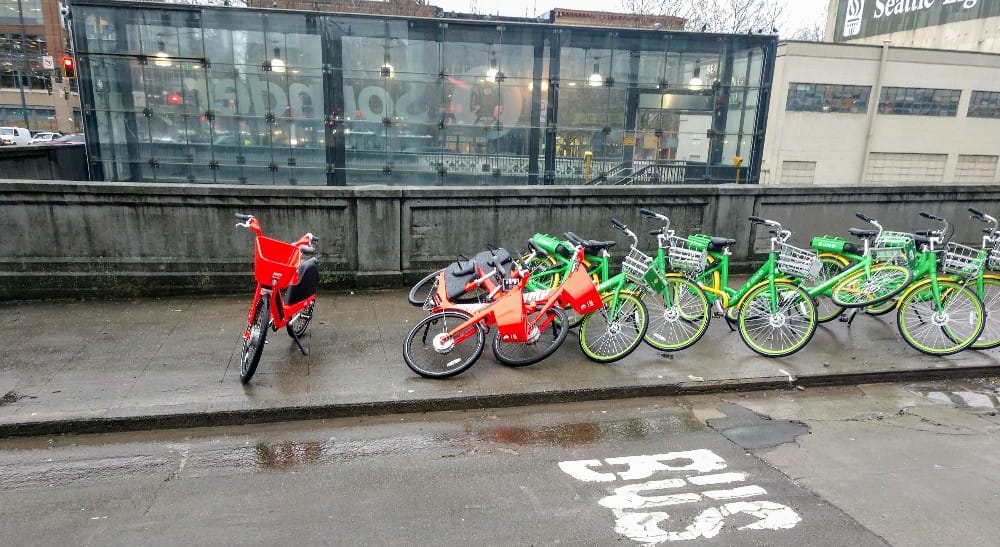
Lime Bikes dominated the first year of dockless bikeshare in Seattle, but the second year has been a different story. The Urbanist spoke to three bikeshare workers that Lime laid off just in time for the holidays. Rumors began swirling that Lime was ending bikeshare in Seattle, but Lime spokesperson Alex Youn sought to put that rumor to bed.
“As we enter the winter months with slower ridership throughout the city, we’ve decided to reduce our operations to meet demand, something we typically do in markets around the world that experience seasonal changes,” Youn said. “We look forward to ramping back up in the spring.”
Lime is trimming its bike fleet
Lime has reduced its fleet to about 2,000 e-bikes in Seattle, a spokesperson said–well below its previous high-water mark and its permitted cap. Seattle has permitted each bikeshare provider up to 5,500 bikes. The Seattle Department of Transportation (SDOT) reduced that number by 1,000 bikes in July as punishment for failure to address illegally parked bikes, which create obstacles for people walking and rolling on sidewalks.
After Mayor Jenny Durkan slowly warmed to the idea, SDOT plans to launch a scootershare pilot in the spring, and, since Lime is also a major scootershare provider in other cities, some have speculated the company would shift its focus to scooters. Lime also has dabbled in carsharing with Lime Pod, but announced in September that was winding down the pilot program in Seattle by year’s end. A Lime spokesperson declined to say what the company had planned after scootershare launches. Clearly Lime has interest in adding scooters in Seattle since it’s been lobbying the City to end the scooter ban and has rolled out scootershare in Redmond.
Summer boom gives way to winter hibernation
Across both bikeshare providers, SDOT’s third-quarter audit found a record-high ridership of 750,000 trips from July to September, with a total of 1.6 million trips for the first three quarters of 2019. Widely available bikes with electric assist to help power up Seattle’s many hills are a revelation in the warmer half of the year, but bikeshare companies are preparing for winter doldrums.
A Lime spokesperson blamed rainier weather, colder temperatures, and reduced tourism for the decrease in ridership and bikeshare demand. Perhaps the retreat covers up deeper fundamental issues? After all, Lime pulled out of Bellevue completely last month after a brief foray in Seattle’s more car-centric neighbor.
Across its global operations, Lime is expected to lose $300 million in 2019, and the venture capital can’t last forever. Locally, it could also be that JUMP–a subsidiary of Uber that is the other bikeshare operator left standing in Seattle–is cutting deeply into Lime’s market share. Uber spokesperson Nathan Hambley said that JUMP has about 3,500 bikes in Seattle and does not plan to scale back operations. “We’re also optimistic about the possibility of operating both bikes and scooters in Seattle like we already do in a number of other cities,” Hambley added.
Bikeshare providers Spin and ofo participated in Seattle initial dockless bikeshare pilot, but have since left, as have the super-low $1 fares of the initial launch.
Bikeshare is getting pricier
Without facing competition from pedal-powered competitors, Lime and JUMP have significantly increased rates on their e-bike rides over the past year. Lime now charges an unlock fee of $1 plus 29 cents per minute–nearly double the rate charged in 2018. That means a 30-minute trip is $9.70, and a 15-minute ride is $5.35. JUMP, meanwhile, charges 27.5 cents per minute with no unlock fee. That puts a 30-minute trip at $8.25 and a 15-minute one at $4.13. Since JUMP bikes are a nicer model and cheaper to rent, users likely have a preference for them. Anecdotally, folks I know do prefer JUMP.
The other looming issue is poorly maintained bikes, as many Lime users can attest. Many bikes are inoperable. A Seattle Times survey found the majority of bikes tested in late summer inoperable, and SDOT’s audit confirmed only about half of bikes out on the street were in working condition. Sometimes the problem was only a battery that needed to be charged, but other times the maintenance issues were more dire.
Lime appears to be losing the maintenance battle since the audit found a significantly larger share of incapacitated Lime bikes versus JUMP bikes. In a September check, the City found only 36.6% of Lime’s bikes were usable, while 64.7% of JUMP’s bikes were. Officially, SDOT requires bikeshare providers maintain 70% usability, putting Lime way below the threshold and JUMP slightly below it.
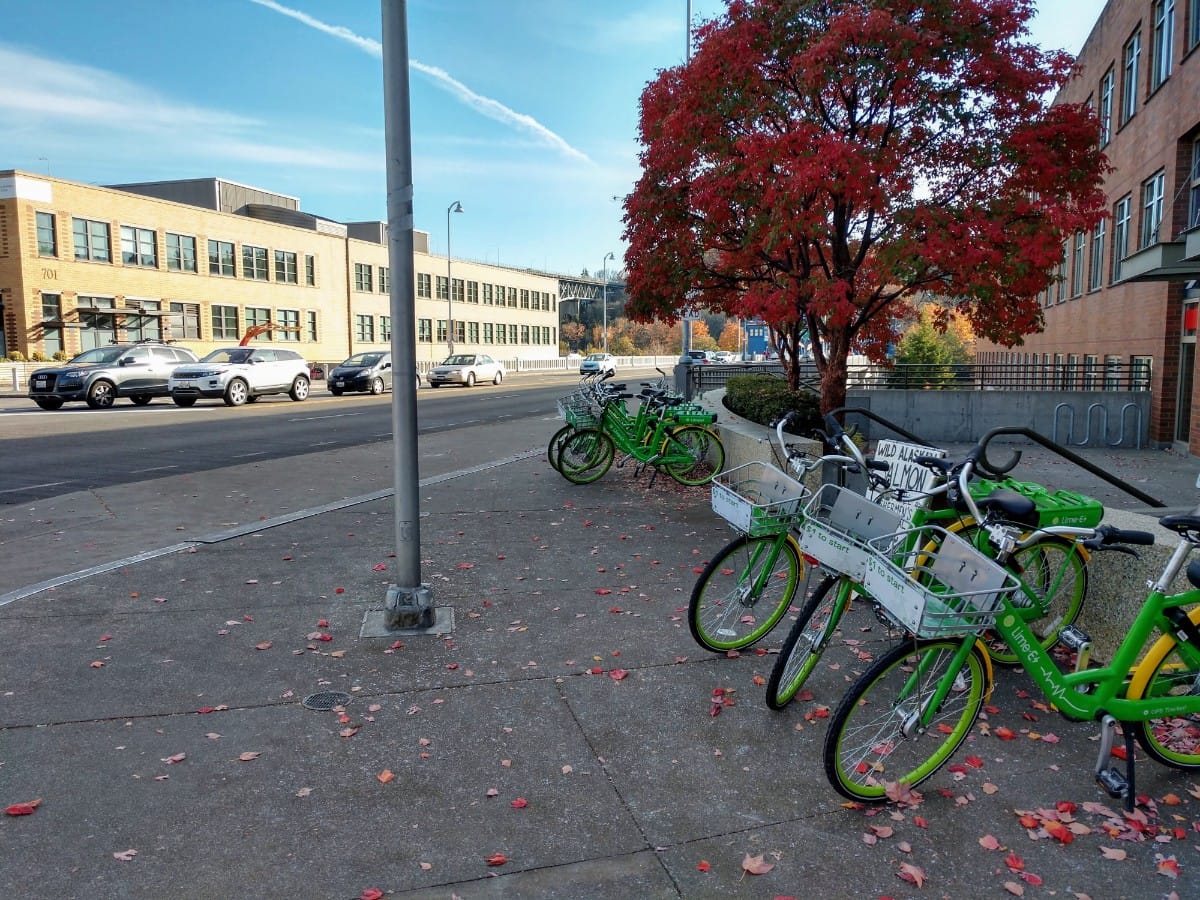
Lime blamed the poor September showing on a backlog at its warehouse related to an August fire, a Labor Day surge in usage draining batteries, and low staff due to vacations. While the usability rate may have recovered since, the damage to consumer trust may have been done. The company declined to share usage statistics, but did say it has surpassed three million rides in Seattle.